Curly hair offers plenty of room to play with shape, length, and movement, and the right haircut can make daily styling feel much more manageable. The best choice is rarely about age alone. Curl pattern, hair density, preferred length, and how much styling you actually want to do all matter. Some women prefer a cropped cut that lets natural curls spring up around the face, while others like a soft bob or longer layers with more movement.
These 15 curly haircuts for women over 60 cover a range of silhouettes, from short and wash-and-wear to softly layered medium-length cuts, with ideas for gray, silver, fine, and fuller curls along the way.
1. Soft Curly Pixie With a Longer Crown
A soft curly pixie keeps the sides and back relatively short while leaving enough length through the crown for the curls to form a visible, rounded shape. That extra length is what separates this version from a very cropped pixie. The result can feel light around the ears and neckline while still keeping plenty of texture on top.
This shape can be especially appealing for women who want a shorter haircut without giving up their natural curl pattern. Finer curls may benefit from a slightly fuller crown, while denser curls can often carry a more sculpted silhouette. For styling, scrunching a lightweight curl product into damp hair and allowing the top to air-dry or dry gently with a diffuser can help preserve the shape.
2. Tapered Curly Crop With Defined Sides
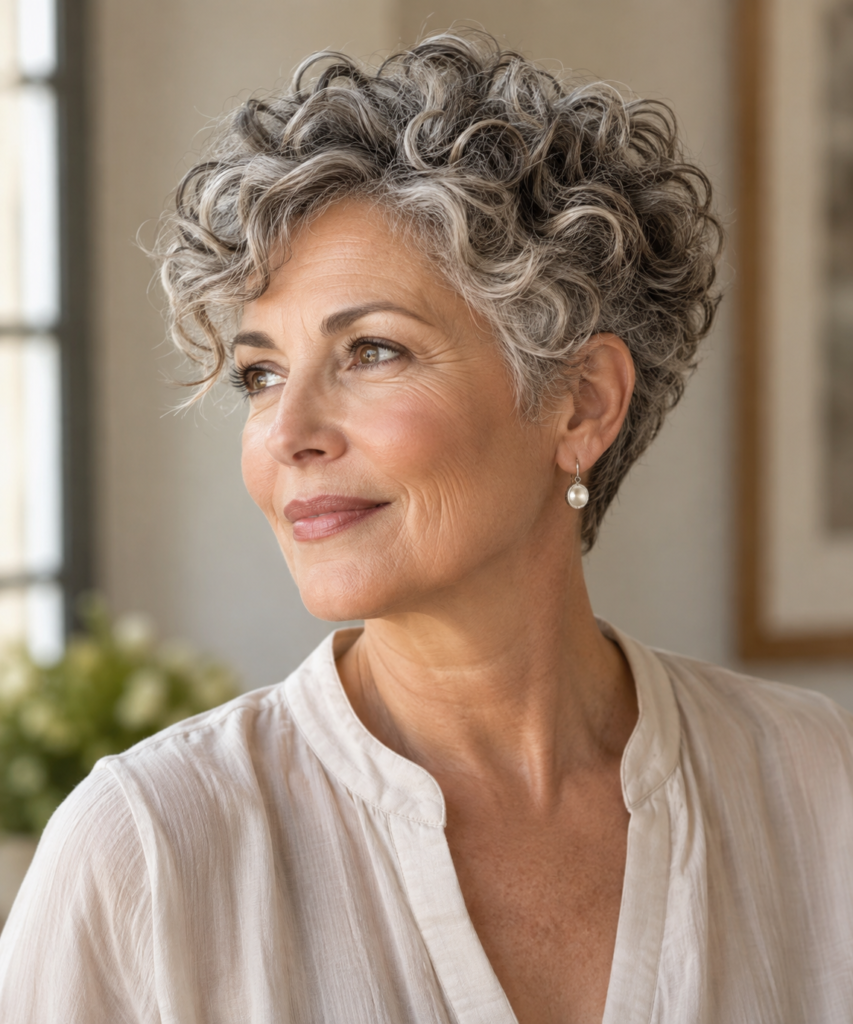
A tapered curly crop places more emphasis on a clean, controlled outline around the ears and nape while allowing the curls on top to remain fuller. From the front, it has the softness of a curly crop; from the side, the narrowing shape gives it a more deliberate silhouette.
This option may suit someone who wants short curly hair that still feels structured. It can also be useful when you like the idea of keeping your natural texture visible without carrying much length around the lower part of the haircut. For thicker curls, a stylist may shape the sides more closely while preserving enough space on top for movement. For finer curls, a softer taper can keep the overall effect from looking too severe.
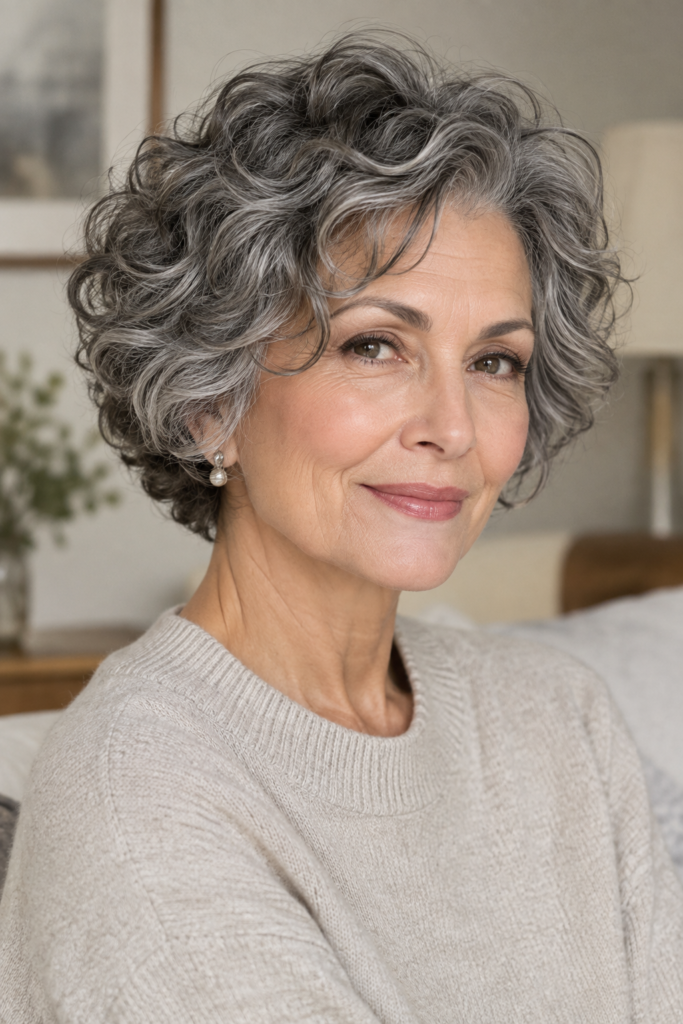
3. Curly Pixie Bob With Extra Movement
A curly pixie bob sits between a traditional pixie and a short bob, making it a useful choice when you want some length around the sides without moving into a full chin-length shape. The curls can be left longer around the temples, ears, and crown, creating movement that a very short crop may not provide.
This cut is particularly interesting for women who are growing out a pixie or simply want a little more softness around the face. Mixed curl patterns can work nicely here because different sections can be shaped to create a more natural outline. Ask your stylist to preserve enough length for the curls to bend and spring rather than cutting everything to one short level.
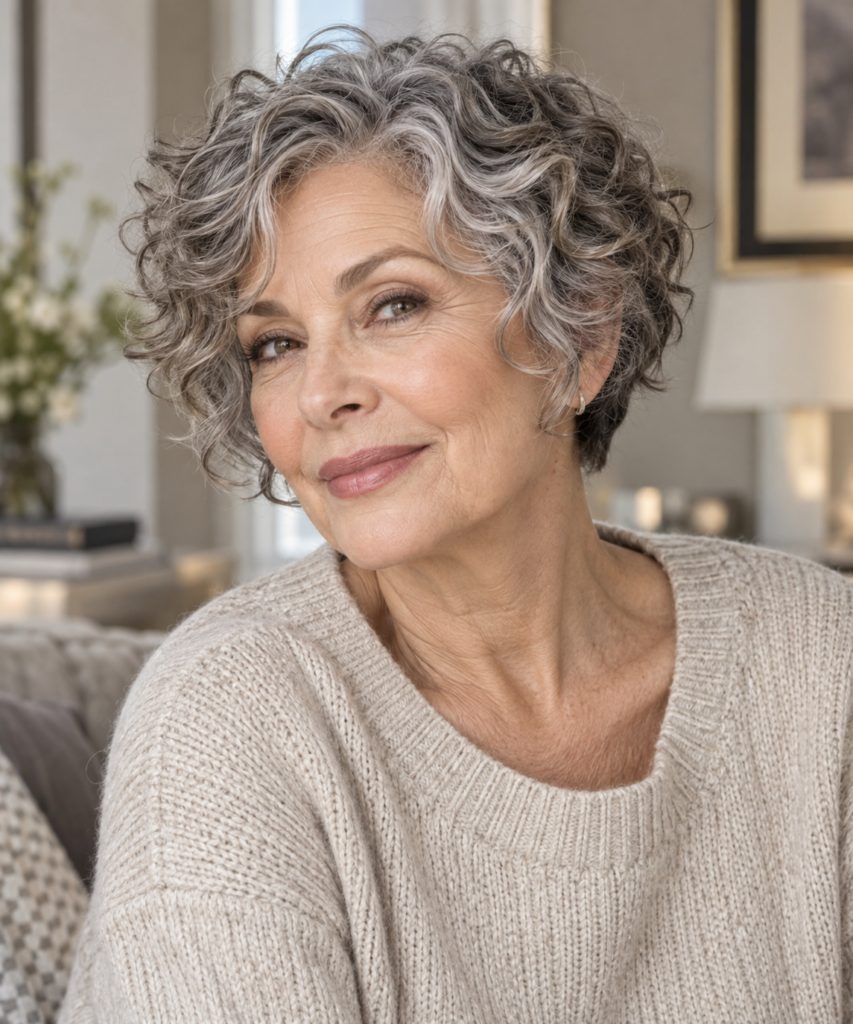
4. Rounded Chin-Length Curly Bob
A rounded chin-length curly bob creates a clear shape around the lower face while allowing the curls to build a soft, balanced outline. Instead of falling straight down, the haircut follows the jaw area and lets the curls create width and movement around the chin.
This can be a versatile option when you want a recognizable bob but still want natural texture to remain the main feature. Fine curls may benefit from subtle internal layering so the shape does not sit too flat, while thicker curls may need careful weight removal to keep the bob from becoming overly dense. A center or slightly off-center part can change the balance of the style without changing the overall haircut.
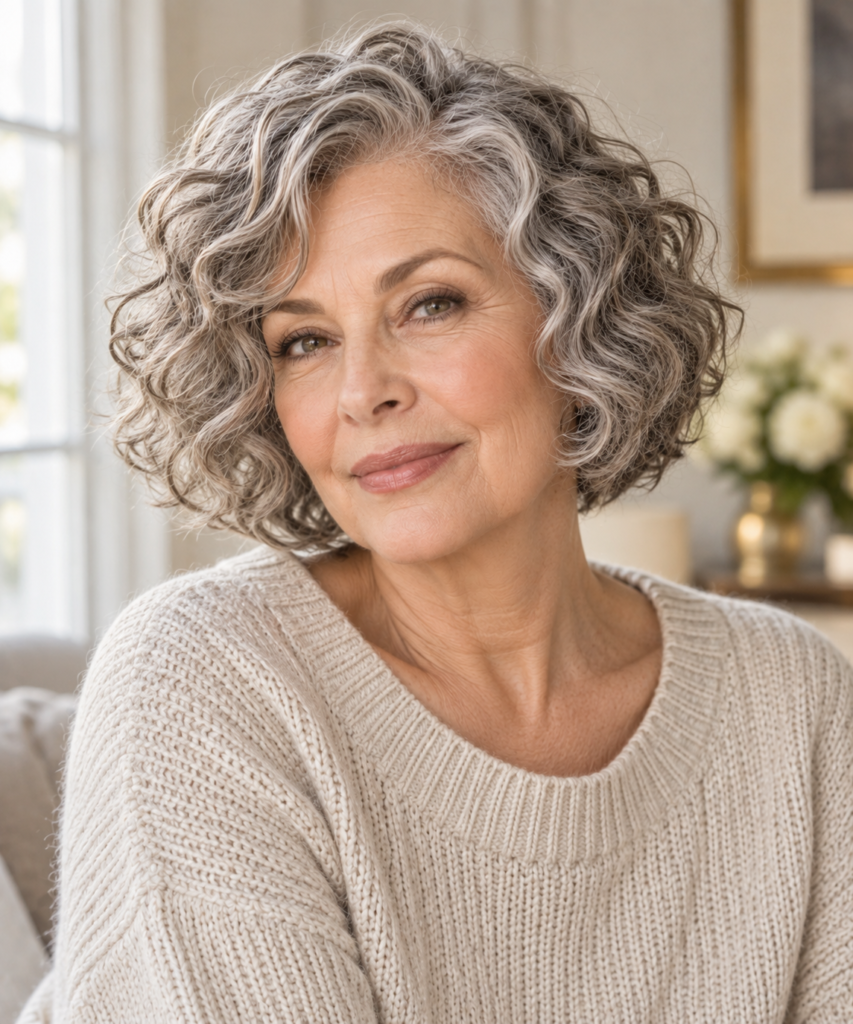
5. Jaw-Length Layered Curly Bob
A jaw-length layered curly bob adds more movement than a single-length bob by placing shorter layers through selected areas of the shape. The goal is not to create lots of visible steps, but to let curls separate and move instead of forming one heavy block.
This cut can be useful for women who want a bob but prefer a more relaxed finish. Layers near the front can help create soft face framing, while slightly shorter sections through the crown can encourage lift. With thicker curls, the stylist may remove strategic weight instead of simply shortening the whole shape. With finer curls, fewer and more deliberate layers can help preserve density.
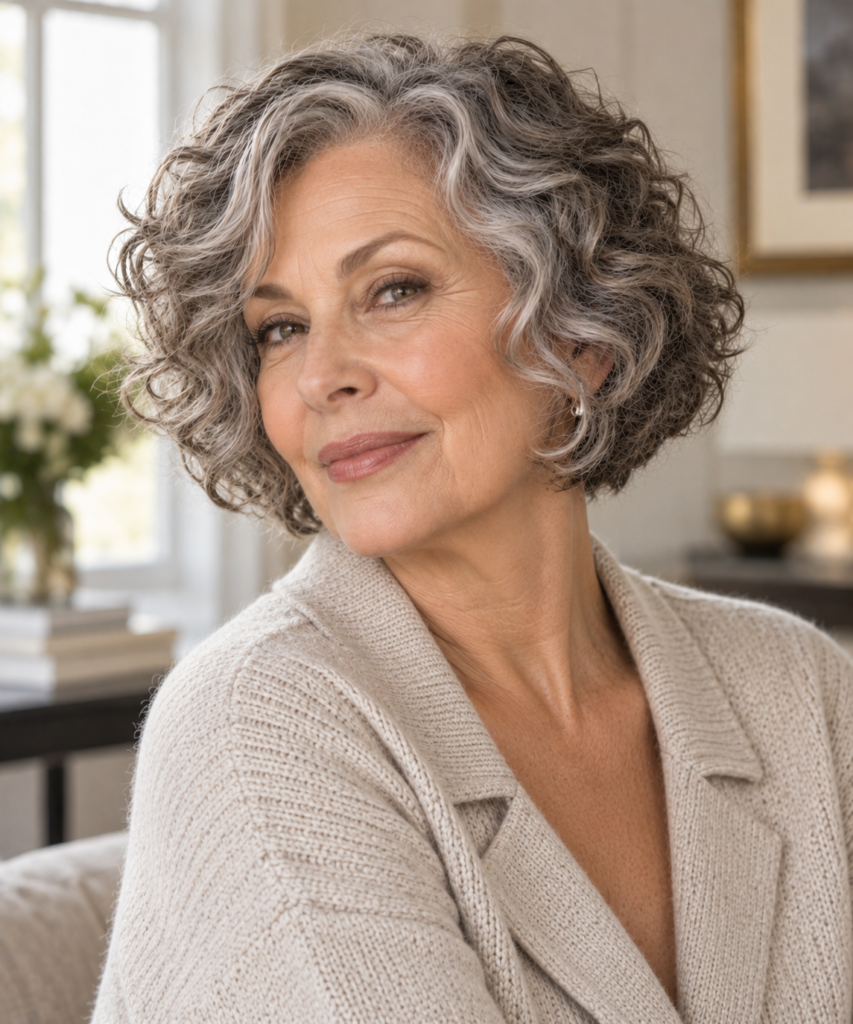
6. Side-Swept Curly Fringe Bob
A side-swept curly fringe changes the feel of a bob without requiring a completely different length. Rather than having the front curls fall evenly across the forehead, the hair is shaped so the fringe naturally moves toward one side. This can create an asymmetrical visual line while keeping the rest of the haircut balanced.
The style can work particularly well when you like a little extra movement around the forehead and cheekbone area. The exact fringe length should depend on how much your curls spring up when dry. Ask your stylist to account for the curl pattern rather than trimming the front based only on its wet length. A gentle side part can also make the look feel more relaxed.
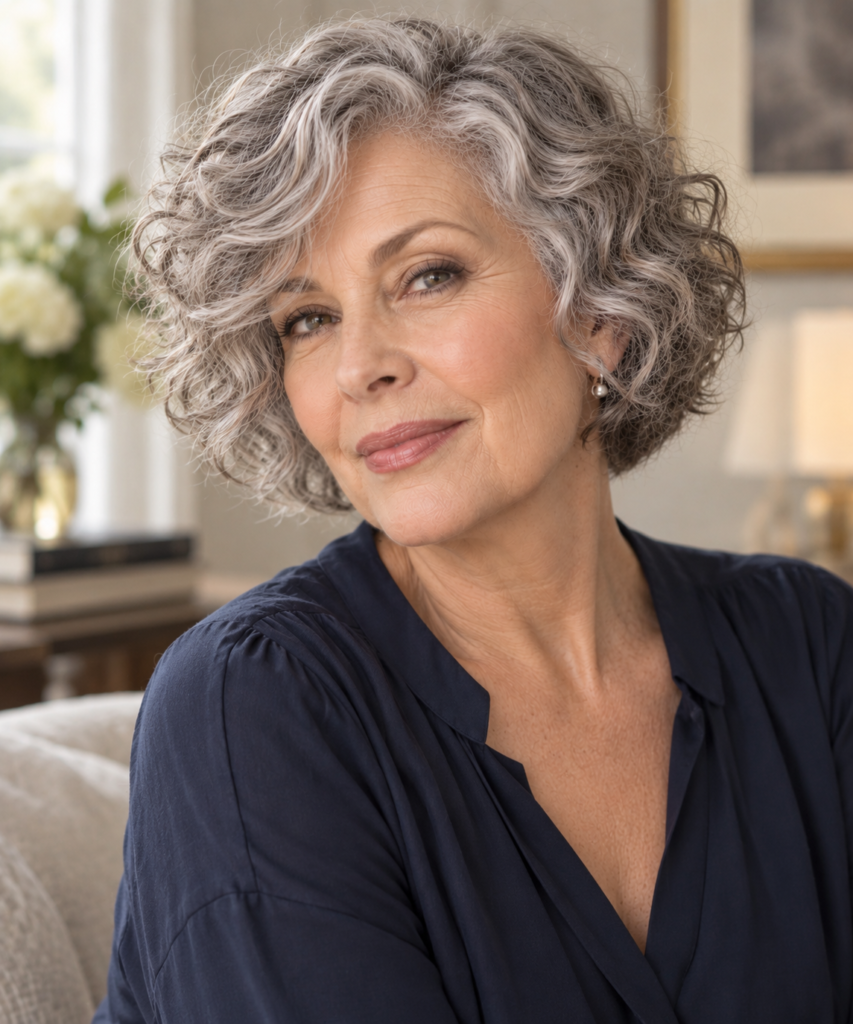
7. Face-Framing Medium Curly Layers
Medium-length curly layers offer more styling flexibility while keeping enough length to shape the face. Instead of cutting the curls into a short, rounded bob, the layers can begin around the cheek or jaw area and continue into the mid-lengths. The result has more vertical movement and a softer outline.
This is a good direction for women who are not ready to go very short. Fine curly hair may benefit from keeping the lower sections relatively full, while thicker curls can handle more strategic layering through the crown. A diffuser can help encourage definition, but the haircut should still make sense on days when the curls are simply allowed to dry naturally.
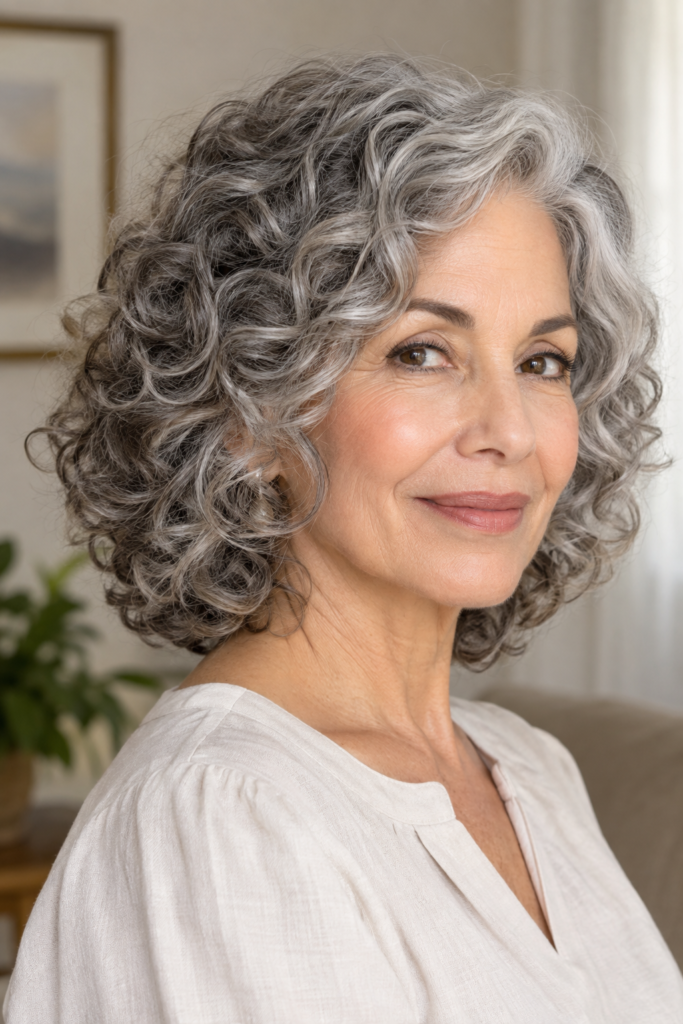
8. Shoulder-Grazing Curly Lob With Soft Layers
A shoulder-grazing curly lob gives you more length without requiring the commitment of long hair. The ends sit around the shoulders, while soft layers help the curls move instead of forming a heavy triangular shape.
This can be a useful middle ground for someone who wants to keep length but would still like a haircut that feels intentional. A slightly longer front can create a gentle frame around the face, while subtle layers through the ends help prevent the silhouette from looking too solid. With denser curls, the stylist may want to shape the lower sections carefully so the cut still moves. For looser curls, a slightly stronger layer can create a more visible wave-and-curl pattern.
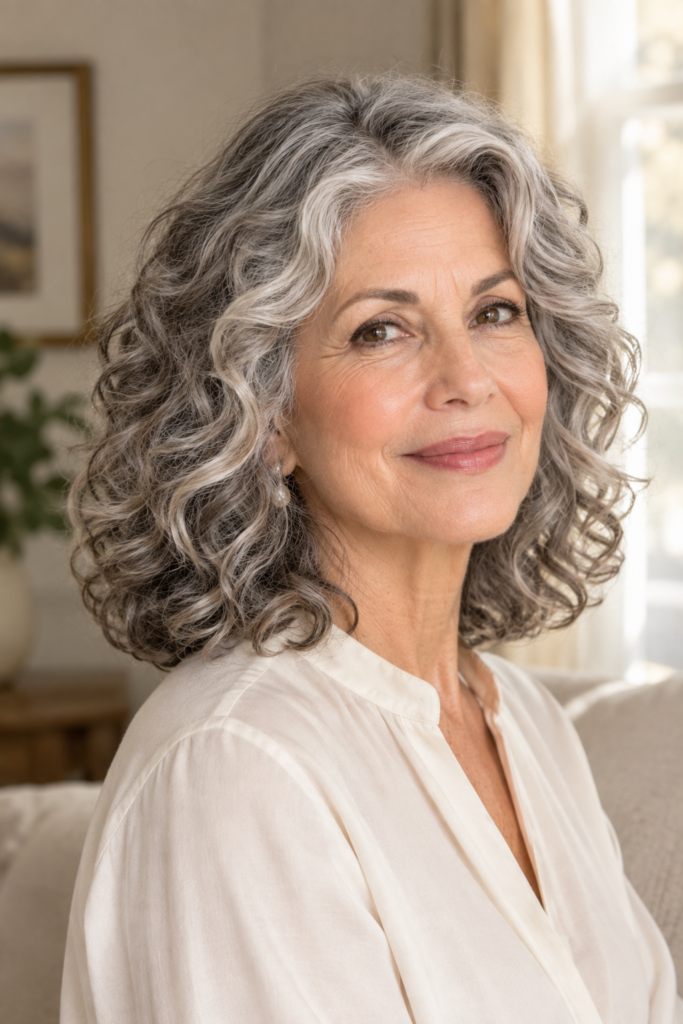
9. Airy Curly Shag With Light Layers
A curly shag brings layers into the conversation without requiring a very short haircut. The shape is typically lighter around the crown and face, with curls that move through different lengths rather than sitting in one solid outline.
For women who enjoy a little more personality in their natural texture, this can be a fun choice. The key is restraint: too many short layers can create a shape that feels difficult to control, especially when curls are dense. A softer version with longer transitions may be easier to wear. Letting the curls dry naturally can emphasize the layered silhouette, while a diffuser can add definition when you want more structure.
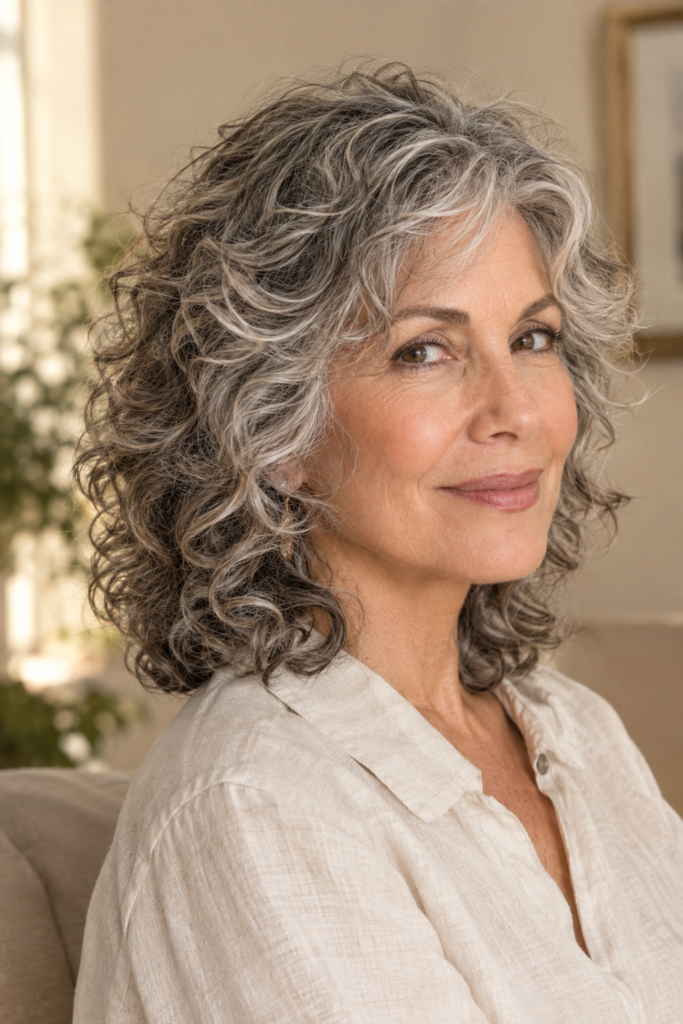
10. Feathered Curly Cut With Piecey Ends
Feathered layers can give curly hair a softer edge, especially when the goal is to avoid a blunt or heavy-looking perimeter. Instead of making every curl end at the same point, the haircut creates staggered movement through the ends.
This style can be especially attractive on medium-length curls where you want the haircut to feel light without removing too much overall length. It can also work nicely with naturally mixed curl patterns because the feathered structure leaves room for different sections to move at slightly different levels. For styling, a small amount of curl cream or mousse can help separate the layers while preserving a soft finish.
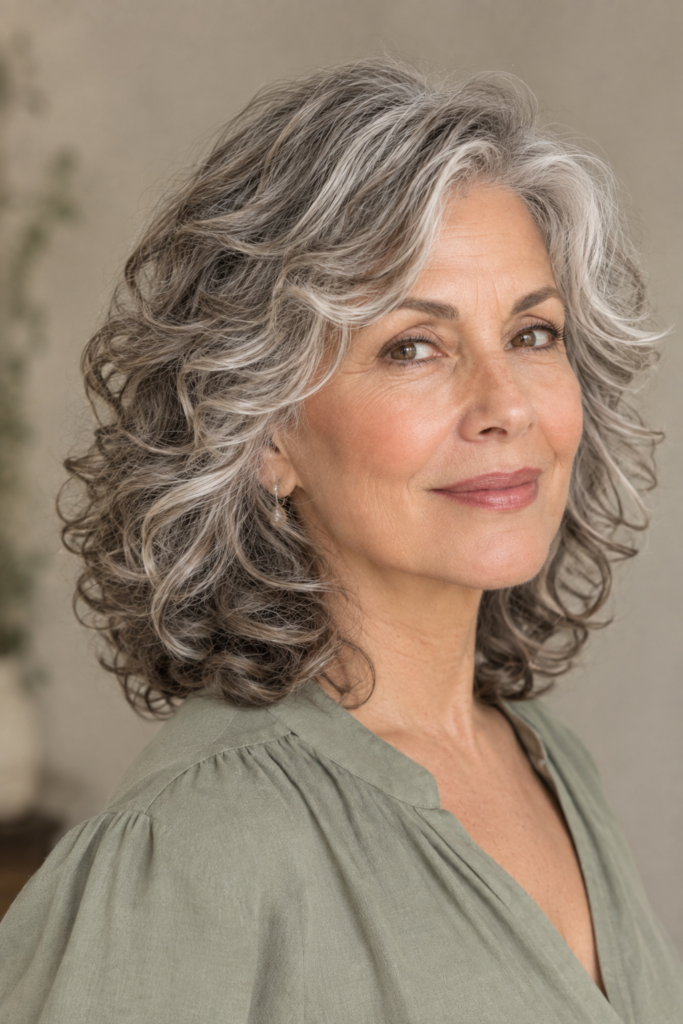
11. Wash-and-Wear Curly Crop With Natural Volume
For someone who wants to spend less time shaping the hair every morning, a wash-and-wear curly crop can be a practical direction. This cut keeps the overall length short enough to feel manageable while leaving enough curl on top to create natural volume.
The important part is choosing a shape that matches the way the hair actually behaves. A tighter curl pattern may form a compact rounded crop, while a looser pattern may create a softer, more tousled finish. Rather than promising that the cut requires no styling, think of it as a haircut designed to work with natural texture. A leave-in curl product and gentle scrunching may be all that is needed on many days.
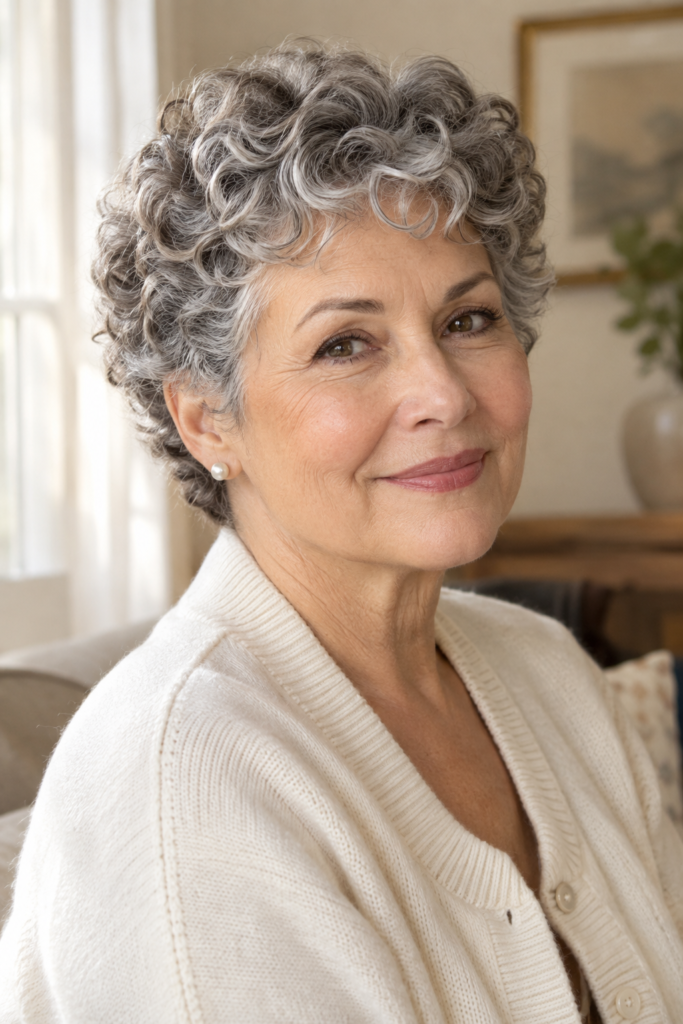
12. Silver Spiral Crop With a Rounded Shape
A short rounded crop can make silver curls the visual focus without relying on a complicated haircut. The cut stays relatively compact while allowing the natural spiral pattern to create texture across the top and sides.
This shape can work especially well when you want short hair that still looks visibly curly rather than simply trimmed close. The rounded outline is easier to recognize from different angles, while the silver coloring adds definition between the curls. If your curls are very dense, your stylist may need to remove some weight to keep the rounded shape comfortable. With finer curls, preserving enough length on top can help the texture remain visible.
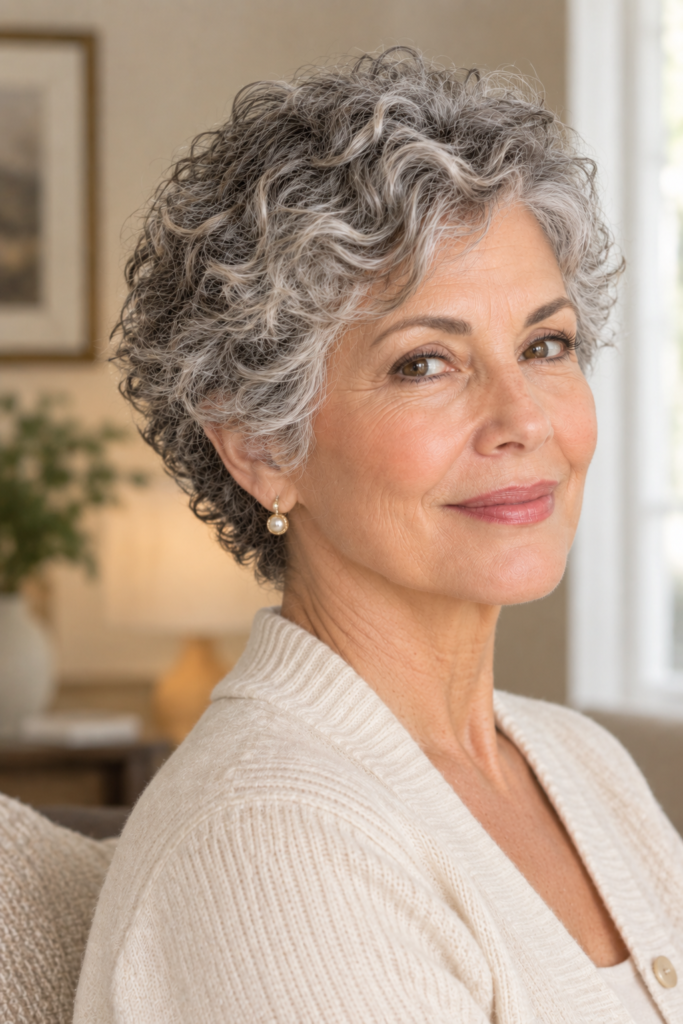
13. Asymmetrical Curly Bob With a Longer Side
An asymmetrical curly bob creates visual interest by allowing one side to sit slightly longer than the other. The difference does not need to be dramatic. Even a subtle shift in length can change the way the curls frame the face and give the haircut a more directional shape.
This can be a good option for someone who wants a bob with a little more personality. The longer side can be emphasized with a side part, while the shorter side keeps the silhouette from feeling too heavy. Because curls spring differently depending on their pattern, the asymmetry should be shaped with dry curl behavior in mind. This is one of the cuts worth discussing carefully with a stylist before making the final length choice.
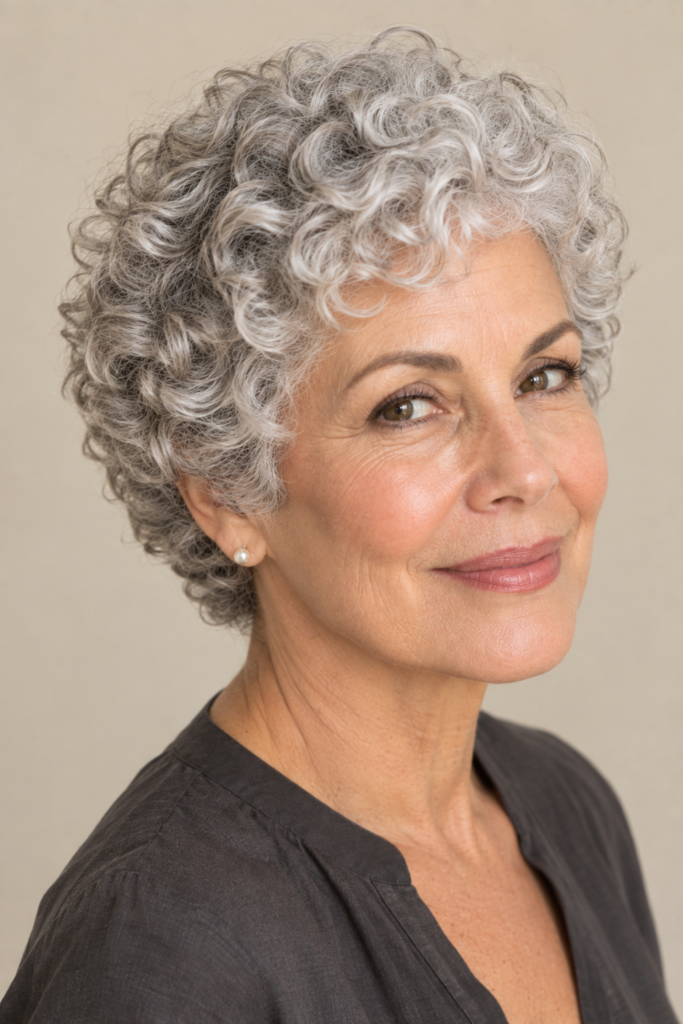
14. Curly Wedge Cut With a Stacked Back
A curly wedge cut creates a more structured shape by keeping the back shorter and slightly stacked while the front and crown retain more length. On curly hair, the stacked effect can become softer and more blended than it looks on straight hair, giving the silhouette a rounded lift without requiring a lot of visible layering.
This haircut can work well when you want a neat neckline with more curl movement toward the face. It is particularly worth considering when you like a bob shape but want the back to feel lighter and more controlled. Denser curls may require careful shaping at the nape, while finer curls can keep a softer stack with longer upper layers.
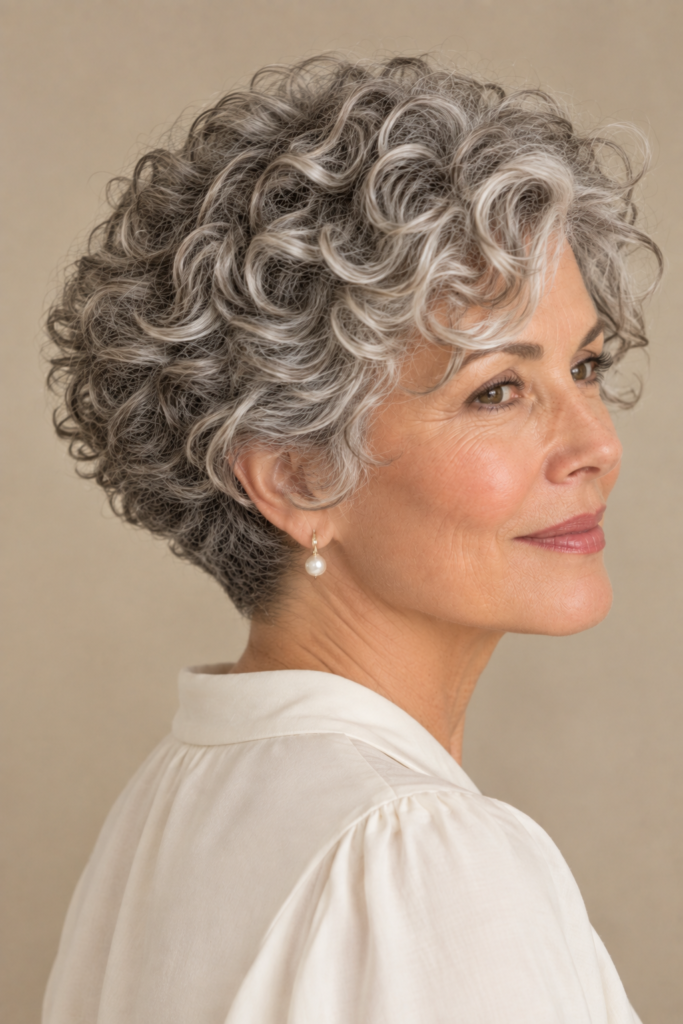
15. Rounded Curly Cut With Soft Bangs and Crown Volume
A rounded curly cut with soft bangs brings the curls forward while keeping the overall silhouette balanced and full through the crown. The bangs should not look blunt. Instead, they can be shaped to blend into the surrounding curls, creating a soft frame across the forehead.
This approach can suit women who enjoy seeing some curl across the front of the face rather than sweeping everything to one side. The amount of crown volume can be adjusted to suit the curl pattern and density. Fine curls may look best with controlled, lightweight volume, while thicker curls can support a fuller rounded shape. Because curls can shrink as they dry, fringe length should be planned carefully.
How to Choose Between These Curly Haircuts
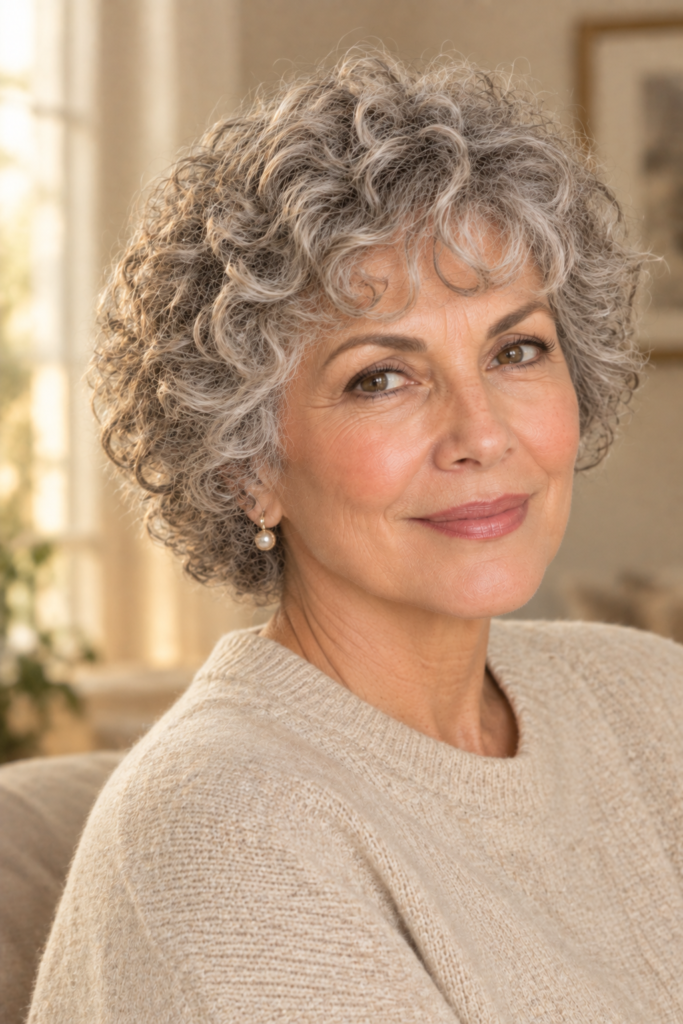
With curly hair, the same haircut can look surprisingly different from one person to another. Curl diameter, density, shrinkage, and styling routine all affect the finished shape. That makes the best haircut less about finding one universally “right” style and more about finding a cut that works with the way your hair naturally behaves.
For finer curls, preserving enough length and avoiding excessive layering can help maintain a fuller-looking shape. Thicker curls often benefit from strategic weight removal and carefully placed layers. If you prefer minimal styling, a shorter shape that works with your natural curl pattern may make more sense than a cut that depends on a specific blow-dry technique.
Gray, silver, and salt-and-pepper curls can work beautifully with every length in this gallery. Color does not determine which haircut you should choose. Think first about silhouette, maintenance, and how you want the curls to frame your face.
Before your appointment, save one or two reference images that look close to your natural curl pattern. Then show your stylist the front, side, and overall shape you like. That makes the conversation much more useful than choosing a haircut name alone.
Low-Maintenance Curly Hair: What to Look For
A low-maintenance haircut is not necessarily one that requires absolutely no styling. In practice, it usually means the haircut works reasonably well with your natural texture and does not depend on a long daily styling routine.
Shorter curly crops often dry faster, while medium-length cuts may offer more styling flexibility. Layered shapes can encourage curl movement, but the amount of layering should match your density and curl pattern. A stylist can also adjust the shape for air-drying, diffuser use, or the way you prefer to wear your hair on most days.
When comparing curly haircuts for women over 60, think about your actual routine. A beautiful haircut that requires a styling method you dislike may be less practical than a simpler shape that fits naturally into your day.
If you regularly air-dry, diffuse, or use other styling methods, it is worth learning how to style hair without damage.
Frequently Asked Questions
What curly haircuts are easiest to maintain after 60?
Short crops, soft pixies, tapered curls, and simple rounded bobs can be relatively easy to manage when they are shaped around the natural curl pattern. The easiest option depends on your density, curl type, and preferred styling routine.
Are short curly cuts suitable for fine curly hair?
They can be. Fine curls often benefit from shapes that preserve enough density while using selective layering instead of removing too much length. A fuller crown can also help maintain visible curl movement.
What curly haircut works well for thicker hair?
Thicker curls can often support layered bobs, curly shags, wedges, and medium-length shapes. Strategic layering or weight removal may help create movement without making the haircut feel overly bulky.
Can gray or silver curls work with short haircuts?
Absolutely. Silver and gray curls can be used as natural color variations across pixies, crops, bobs, and layered shapes. The haircut should still be chosen according to curl pattern, density, and maintenance preference.
Are curly bobs practical for wash-and-wear styling?
Some curly bobs can work well with a natural drying routine, especially when the haircut follows the curl pattern. However, the exact result depends on the person’s curls and how much styling they normally use.
Conclusion
The best curly haircut is the one that fits the way you actually want to wear your hair. A short pixie can keep things simple, a bob can offer a balanced middle ground, and layered medium cuts can preserve more movement and length. Your curl pattern, density, preferred maintenance level, and natural color all deserve a place in the decision.
Save a few of these ideas before your next salon appointment and compare them with your natural texture rather than choosing from length alone. The goal is a haircut that feels comfortable, looks intentional, and works with your curls instead of fighting them.