Blue and pink hair is one of those color combinations that can look completely different depending on how the shades are placed. Soft pastels create a dreamy finish, while electric blue and hot pink feel bold and energetic. You can also play with ombré, balayage, peekaboo sections, split dye, or subtle face-framing pieces instead of coloring your entire head.
If you have been saving colorful hair inspiration and want something beyond a single shade, these 12 blue and pink hair ideas offer different ways to combine the two colors. From delicate pastel blends to vivid mermaid-inspired color, there is plenty of room to make the look your own.
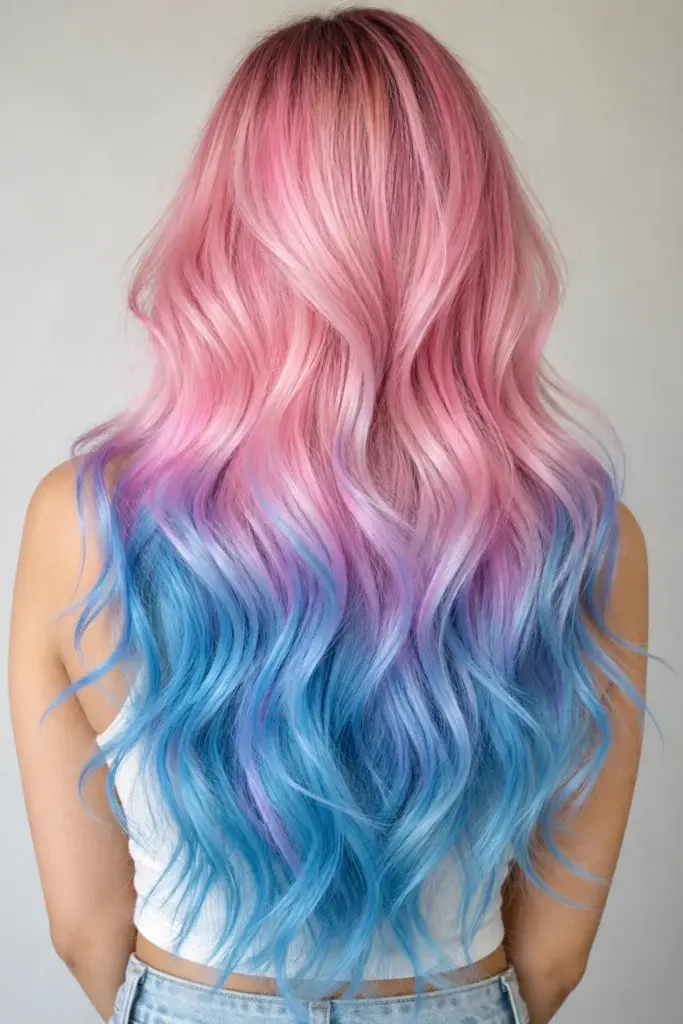
1. Blue and Pink Ombre Hair
Blue and pink ombré hair creates a smooth color transition from one shade into the other. Instead of having a sharp dividing line, the colors gradually blend together for a softer finish.
Try placing a dusty or pastel pink near the roots and gradually transitioning into blue through the mid-lengths and ends. For a more dramatic version, reverse the placement and let blue dominate the roots before melting into pink. This style works especially well on longer hair because the extra length gives the colors more space to transition naturally.
Styling tip: Loose waves can make the color movement easier to see, especially where the two shades meet.
2. Pastel Blue and Pink Hair
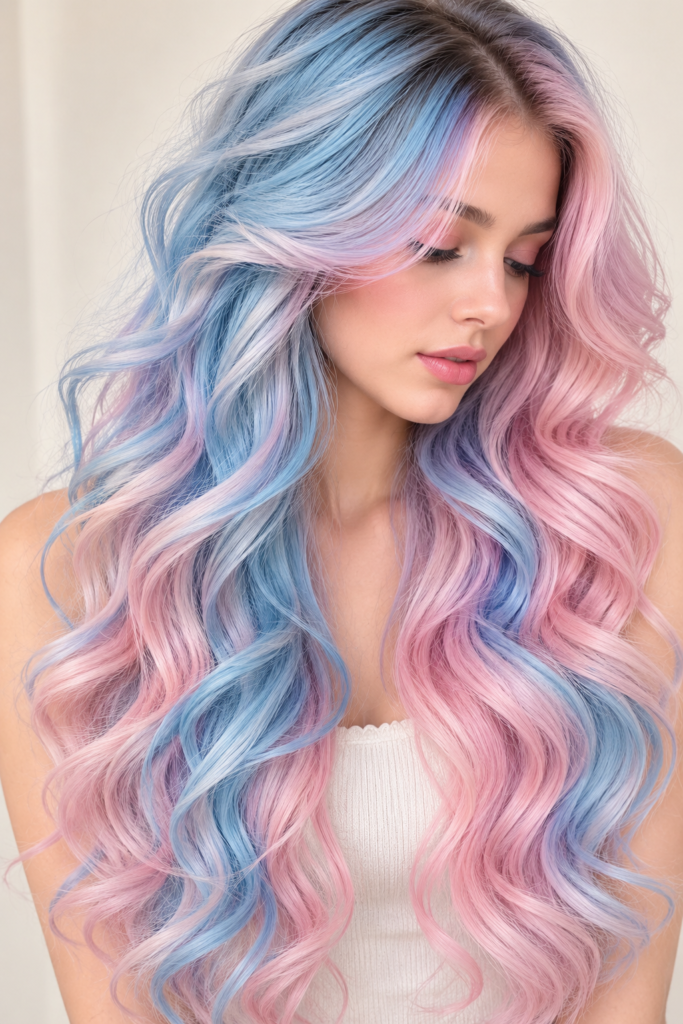
Pastel blue and pink hair has a softer, almost watercolor-like appearance. Instead of highly saturated shades, this version uses pale baby blue and delicate blush pink for a subtle colorful look.
The colors can be blended throughout the hair or placed in larger sections for a more noticeable pattern. Keeping both shades similarly light helps the combination feel coordinated rather than overly contrasting.
This is a lovely option if you want colorful hair inspiration with a softer aesthetic. Gentle curls or loose waves can add dimension without distracting from the pastel tones.
Styling tip: Ask for both colors to have a similar level of softness so one shade does not overpower the other.
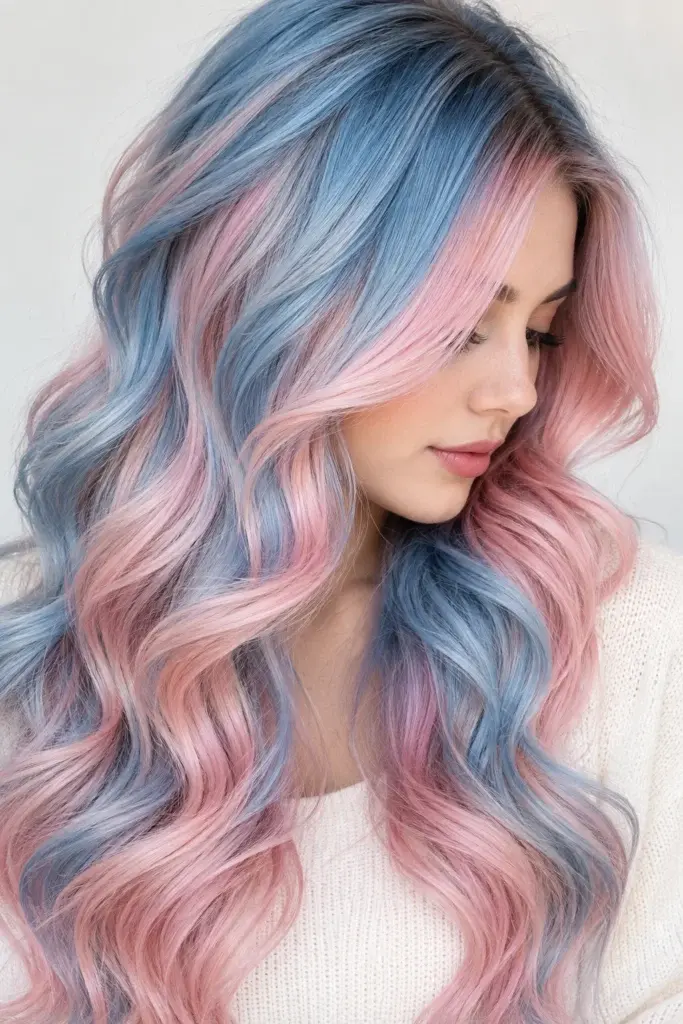
3. Blue and Pink Balayage Hair
Blue and pink balayage gives the colors a more dimensional, hand-painted appearance. Rather than applying two solid blocks of color, lighter pieces can be swept through the hair to create movement.
A darker blue base with pink painted through the mid-lengths can create a striking contrast. Alternatively, a lighter base can make the overall look softer. The placement can also be concentrated around the face for a subtle version or spread throughout the lengths for a more colorful result.
Styling tip: Soft waves are useful for showing off balayage because they reveal the different colored pieces as the hair moves.
4. Blue and Pink Peekaboo Hair
Blue and pink peekaboo hair keeps the brighter colors partially hidden underneath the top layer. When the hair is worn down, the colors appear as subtle flashes, but they become much more noticeable with a ponytail, braid, half-up style, or movement.
You can use pink underneath one side and blue underneath the other, or blend the two shades into the hidden layers. This approach is particularly useful for anyone who wants colorful hair without making the entire head intensely bright.
Styling tip: A half-up hairstyle is an easy way to reveal more of the hidden color when you want it to stand out.
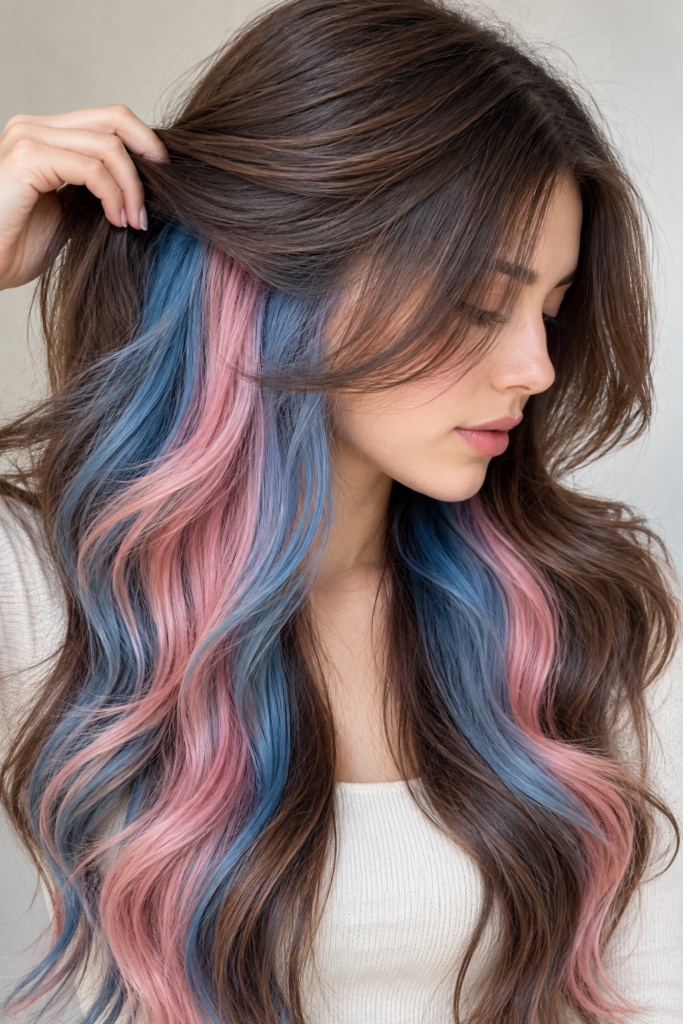
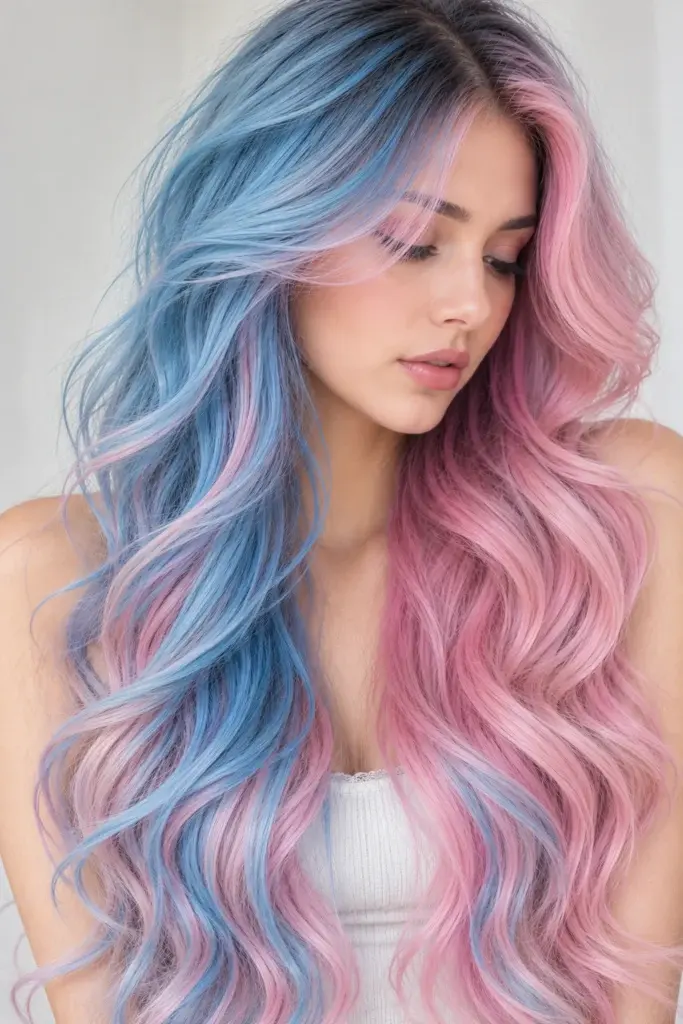
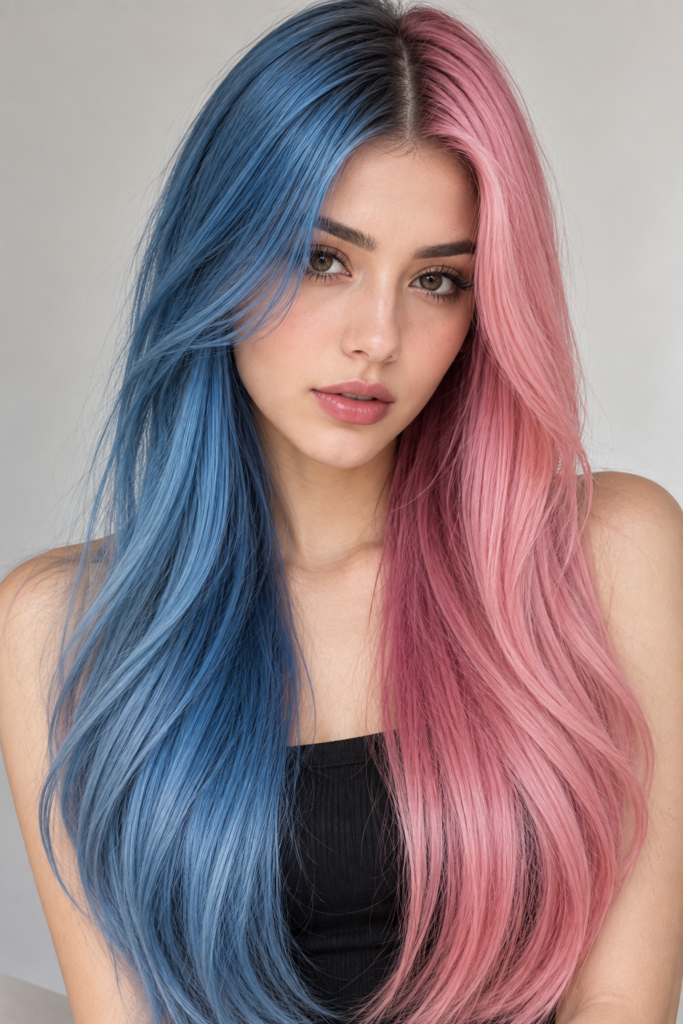
5. Blue and Pink Split-Dye Hair
Split-dye hair makes the color contrast impossible to miss. The hair is divided into two main sections, with one side colored blue and the other pink.
A center part works particularly well because it makes the two shades visually balanced. You can choose muted colors for a softer interpretation or go for highly saturated shades when you want the contrast to become the main feature.
The beauty of split dye is its graphic quality. It looks striking even when the hair is worn straight, making it a good choice for showing off the color placement clearly.
Styling tip: Keep the part clean and intentional so the two color sections remain visually distinct.
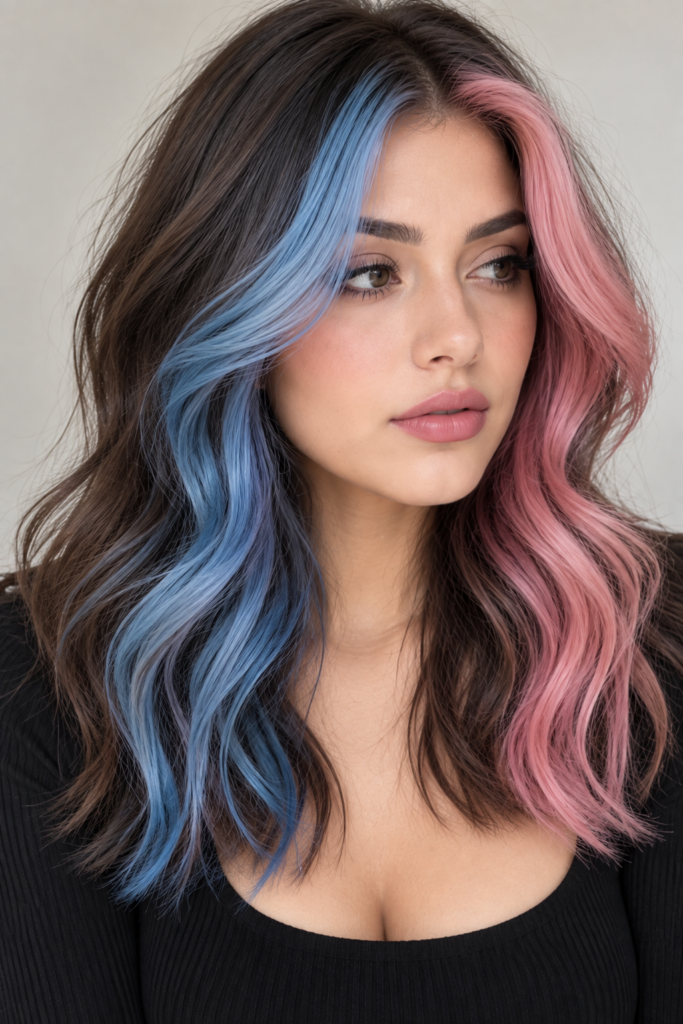
6. Blue and Pink Money Piece Hair
A blue and pink money piece focuses color around the front sections of the hair, creating a face-framing effect. You can keep most of the hair a deeper or more neutral color and use blue and pink around the front for a smaller commitment.
One side can feature blue while the other has pink, or both colors can be blended into the front pieces. The contrast becomes especially visible when the hair is tucked behind the ears or styled away from the face.
Styling tip: Choose shades that complement your existing base color so the face-framing pieces feel intentional rather than disconnected.
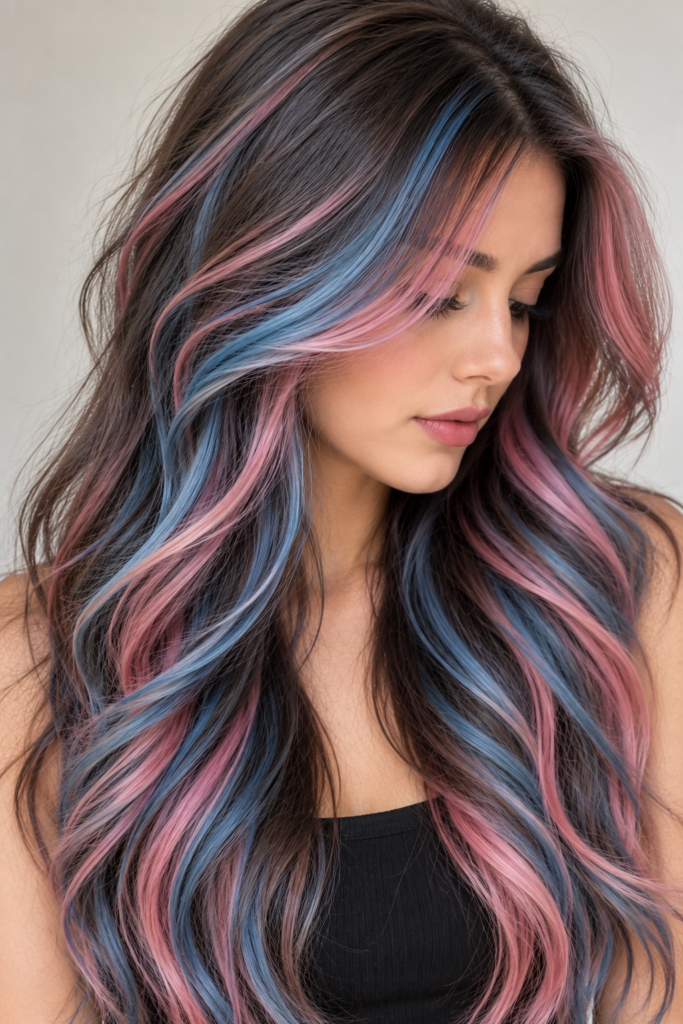
7. Blue and Pink Highlights
Blue and pink highlights are an easy way to distribute color throughout the hair without creating two large blocks. Fine or medium sections of each shade can be placed across the head for a dimensional result.
For a softer look, use pastel shades against a light base. If you prefer more contrast, vivid blue and pink highlights stand out beautifully against dark hair. You can also vary the thickness of the sections to keep the finished color from looking too uniform.
Styling tip: Ask for varied placement rather than perfectly identical stripes for a more natural-looking distribution.
8. Blue and Pink Underlayer Hair
Blue and pink underlayer hair places the colorful shades underneath the main layer of hair. It is similar to peekaboo coloring but can cover a more deliberate, substantial section of the lower layers.
This technique looks especially interesting with medium or long hair because the movement of the top layer reveals flashes of blue and pink. A dark base can make the colors look more dramatic, while a lighter base creates a softer contrast.
Styling tip: Try a ponytail or half-up style when you want the underlayer to become the main feature.
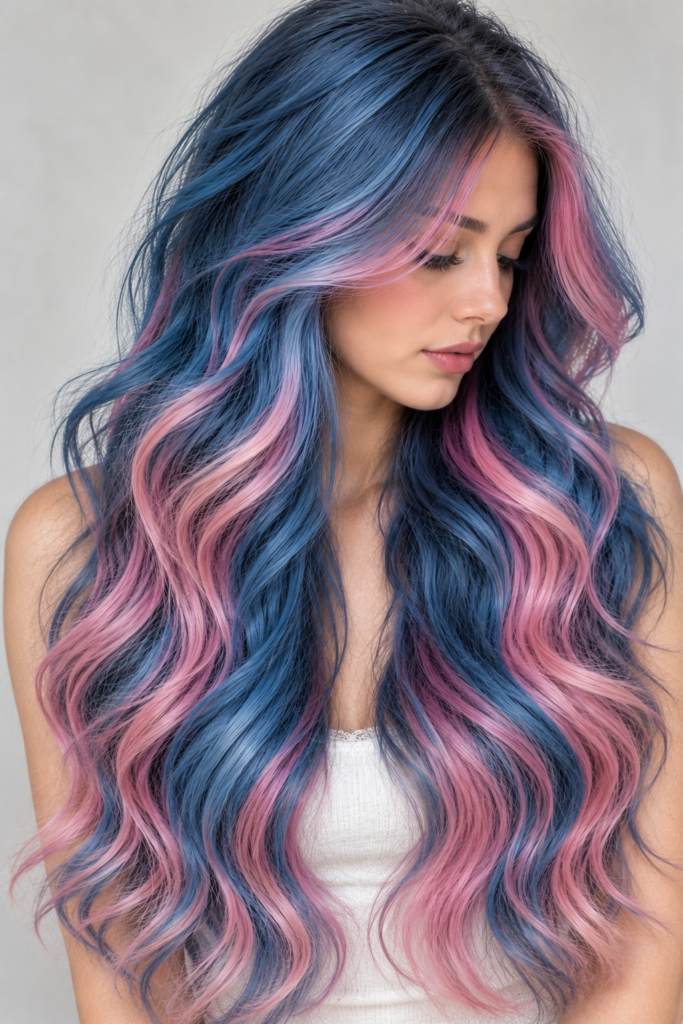
9. Blue and Pink Mermaid Hair
Blue and pink mermaid hair combines multiple flowing shades to create an ocean-inspired effect. Rather than dividing the hair into equal halves, the colors can ripple through the lengths in overlapping sections.
Start with blue as the dominant shade and weave pink through the mid-lengths and ends. Adding slightly different tones of blue can give the hair more depth while keeping pink as the contrasting accent.
Long waves work particularly well because they make the color transitions look fluid and dimensional.
Styling tip: Keep the wave pattern loose rather than tightly curled so the different shades remain visible.
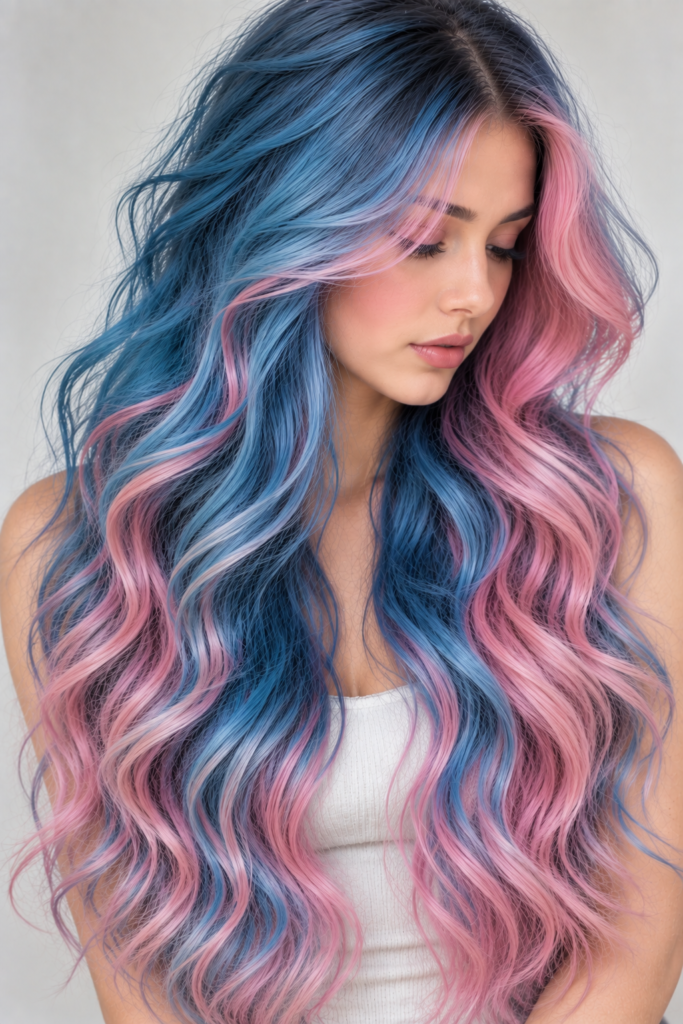
10. Blue, Pink and Purple Hair
Adding purple creates a bridge between blue and pink, allowing the three colors to flow together more naturally. Instead of treating purple as a separate block, use it between blue and pink to create smoother transitions.
This combination works with both pastel and vivid shades. For a dreamy version, use lavender with powder blue and soft pink. For something more dramatic, pair deep violet with saturated blue and bright pink.
Styling tip: Use purple as a transition shade where blue and pink meet instead of distributing all three colors equally.
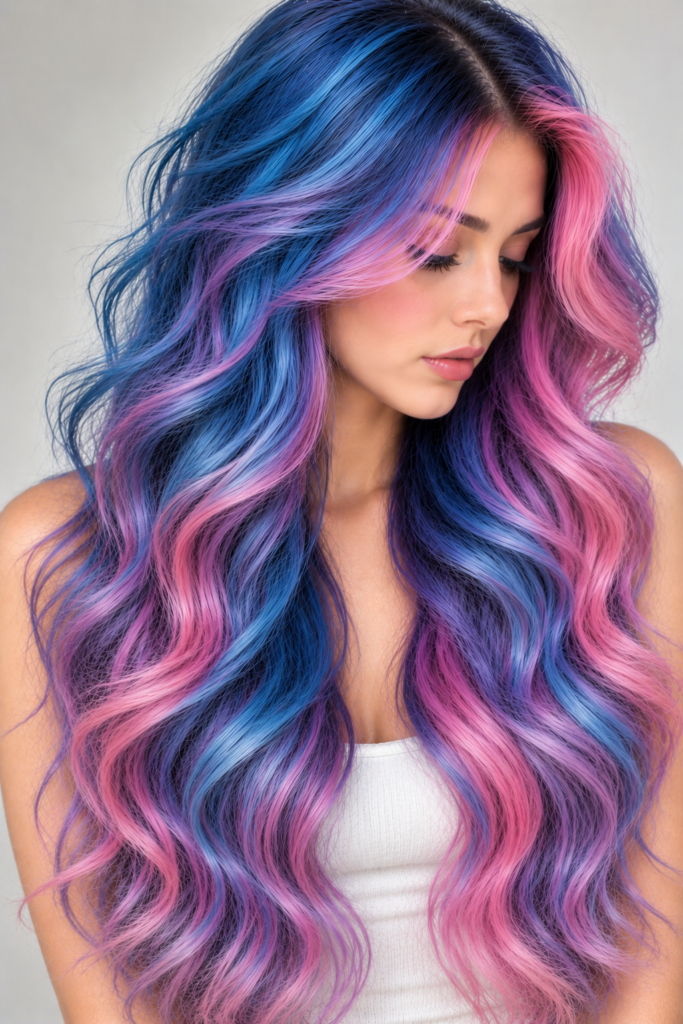
11. Electric Blue and Hot Pink Hair
Electric blue and hot pink create a much bolder version of the trend. The saturated shades have strong contrast, making them ideal if you want the hair color to become the main part of your look.
You can use electric blue as the base and place hot pink through selected sections, or divide the colors into larger panels. Straight hair makes the contrast particularly graphic, while waves create more movement between the shades.
Styling tip: Keep the haircut relatively clean and simple if you want the vivid colors to remain the focus.
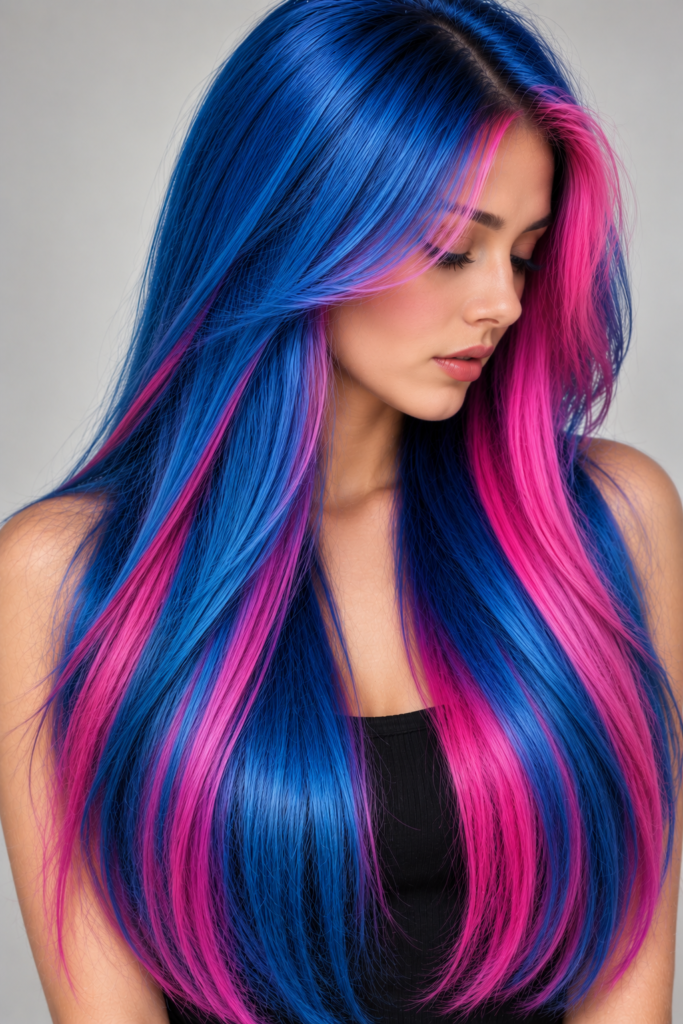
12. Baby Blue and Soft Pink Hair
Baby blue and soft pink hair gives the color combination its most delicate interpretation. The shades are light, airy, and easy to blend into a dreamy pastel palette.
Instead of using strong contrast, let the two colors overlap gently through different sections. A soft pink base with baby-blue pieces can look subtle, while a baby-blue base with pink ends creates a slightly stronger color transition.
Loose curls or soft waves help reflect light across the pastel shades.
Styling tip: Keeping the colors close in intensity helps maintain the soft, blended appearance.
FAQs About Blue and Pink Hair
Is blue and pink hair a good color combination?
Yes, blue and pink work well together because they offer plenty of contrast while still allowing many different aesthetics. You can choose soft pastel shades for a subtle look or vivid blue and pink for a much bolder result.
What blue and pink hair style is easiest to customize?
Peekaboo hair, underlayer color, highlights, and money pieces are relatively flexible because the colors can be concentrated in selected sections rather than covering the entire head. The exact coloring process and suitability will depend on your starting hair color and condition.
Can blue and pink hair be pastel?
Yes. Pastel blue and pastel pink create a much softer version of the color combination. Baby blue, blush pink, lavender, and other pale shades can also be incorporated for a dreamy multi-color effect.
What hairstyle shows blue and pink hair best?
Loose waves, layered styles, braids, ponytails, and half-up hairstyles can all reveal different color placements. Ombré and balayage are especially noticeable in waves because the movement helps show the transition between shades.
Which blue and pink hair idea is best for a subtle look?
Peekaboo, underlayer, money-piece, and delicate highlight techniques allow you to introduce blue and pink without coloring the entire head. Pastel shades can make the result even softer.
How can I make blue and pink hair look more dimensional?
Use different placement techniques or related shades rather than applying two flat blocks of color. Balayage, highlights, ombré, and the addition of a transitional purple shade can create more visible depth.
Final Thoughts
Blue and pink hair does not have to mean choosing one bright shade and covering your entire head. The placement makes just as much difference as the colors themselves. A soft pastel combination can create an understated look, while split dye or electric blue and hot pink delivers much stronger contrast.
If you are saving ideas before your next color appointment, consider how much color you actually want, where you want it to appear, and whether you prefer soft blending or clearly separated sections. Save your favorite blue and pink hair ideas so you have a clear visual reference when planning your final look.