A good pink blush can make a makeup look feel instantly fresher without making it look overly done. From barely-there baby pink to rich berry tones, the right shade can add dimension, warmth, or a soft rosy flush while keeping your complexion looking naturally radiant. The trick is choosing a color and formula that work with your skin tone, undertone, and preferred finish.
These 20 pink blush ideas cover different shades, textures, finishes, and application styles, so you can find a look that fits everything from quick everyday makeup to a more polished evening face.
1. Soft Baby Pink for a Fresh-Faced Look
Baby pink blush is a lovely choice when you want cheeks that look delicate, bright, and naturally flushed. Its soft color works especially well with minimal makeup because it adds definition without becoming the focal point.
For a subtle result, use a small amount on the apples of the cheeks and blend the edges toward the temples. Fair complexions can usually wear very pale pinks beautifully, while medium and deeper skin tones may prefer a more saturated baby pink so the color remains visible.
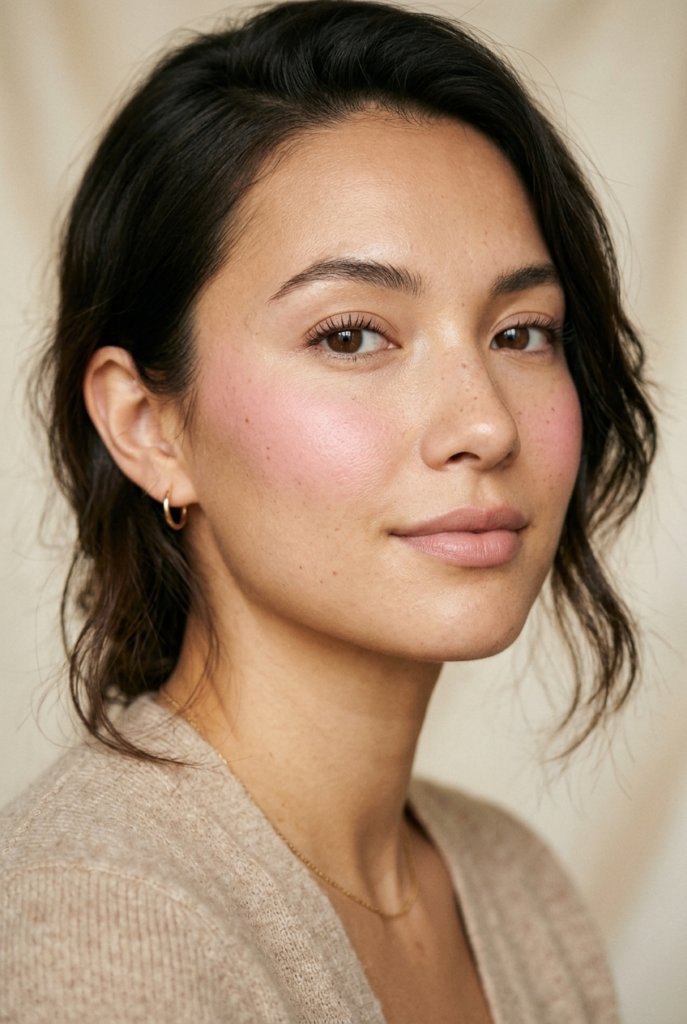
2. Rosy Pink for Naturally Flushed Cheeks
Rosy pink is one of the easiest shades to reach for when the goal is a believable cheek flush. It sits between delicate pink and deeper rose, giving the complexion a little more color while still looking wearable.
Try placing it slightly higher on the cheeks rather than directly underneath the cheekbones. This placement can give the makeup a lifted appearance while keeping the center of the face fresh and lively.
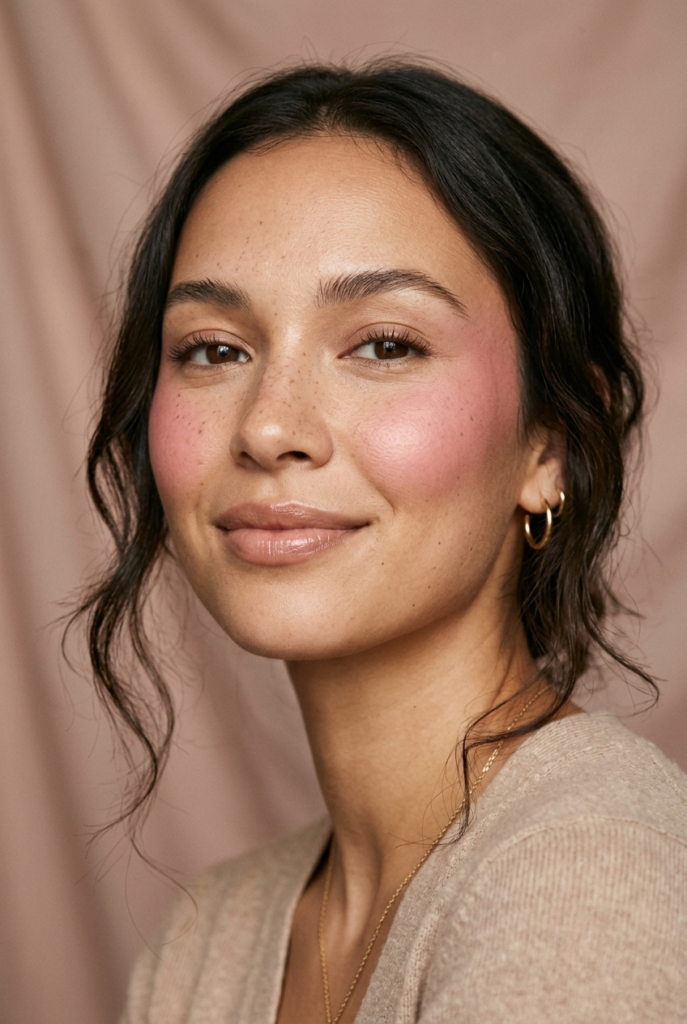
3. Dewy Pink for a Luminous Finish
A dewy pink blush is ideal when you want the cheeks to catch the light rather than appear completely matte. Cream and liquid textures are particularly useful for creating this type of finish, and current beauty coverage continues to highlight radiant, buildable cream blush formulas.
Keep the rest of the complexion relatively restrained so the cheek glow looks intentional. Apply a thin layer first, then build only where more color is needed.
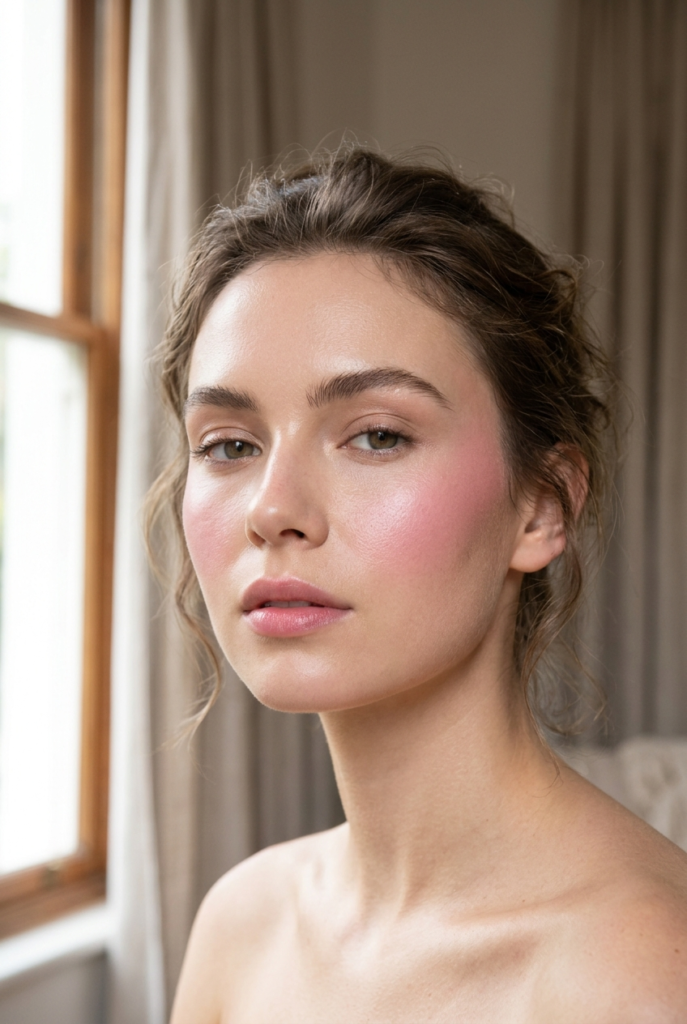
4. Creamy Pink for Seamless Blending
Pink cream blush is a practical option when you prefer makeup that melts visually into the complexion. Cream formulas can be applied with fingers, a sponge, or a brush, making them flexible for different routines.
Start with a tiny amount and press it into the skin instead of immediately sweeping on a heavy layer. This makes it easier to control intensity and maintain a natural finish.
5. Liquid Pink for Buildable Color
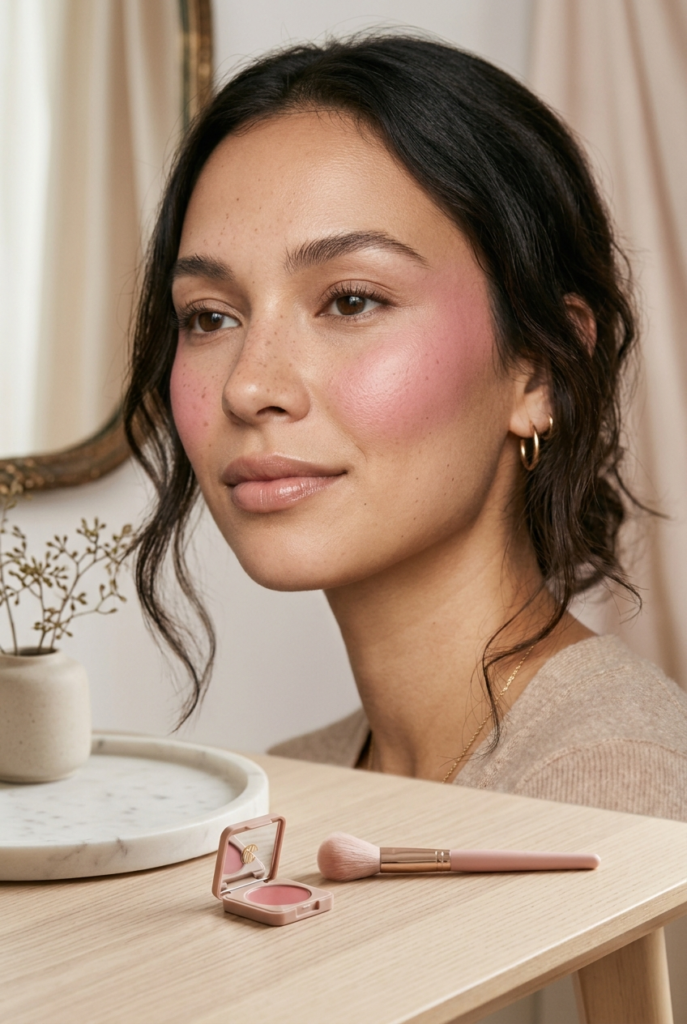
Pink liquid blush can create anything from a sheer wash to a stronger statement cheek, depending on how much you apply. Because liquid formulas vary considerably in pigmentation and finish, start with a very small amount and build gradually.
For everyday makeup, place a dot or two high on each cheek and blend quickly. If you want stronger color, add another thin layer rather than one large application.
6. Soft Pink Powder for Easy Everyday Makeup
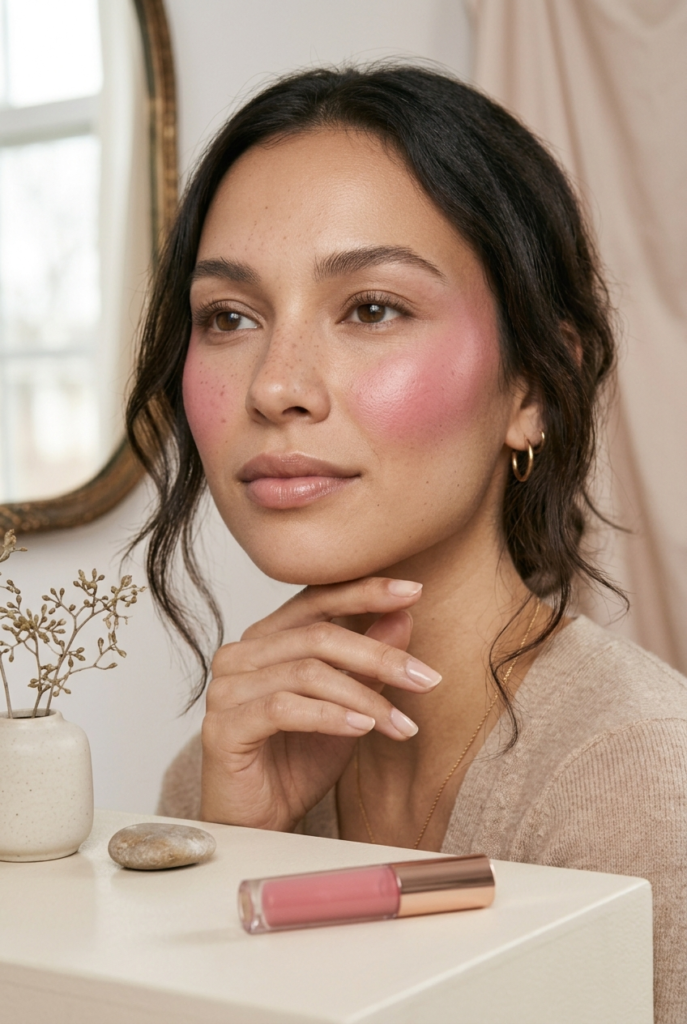
A soft pink powder blush remains a dependable choice if you prefer a traditional powder formula. It can be especially convenient for adding a controlled wash of color after foundation and setting products.
Use a fluffy brush and tap off excess before touching the cheeks. Light layers make it much easier to create a polished result without losing the natural dimension of the complexion.
7. Pink Blush Stick for Quick Application
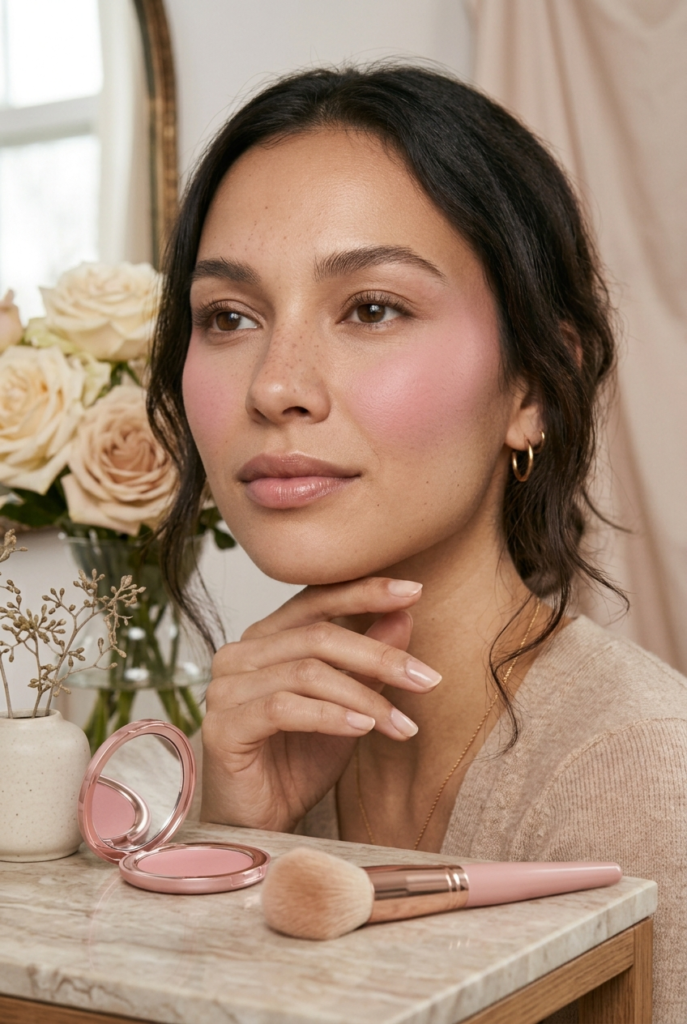
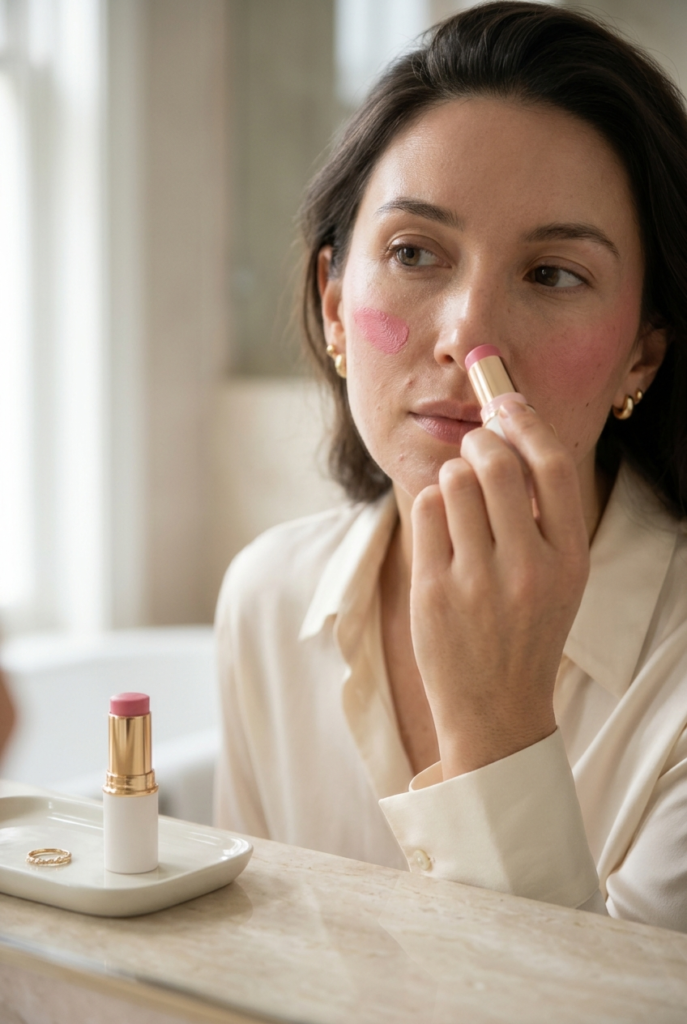
A pink blush stick is useful for fast makeup days because it can be applied directly to the cheeks and blended with fingers or a brush. It also makes a convenient option when you want a compact product for your handbag or travel makeup bag.
Instead of drawing a thick stripe, place a small amount on each cheek and diffuse the edges. This keeps the finish softer and easier to control.
8. Cool-Toned Pink for Fair Complexions
Cool-toned pink blush can complement fair skin when you want a crisp, rosy effect. Shades with blue, lilac, or cooler rose influences can create a delicate flush without adding too much warmth.
If your complexion is very light, begin with a sheer layer. Strong pigment can quickly become more dramatic than intended, so blending is just as important as the shade itself.
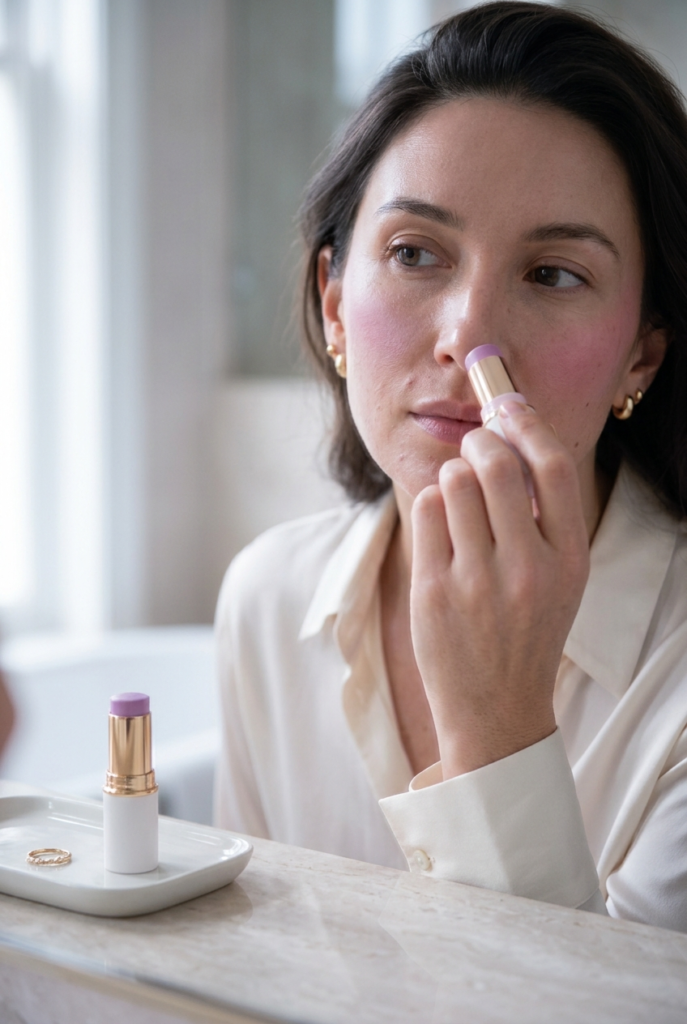
9. Warm Pink for a Sun-Kissed Flush
Warm pink blush has a slightly golden, peachy, or coral influence that can make the cheeks look lively and softly warmed. It is particularly useful when your overall makeup has warmer tones.
Pair it with peachy lipstick or bronzed eyes for a coordinated look. Keep the blush concentrated rather than spreading it too far across the face.
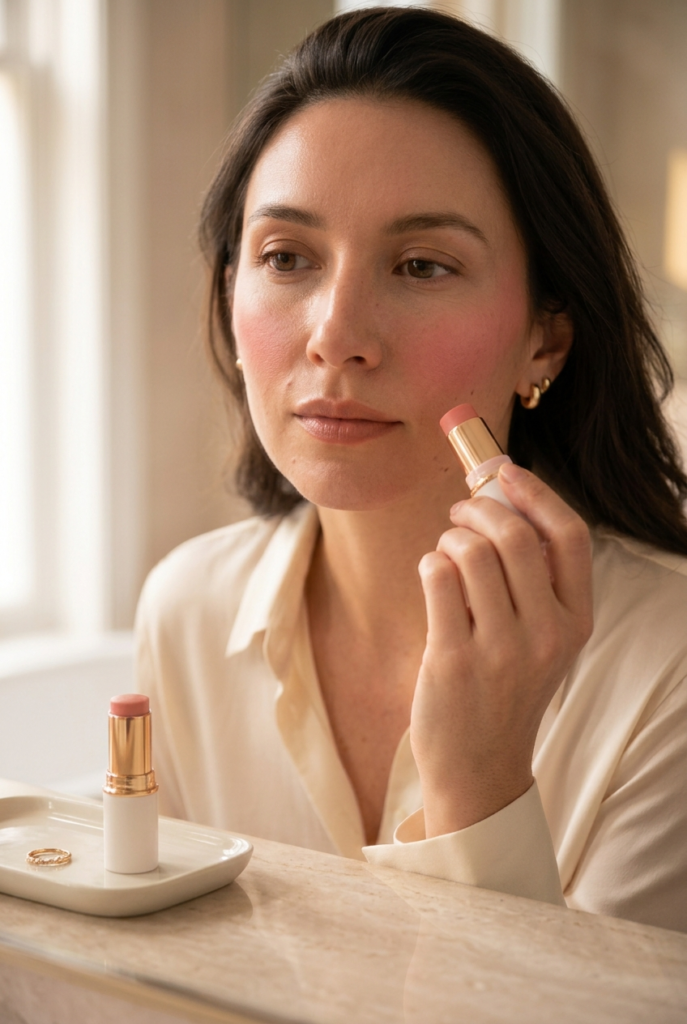
10. Mauve Pink for a Sophisticated Cheek Look
Mauve pink is a deeper, slightly muted alternative to bright pink. It works beautifully when you want your blush to look polished and understated rather than distinctly youthful or candy-colored.
This shade can also transition easily from daytime makeup to evening looks. Use a sheer layer for a soft result or build the color along the outer cheeks for greater definition.
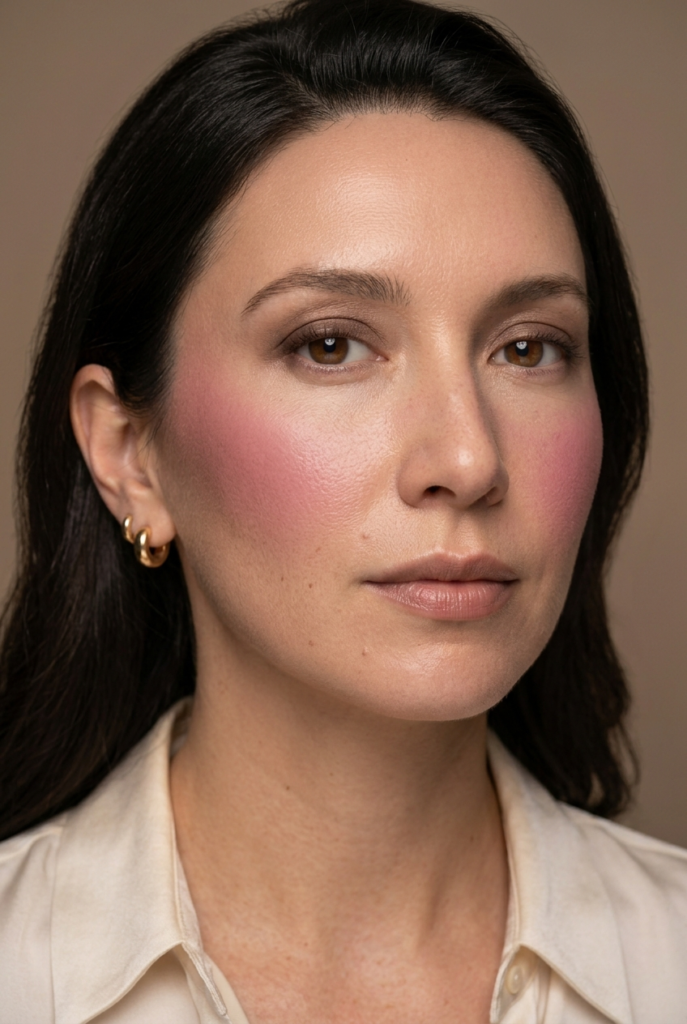
11. Sheer Pink for Minimal Makeup Days
Sheer pink is perfect when you want your complexion to look awake without appearing heavily made up. It is especially useful for quick routines involving tinted moisturizer, concealer, mascara, and lip balm.
The key is keeping the application transparent. A sheer formula should enhance the complexion rather than sit visibly on top of it.
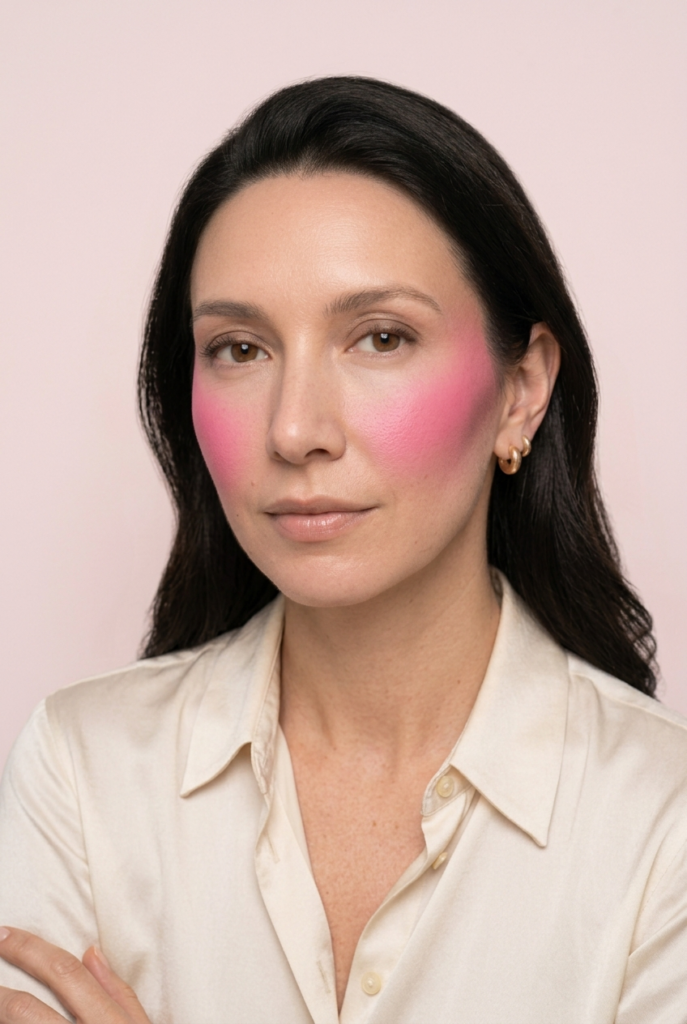
12. Bright Pink for a More Defined Flush
Bright pink blush is for days when you want the cheeks to stand out. A vibrant shade can bring energy to an otherwise simple makeup look, especially when balanced with neutral eyes and lips.
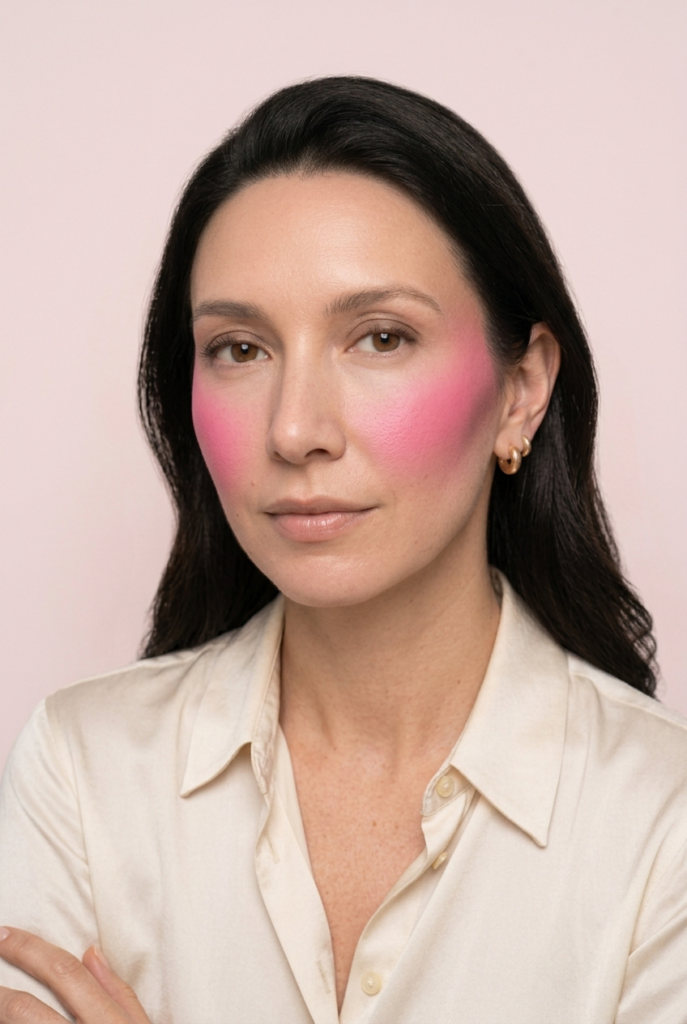
Start with less product than you think you need. Bright blush is much easier to build than to tone down, so apply a thin layer, blend thoroughly, and add more only if necessary.
13. Dusty Pink for Soft Everyday Makeup
Dusty pink offers a muted alternative for anyone who finds bright blush shades too intense. Its softened color works nicely with neutral wardrobes and understated makeup.
Try it with taupe eyeshadow, brown mascara, and a nude-pink lip for a cohesive everyday face. Because the shade is subdued, it is also easy to layer gradually.
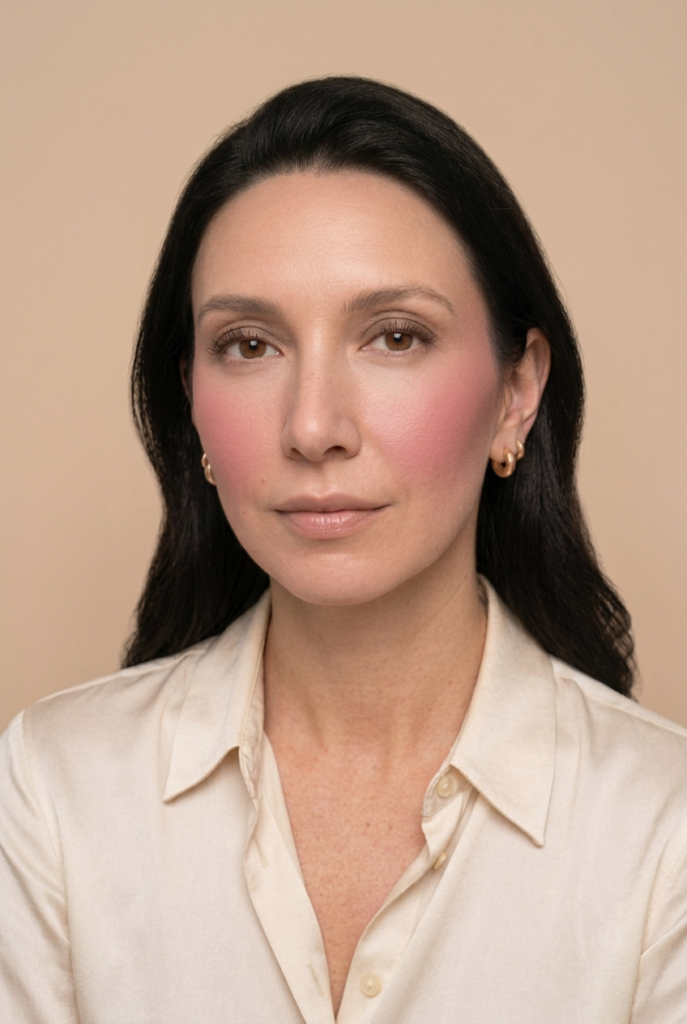
Suggested Filename: dusty-pink-blush-everyday-makeup.jpg
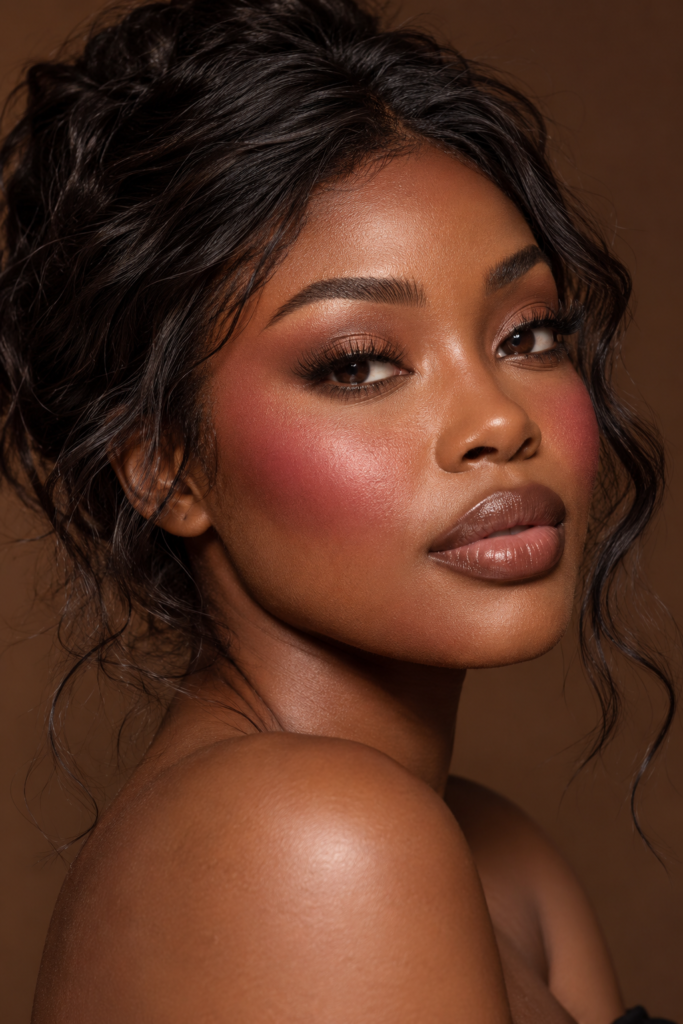
14. Berry-Pink Blush for Deeper Skin Tones
Berry pink offers more depth and saturation than pale pinks, making it a useful choice when you want visible color on deeper complexions. Current beauty coverage continues to highlight stronger pink blush looks across deeper skin tones, including liquid, cream, and powder formulas.
Instead of relying on a very pale pink and adding more layers, choose a shade with enough depth from the start. Apply a small amount and blend the edges so the color remains rich but seamless.
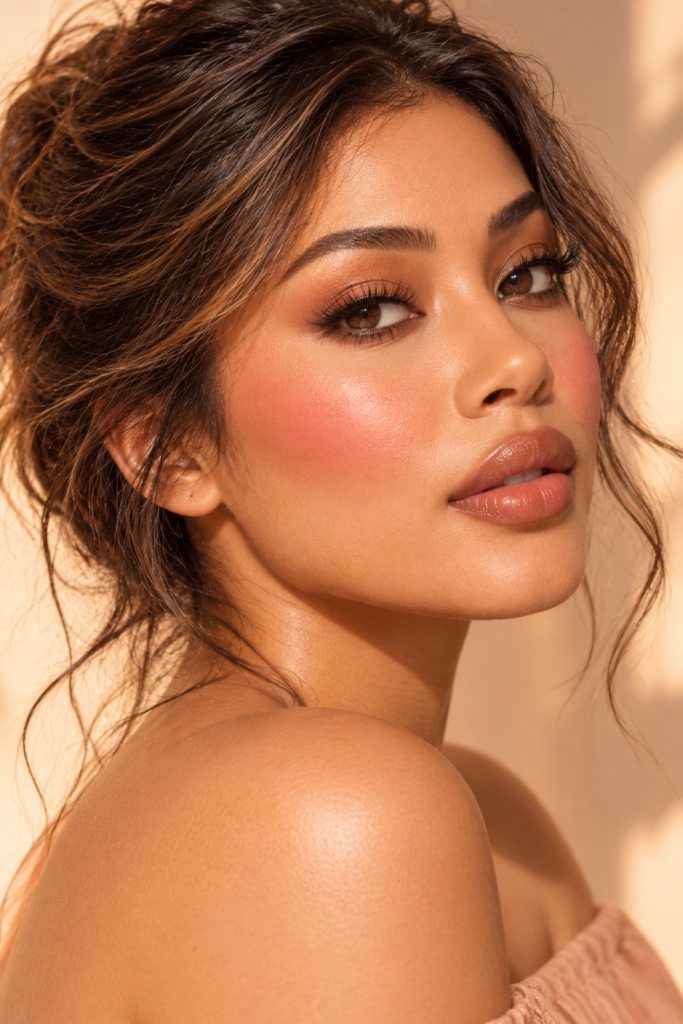
15. Pink-Coral Blush for Warm Undertones
Pink-coral sits between traditional pink and warmer coral, making it a useful choice when you want rosy cheeks with a little extra warmth. It pairs especially well with golden bronzer and warm nude lipstick.
For a balanced look, keep the blush concentrated on the upper cheeks and use a light hand around the edges. The goal is a soft transition rather than a hard patch of color.
16. Long-Lasting Pink Blush for Busy Days
When you need makeup to hold up through a long day, the formula matters as much as the shade. A long-lasting pink blush can be especially useful for workdays, events, travel, or occasions when frequent touch-ups are inconvenient.
Rather than applying a thick layer immediately, build the color in thin layers. If you combine formulas, make sure each layer blends properly before adding the next.
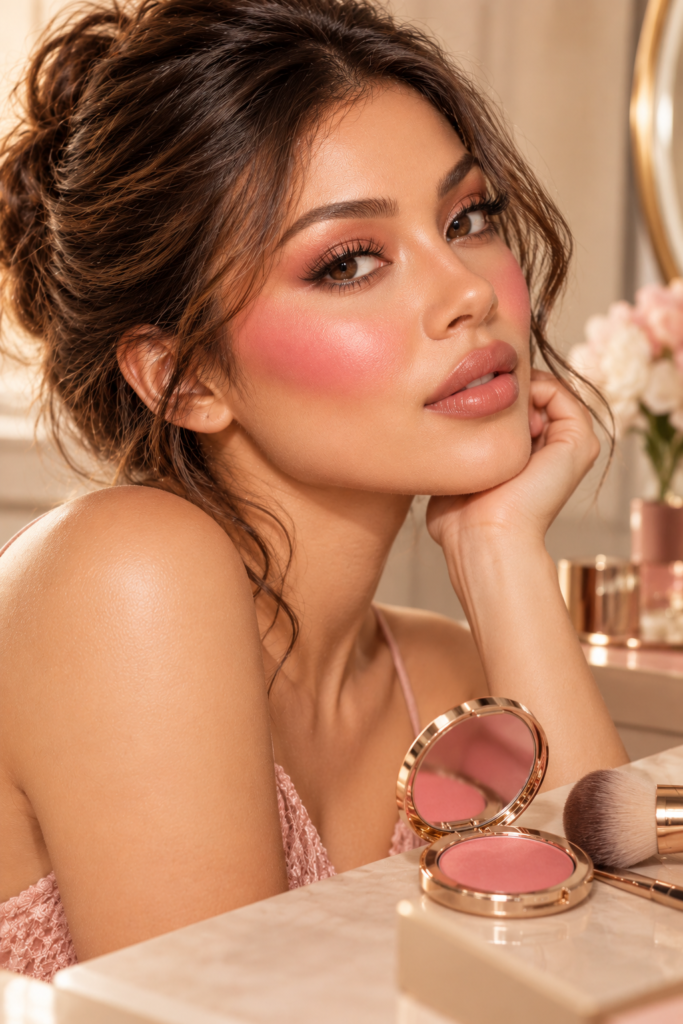
17. Buildable Pink Blush for Flexible Intensity
A buildable pink blush is useful if you do not always want the same level of cheek color. One light layer can work for everyday makeup, while additional layers can create a stronger evening look.
Apply the first layer across the area where you want the color to sit. Pause before adding more so you can judge the intensity against the rest of your face.
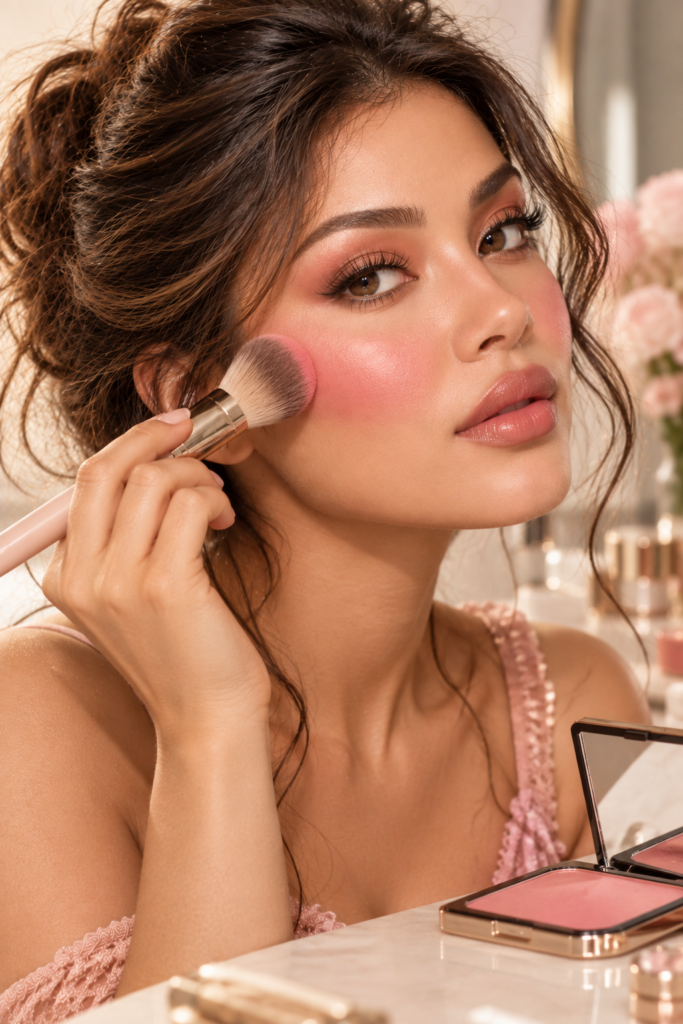
18. Natural Pink Blush for a Subtle Flush
Natural pink blush is the choice to reach for when you want people to notice your fresh complexion rather than your makeup. Look for shades that sit comfortably within your natural coloring and avoid applying too much pigment at the center of the face.
A soft, diffused edge is what makes this look convincing. Blend outward until there is no obvious starting or stopping point.
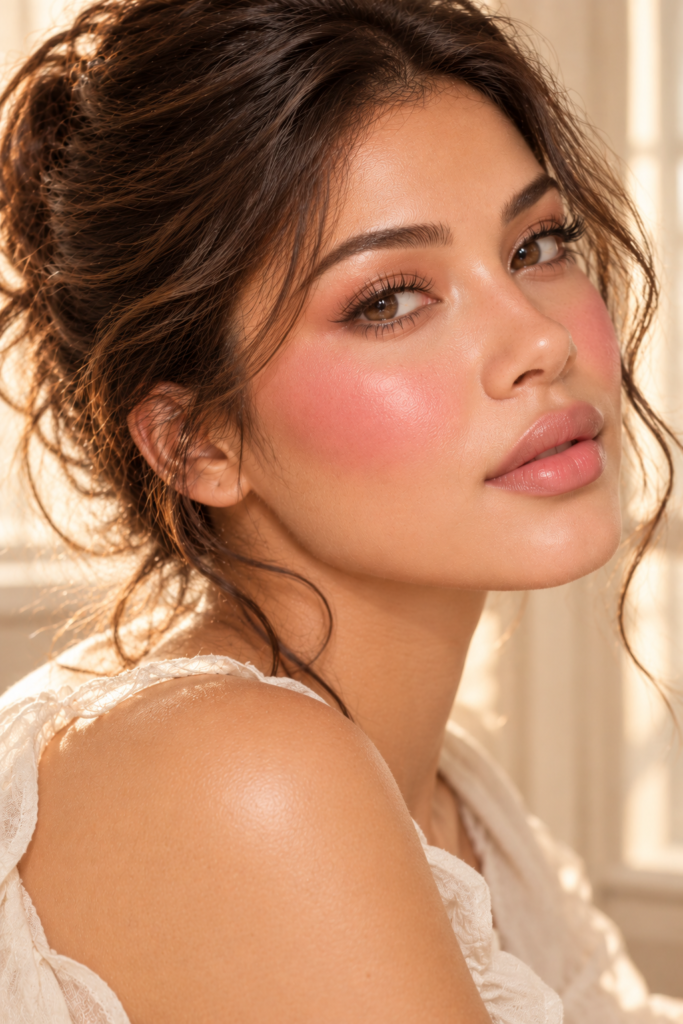
19. Pink Blush for Medium and Olive Skin
Medium and olive complexions can work beautifully with several pink families, but undertone makes a difference. Rosy, mauve, warm pink, and pink-coral shades can each create a different result.
If your skin has an olive cast, compare the blush against your complexion in natural light rather than relying only on how it looks under store lighting. A shade that appears neutral in a compact may pull warmer or cooler once applied.
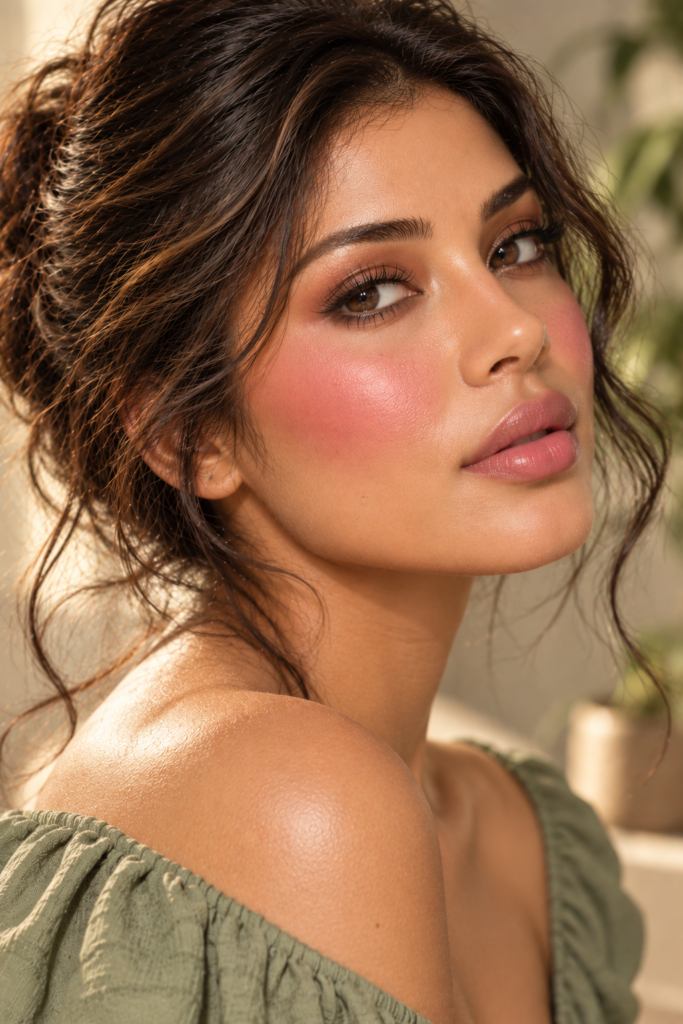
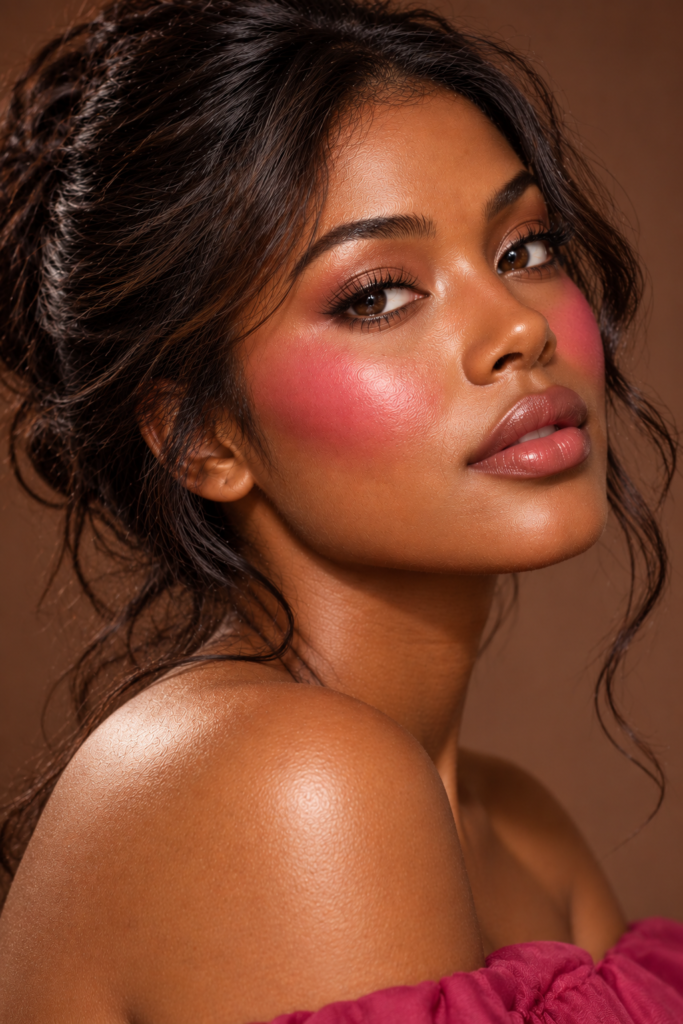
20. Pink Blush for Dark Skin and Richer Contrast
Deep complexions can carry vibrant pink beautifully, particularly when the shade has enough saturation and depth to remain visible. Rich berry, raspberry, fuchsia, and vivid pink families can create striking cheeks without looking chalky.
The goal is not simply using more product. Start with a shade that has enough pigment and build it carefully. A thin, well-blended layer can look much more natural than repeatedly piling on a pale formula.
How to Choose the Right Pink Blush
The best pink blush is not necessarily the brightest or most expensive option. Start by considering your skin depth, undertone, preferred finish, and makeup routine.
Fair complexions may enjoy soft baby pink, cool rose, or delicate mauve. Medium complexions have plenty of flexibility, from rosy pink to warm pink and pink-coral. Deeper complexions can explore saturated berry, raspberry, fuchsia, and richer pink shades.
Your preferred finish matters too. Cream and liquid formulas can create a fresh, luminous appearance, while powder formulas offer more traditional application and control. Current beauty coverage continues to describe cream blush as especially useful for buildable, radiant cheek color.
How to Apply Pink Blush for a Radiant Complexion
For the most natural result, begin with a small amount of product and build slowly.
Apply blush where you naturally want the cheeks to appear lifted, then blend the outer edges until there are no obvious lines. Cream and liquid formulas generally work well when pressed and blended into the complexion, while powder blush can be swept lightly over the cheeks with a soft brush.
If you are layering products, avoid applying too much of each formula. The goal is to create dimension without covering the natural texture of the skin.
Pink Blush Mistakes to Avoid
Using too much product at once: Start small, especially with highly pigmented formulas.
Ignoring undertone: A pink can look completely different depending on whether it leans cool, warm, mauve, coral, or berry.
Choosing a shade that disappears: Very pale pink may lack enough contrast on deeper complexions.
Skipping the blend: Even a beautiful shade can look harsh if the edges remain visible.
Mixing too many finishes: Layering can work, but too many creamy or powdery products may make the finish look heavier than intended.
Applying without checking natural light: Indoor lighting can change how pink, mauve, and coral shades appear.
Frequently Asked Questions
What pink blush is best for a radiant complexion?
A radiant complexion can work with many pink blushes, but cream and liquid formulas are useful when you want a luminous, skin-like finish. The best shade depends on your skin depth and undertone.
Which pink blush is best for fair skin?
Soft baby pink, cool pink, muted rose, and delicate mauve are useful starting points for fair skin. Apply lighter shades gradually to keep the finish balanced.
Can pink blush work on dark skin?
Absolutely. Deeper complexions can wear vibrant pink, raspberry, berry, and fuchsia shades beautifully. Choosing a sufficiently saturated shade is often more useful than simply applying more of a pale pink.
Is cream or powder pink blush better for a dewy look?
Cream formulas are generally a natural starting point for a dewy appearance because they can blend into the skin with a fresh finish. Powder can also look radiant when paired with a luminous complexion and applied lightly.
How do you make pink blush look natural?
Use a shade that complements your undertone, start with a small amount, place it thoughtfully, and blend the edges thoroughly. Build intensity gradually instead of applying a heavy layer immediately.
Final Thoughts
Pink blush has far more range than one soft rosy shade. Baby pink can create a delicate flush, mauve can make a makeup look more refined, berry can bring depth to darker complexions, and dewy cream formulas can give the cheeks a fresh luminous finish.
The easiest place to start is with the finish and intensity you actually enjoy wearing. Once you know whether you prefer sheer, dewy, satin, or more defined color, choosing the right pink becomes much simpler. Save this guide to Pinterest so you can come back when you are ready to try a new shade or makeup finish.