
Quiet luxury is less about filling a room with expensive-looking pieces and more about choosing details that feel considered. Warm neutrals, natural materials, classic shapes, soft lighting, beautiful textures, and uncluttered arrangements can create that polished look without making a home feel cold.
These 25 quiet luxury interior design ideas focus on different rooms, materials, architectural details, and styling approaches so you can find an idea that actually suits your home. From a marble-and-oak kitchen to a cozy reading nook and a small-space approach, each design offers a practical way to bring understated sophistication into your space.
1. Warm Ivory and Taupe Living Room
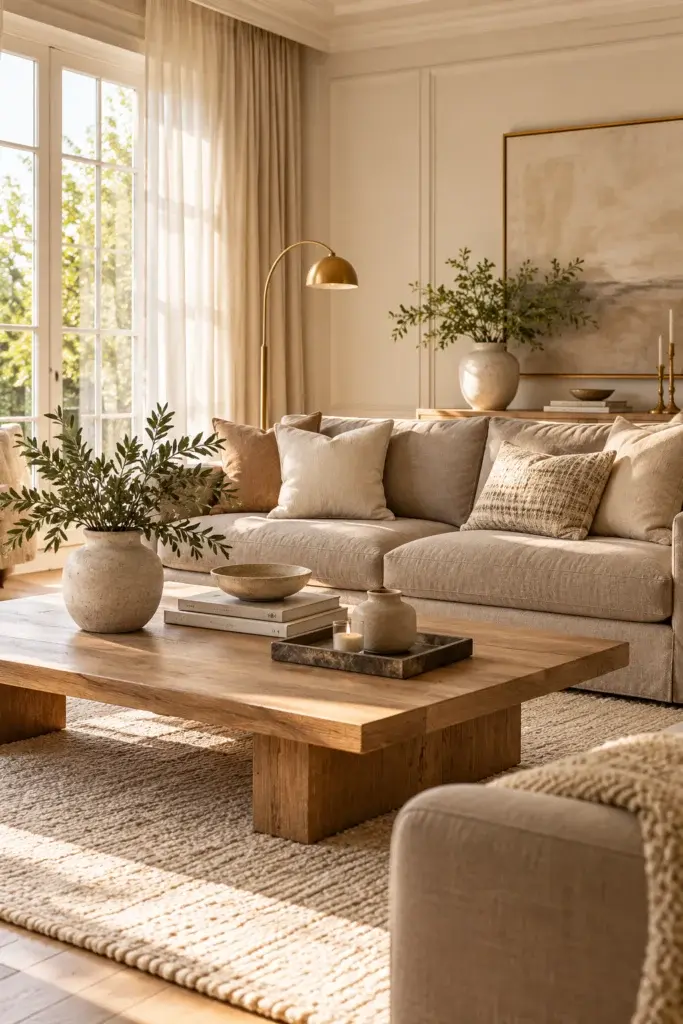
A warm ivory and taupe palette is an easy starting point for a quiet luxury interior. Instead of using several competing colors, layer creamy walls, a taupe sofa, natural wood furniture, and soft beige textiles. The subtle contrast keeps the room interesting without making it feel busy.
Add one or two pieces with character, such as a vintage-style rug, sculptural lamp, or stone coffee table. Keep decorative objects restrained so the larger shapes of the furniture remain the focus.
2. Walnut and Cream Contemporary Lounge
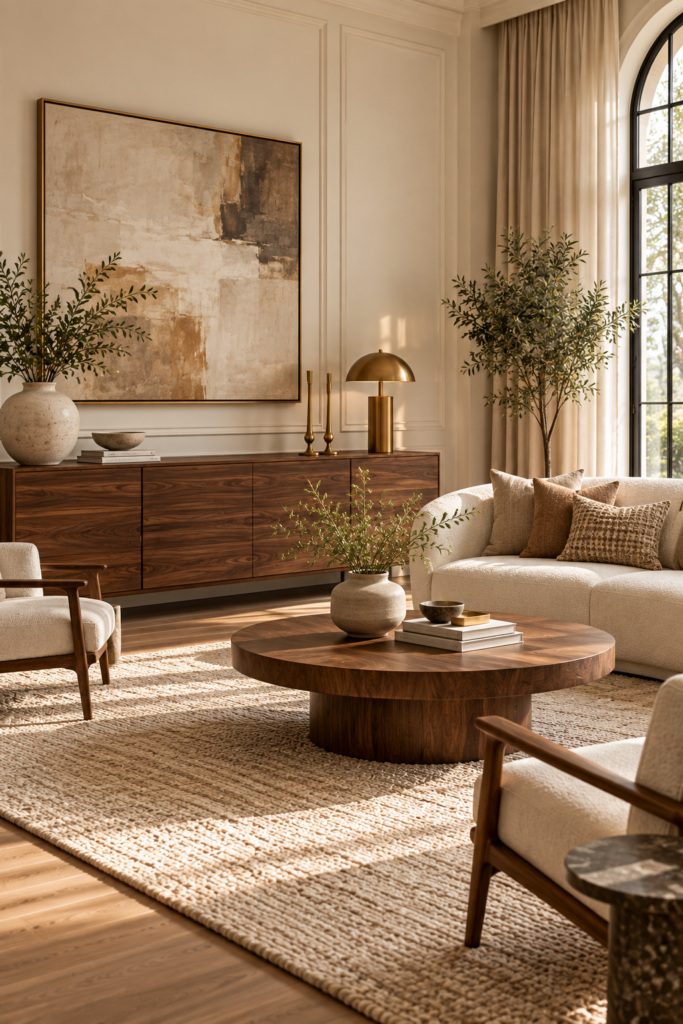
Walnut brings depth to a neutral room without relying on dark paint. Pair a rich walnut media console or sideboard with cream upholstery, off-white walls, and soft woven accessories.
The contrast between the warm wood grain and pale fabrics creates a sophisticated balance. Choose furniture with simple silhouettes rather than overly ornate pieces. A large abstract artwork in muted beige and brown can finish the room without becoming the main attraction.
3. Linen Upholstered Quiet Luxury Bedroom
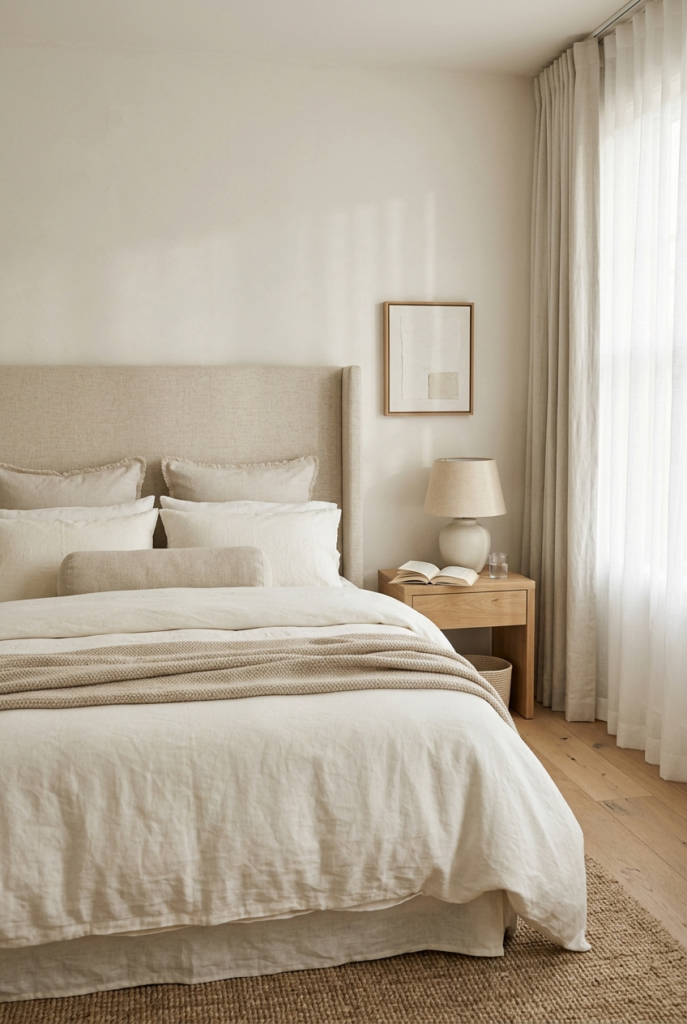
Linen is especially effective when you want a bedroom to feel refined but relaxed. Choose an upholstered headboard in oatmeal, beige, or soft stone and layer it with natural linen bedding.
Keep the palette close in tone, then introduce contrast through texture rather than strong colors. A wooden nightstand, ceramic table lamp, and simple framed artwork can provide enough detail. Avoid overcrowding the bedside tables because the calm feeling depends on visual breathing room.
4. Marble and Oak Kitchen
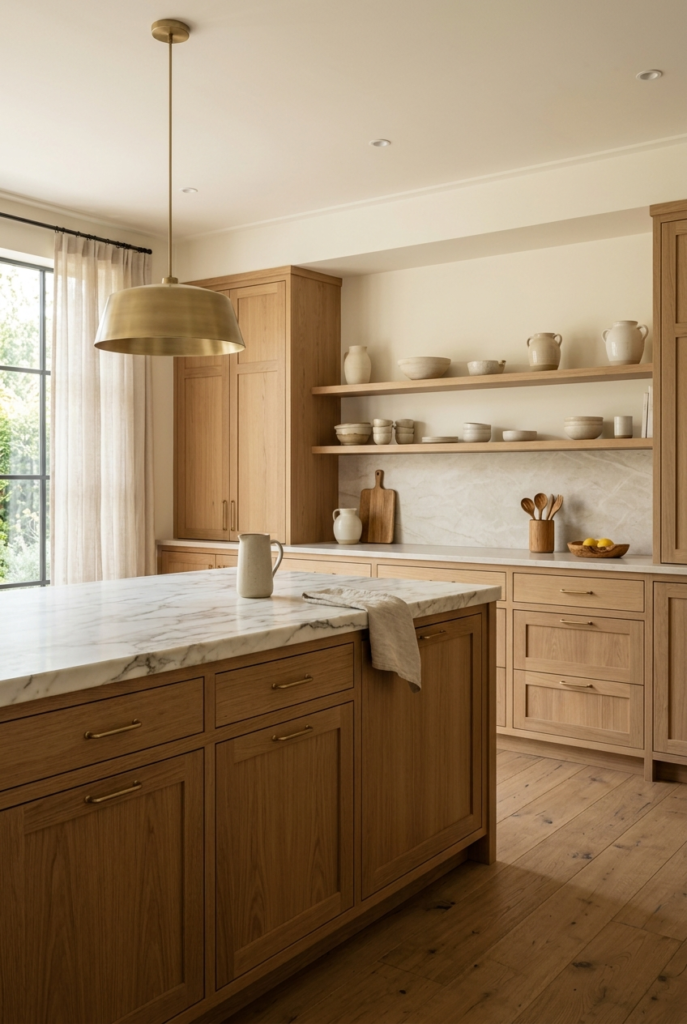
For a kitchen with a quiet luxury feel, combine natural oak cabinetry with a restrained stone surface. White or softly veined marble can work beautifully against warm wood because the materials provide contrast without introducing a busy color scheme.
Keep hardware understated, using simple brushed metal or aged brass handles. Open shelving should hold only a few useful and attractive pieces, such as handmade ceramics or a wooden cutting board.
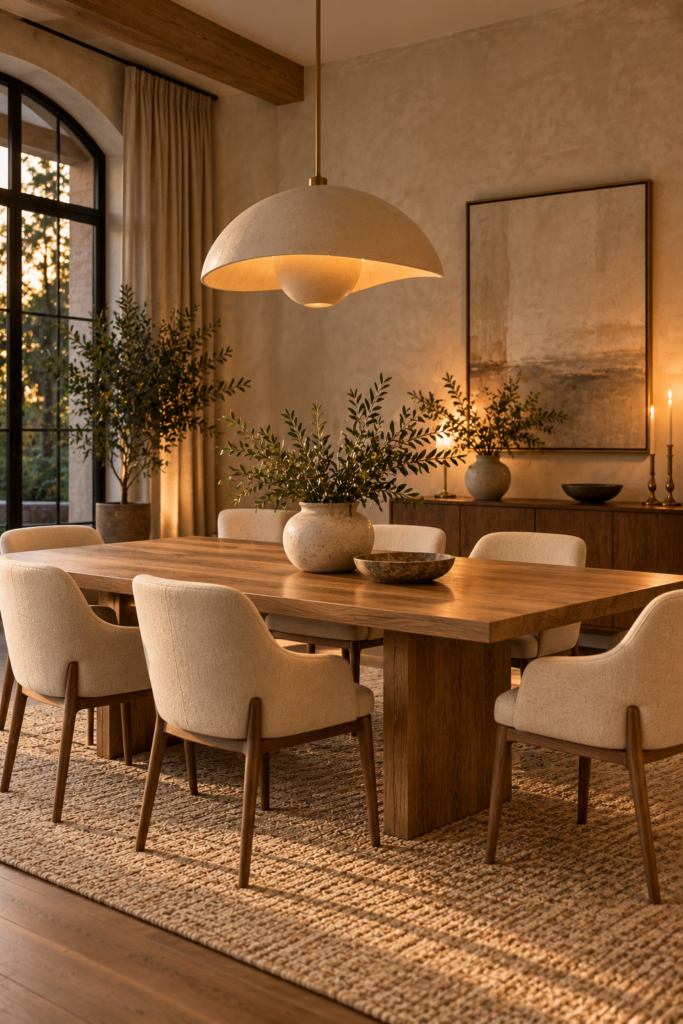
5. Elegant Quiet Luxury Dining Room
A dining room does not need elaborate decoration to feel luxurious. Start with a solid wood or softly finished dining table and surround it with comfortable upholstered chairs in cream, oatmeal, or muted taupe.
A large pendant light can define the center of the room while a simple piece of artwork gives the wall visual interest. For the table itself, use a low arrangement of greenery or a few handmade ceramics rather than a crowded centerpiece.
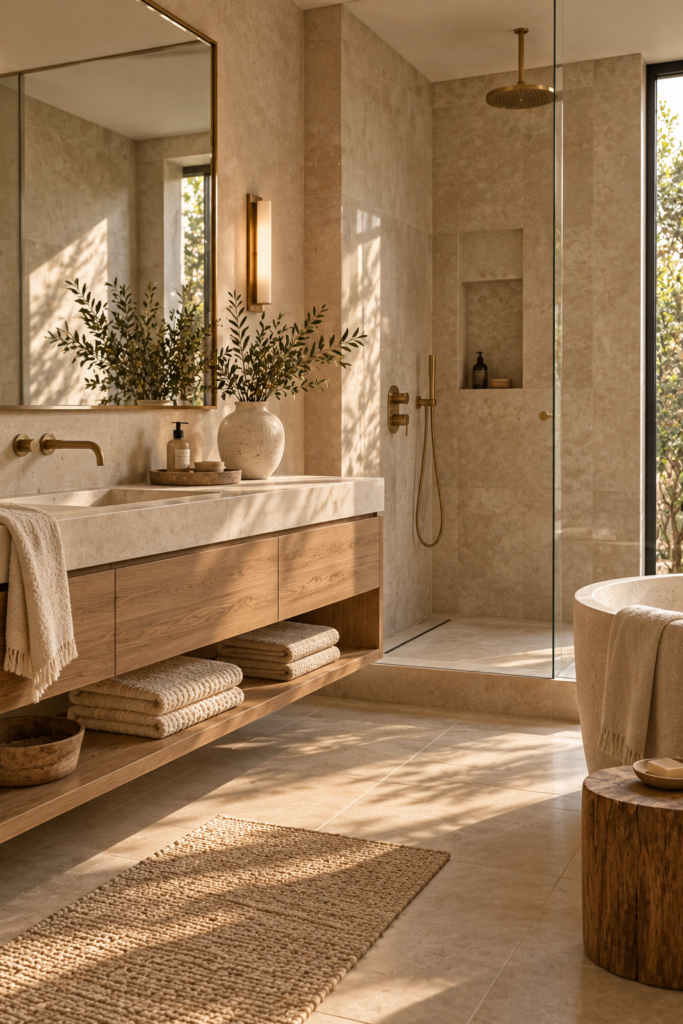
6. Spa-Like Neutral Bathroom
A quiet luxury bathroom can feel expensive through materials rather than decoration. Think warm stone, large-format tiles, soft beige walls, simple cabinetry, and minimal metal hardware.
A floating vanity can make the room feel lighter, while a frameless glass shower keeps the architecture visible. Add folded towels, a small stone tray, and one natural branch or plant for warmth.
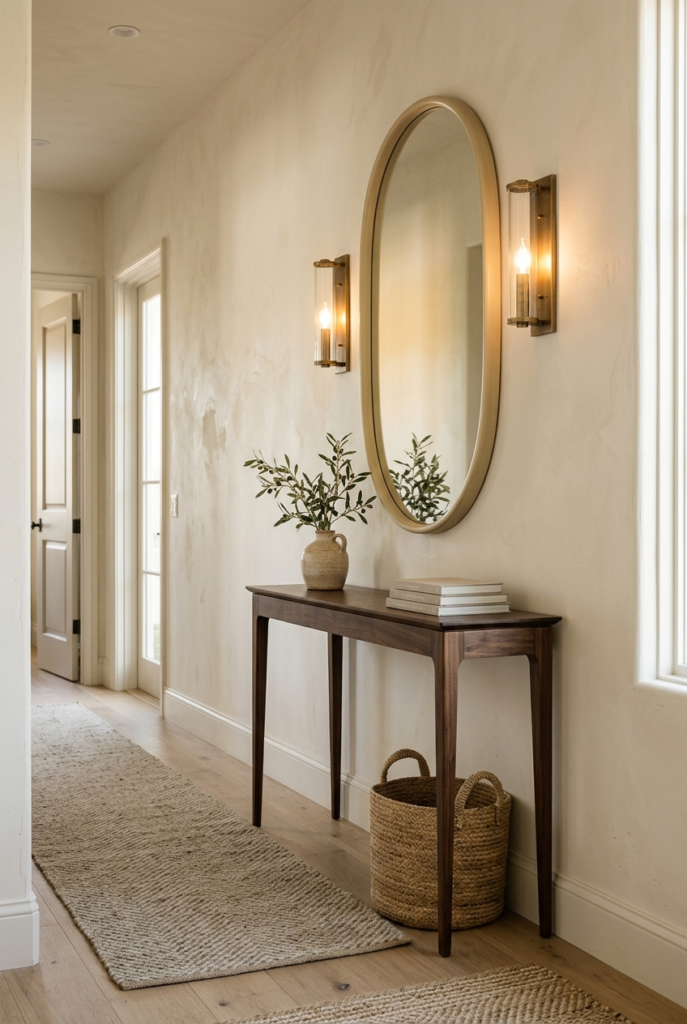
7. Quiet Luxury Entryway With a Console
The entryway sets the tone for the rest of the home. A slim wood console, oversized mirror, warm wall lighting, and a small ceramic arrangement can create an understated first impression.
Choose one substantial mirror rather than covering the wall with several small decorations. A woven basket underneath the console can also provide practical storage while keeping the space visually relaxed.
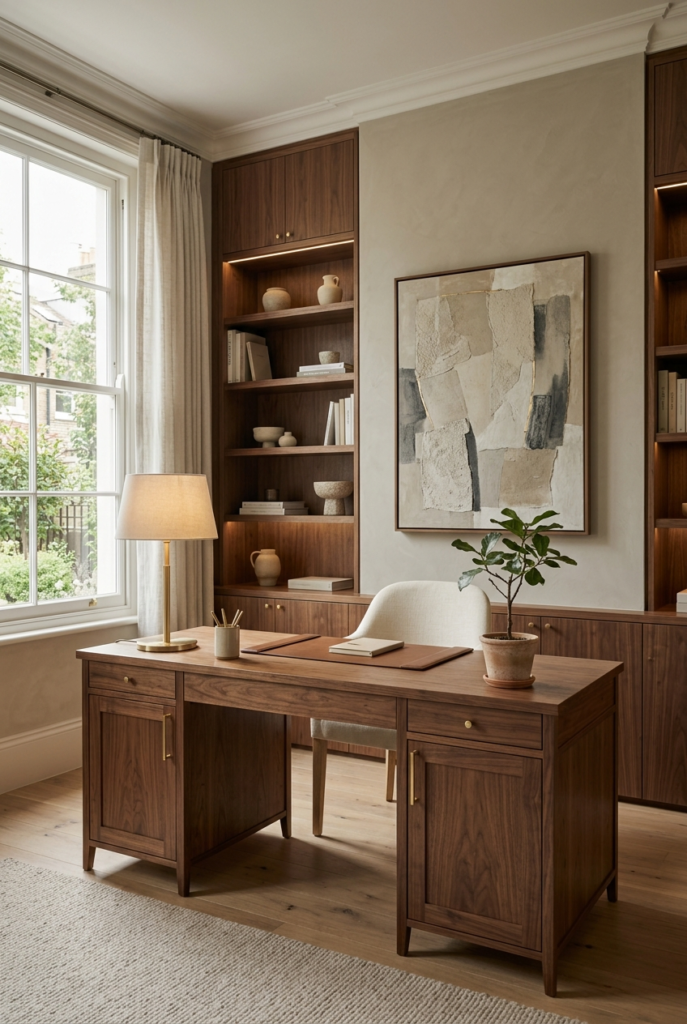
8. Sophisticated Home Office
Quiet luxury works particularly well in a home office because the aesthetic naturally encourages a clean, focused environment. Use a substantial wooden desk, comfortable upholstered chair, warm neutral walls, and one large artwork instead of many small decorations.
Closed storage can hide everyday clutter. Add a quality desk lamp and a small plant to make the room practical without losing its polished character.
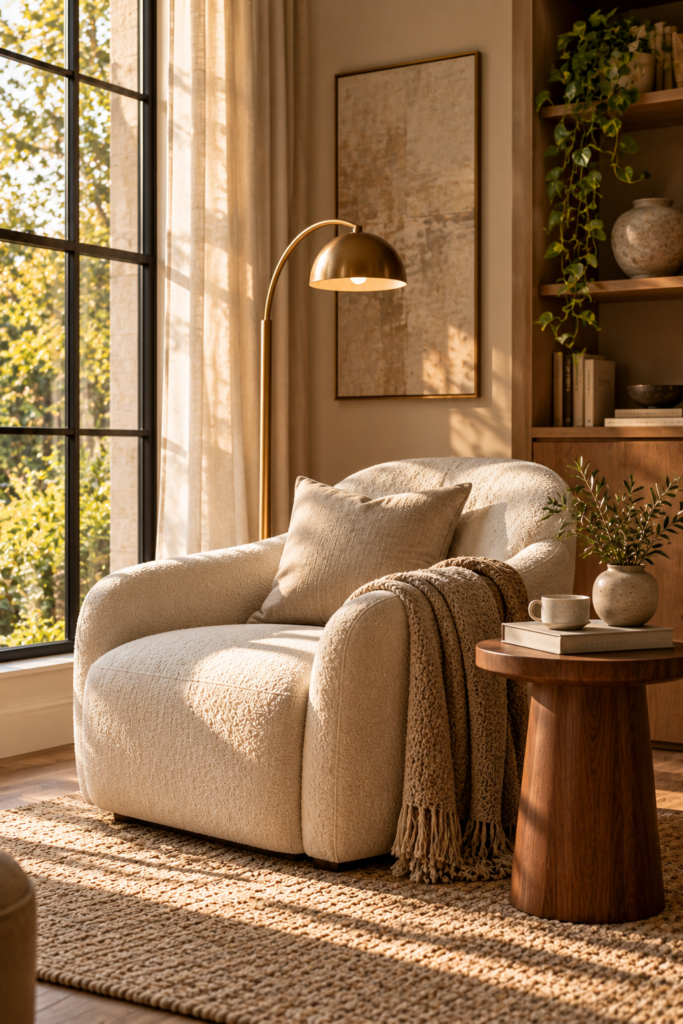
9. Cozy Quiet Luxury Reading Nook
A reading nook can bring a softer side of quiet luxury into an unused corner. Choose a comfortable upholstered chair in cream, camel, or muted olive and place it beside a small wooden side table.
A floor lamp with warm light makes the corner inviting in the evening. Add a textured throw and one or two books, but avoid turning the nook into a crowded display.
10. Travertine Coffee Table Styling
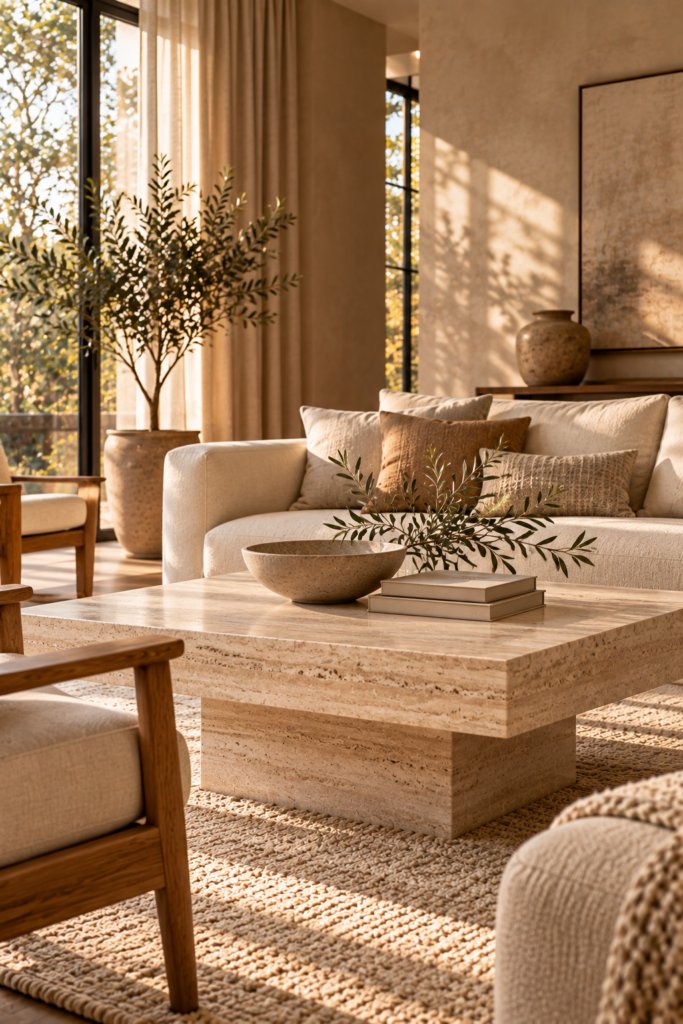
A travertine coffee table immediately introduces natural texture and an earthy focal point. Keep the surrounding furniture simple so the stone remains visible.
Style the surface with just a few objects: a low ceramic bowl, a small stack of neutral books, or a simple branch. The goal is not to make the table look staged with dozens of accessories. Its natural surface should do most of the visual work.
11. Natural Wood and Stone Interior
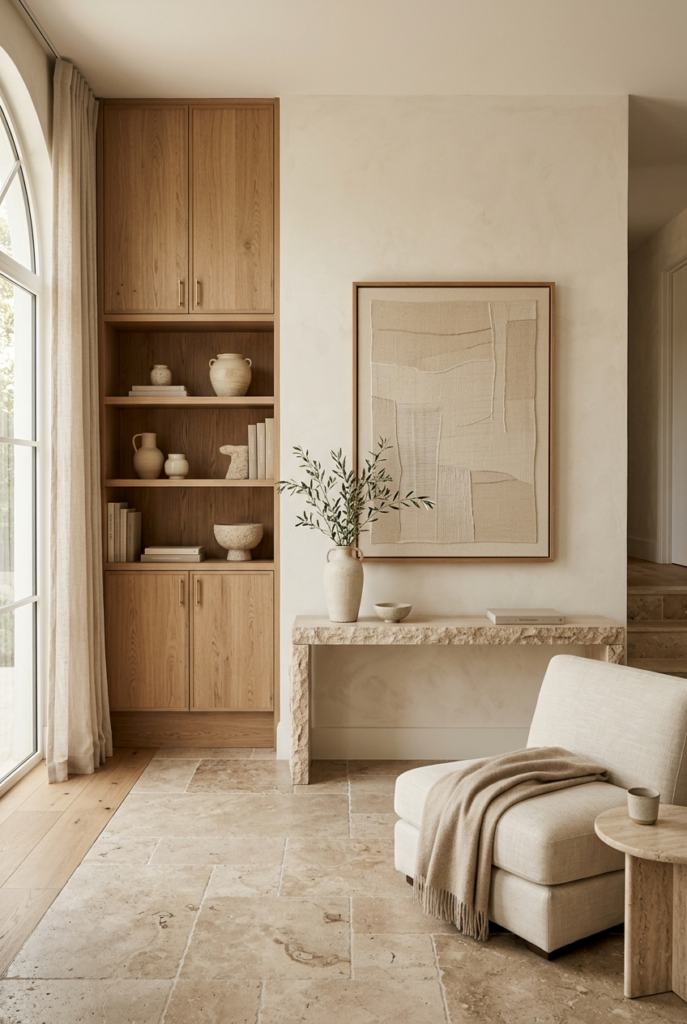
Combining natural wood and stone creates a strong foundation for understated luxury. Rather than matching everything perfectly, let the materials have slightly different tones and textures.
Try warm oak cabinetry with limestone, travertine, or softly veined stone. Keep fabrics muted and tactile so the hard surfaces feel balanced by softness.
12. Soft Greige Monochromatic Room
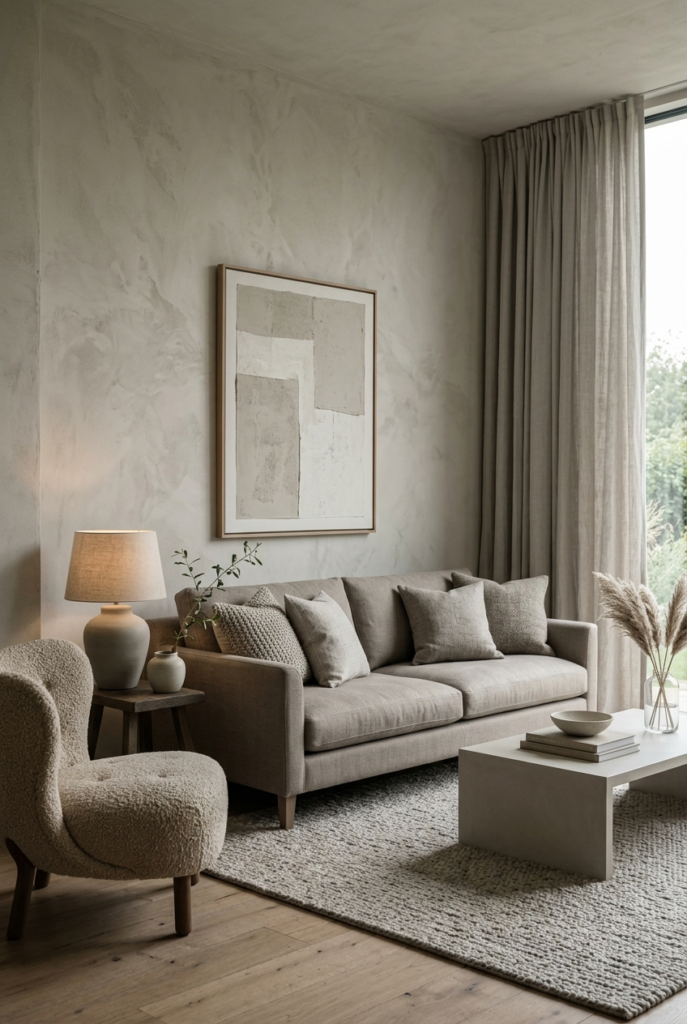
A monochromatic greige room proves that neutral does not have to mean boring. Use several shades of greige across walls, upholstery, curtains, rugs, and accessories.
The secret is varying the texture and depth. A matte wall finish can sit beside a woven rug, linen curtains, boucle chair, and smooth ceramic lamp. Because the colors are closely related, the materials become the main visual interest.
13. Bouclé and Linen Layered Interior
Layering fabrics can make a quiet luxury space feel comfortable rather than formal. Combine bouclé, linen, cotton, and wool in closely related shades.
For example, a cream boucle chair can sit beside an oatmeal linen sofa and a chunky wool throw. Keep patterns minimal so the room feels cohesive. Small changes in texture will give the eye enough detail without requiring bright colors.
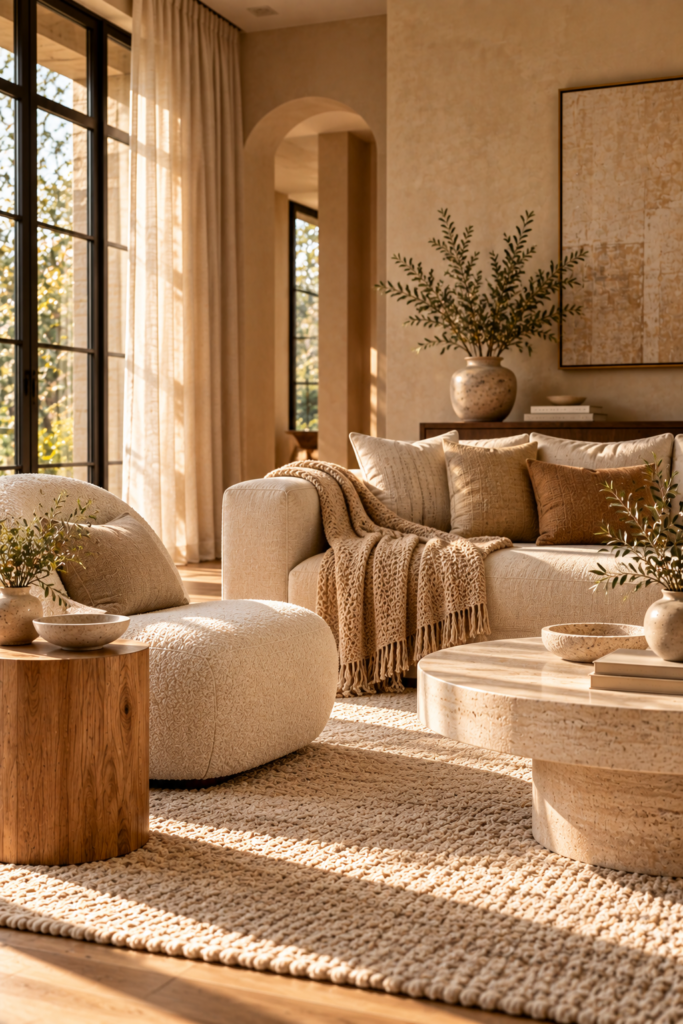
14. Classic Millwork With Modern Furniture
Traditional architectural details can make a contemporary room feel more established. Wall paneling, simple molding, or built-in cabinetry can provide that foundation.
Balance the classic architecture with modern furniture in simple shapes. This prevents the space from feeling overly traditional while preserving the character that makes the room memorable.
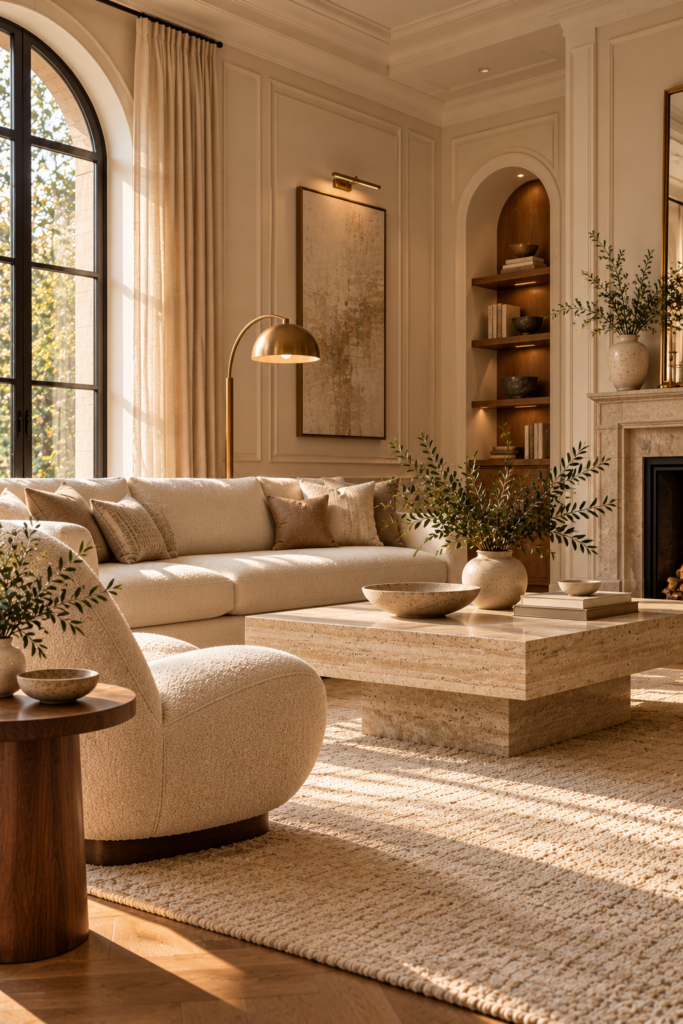
15. Arched Architectural Details
Arches can soften the geometry of a home and create a subtle architectural focal point. An arched doorway, built-in niche, or curved shelving unit can become the defining detail without needing elaborate decoration.
Keep the surrounding palette restrained. Cream plaster, natural oak, and soft stone work especially well with curved forms.
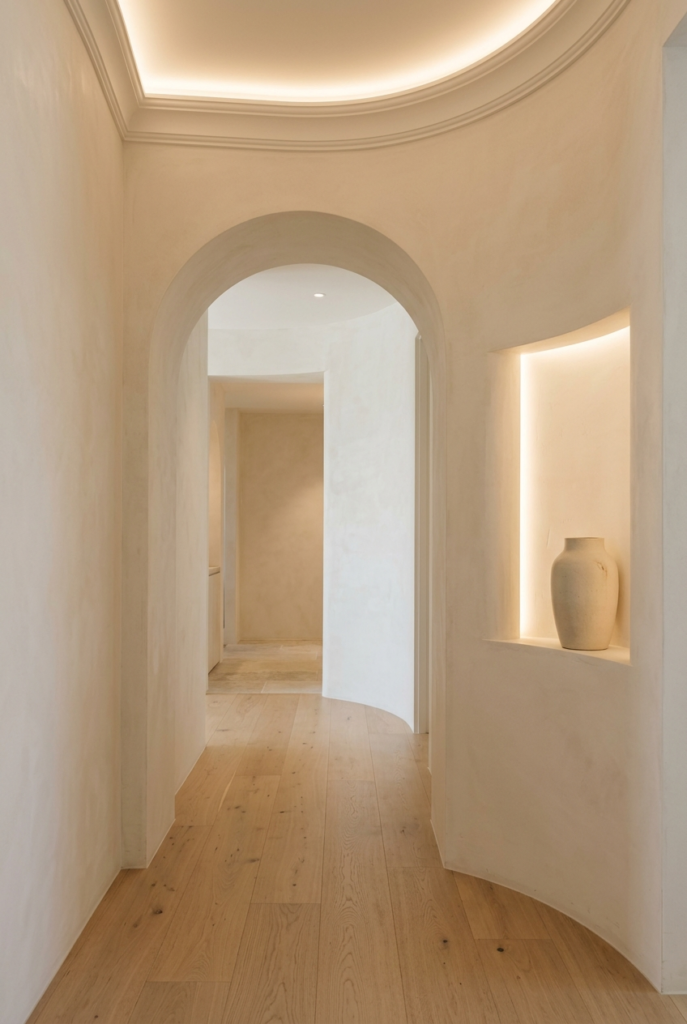
16. Statement Fireplace With Natural Stone
A natural-stone fireplace can serve as the architectural anchor of a quiet luxury living room. Instead of decorating the mantel heavily, allow the stone itself to provide character.
Choose surrounding furniture with clean lines and soft fabrics. A large neutral rug can connect the seating area while a single artwork or sculptural object provides just enough decoration.
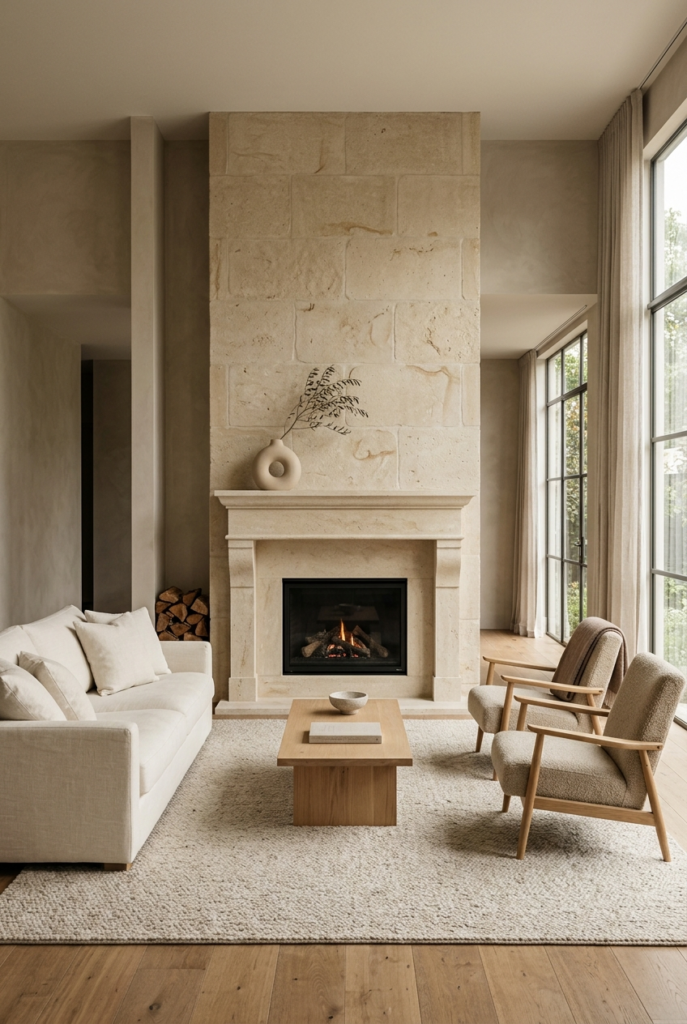
17. Antique and Contemporary Furniture Mix
Quiet luxury does not require every piece to look new. Combining one antique or vintage-inspired piece with contemporary furniture can give a room depth and personality.
Try an aged wooden cabinet beside a modern sofa, or place a vintage-style chair near a simple stone table. The key is balance: one character-rich piece can be enough to make the room feel collected rather than showroom-perfect.
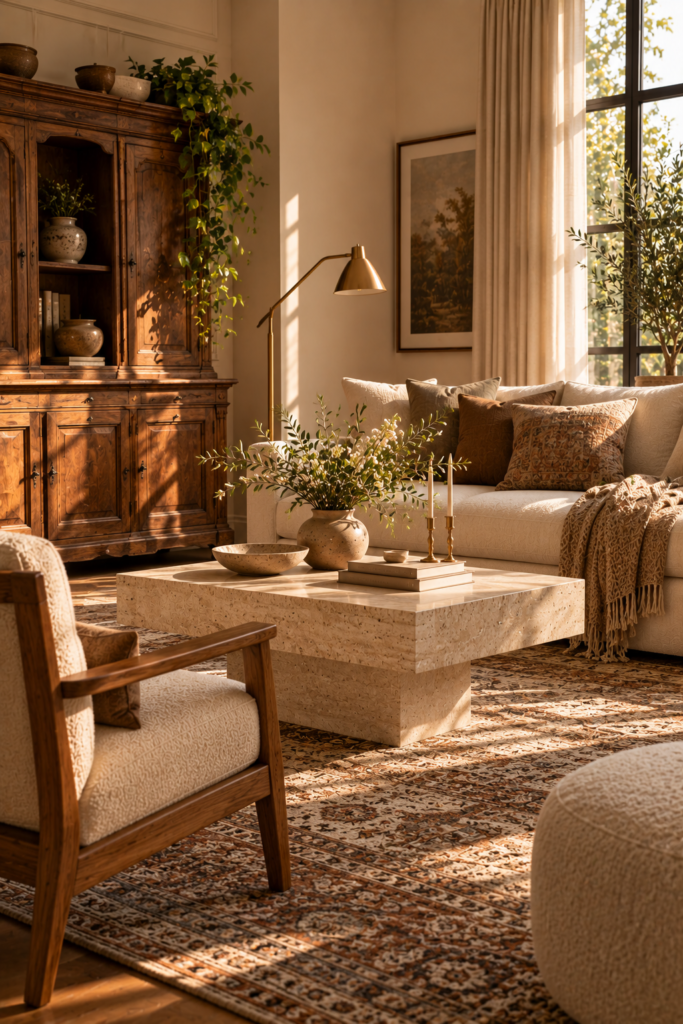
18. Muted Earth-Tone Interior
If you prefer a warmer palette, build your room around muted earth tones such as clay, camel, olive, sand, and warm brown.
Use one dominant neutral and introduce the earthier shades through furniture and accessories. Keeping the saturation low prevents the room from feeling colorful or busy while still adding more personality than an all-beige scheme.
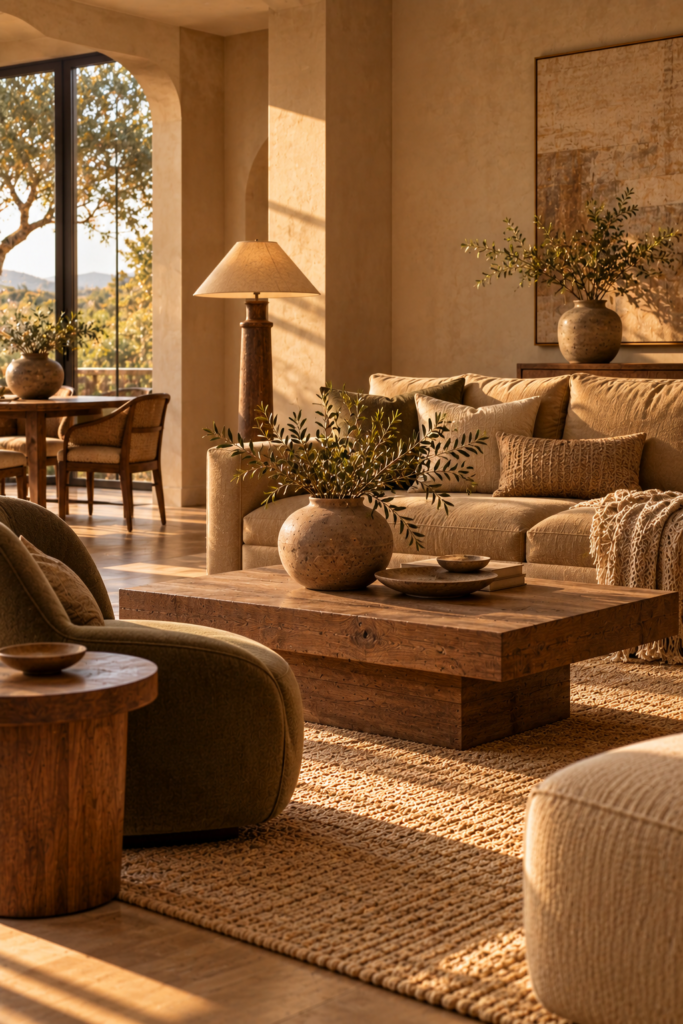
19. Sculptural Lighting in a Minimal Room
Lighting can become the statement piece in an otherwise restrained interior. Choose a sculptural pendant, curved floor lamp, or distinctive wall light with a simple silhouette.
The rest of the room can remain quiet so the fixture has space to stand out. Warm bulbs and layered lighting will also make neutral materials appear richer during the evening.
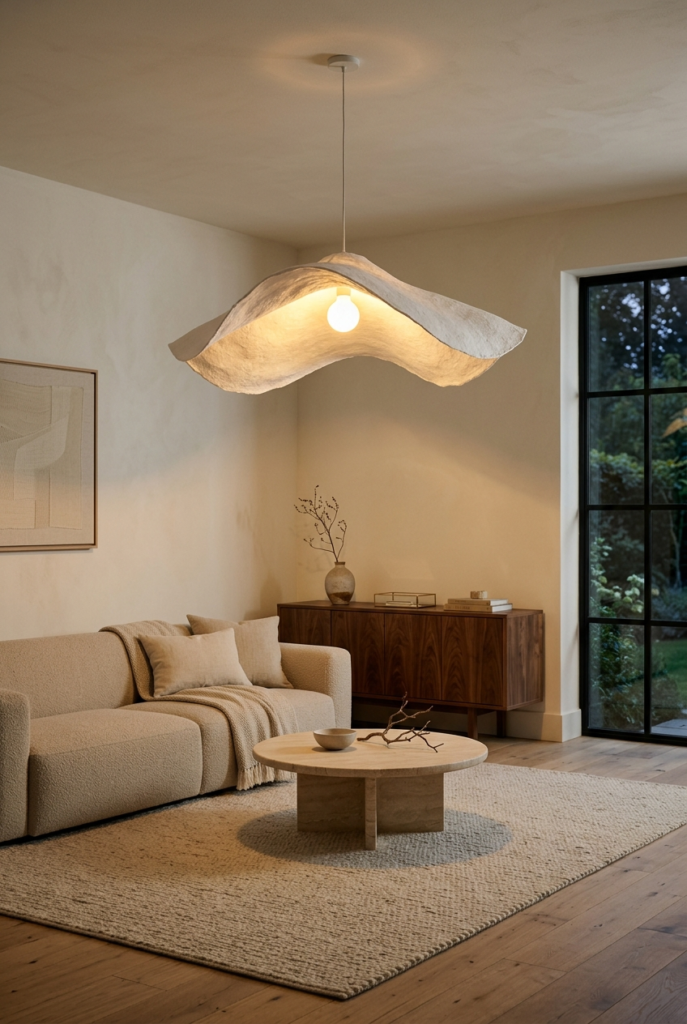
20. Floor-to-Ceiling Neutral Drapery
Long curtains can dramatically change the proportions of a room. Choose linen or linen-look drapery in ivory, oatmeal, or soft beige and hang it close to the ceiling so the fabric falls gracefully to the floor.
The effect is especially useful in rooms with tall windows because the curtains emphasize vertical height while softening hard architectural lines.
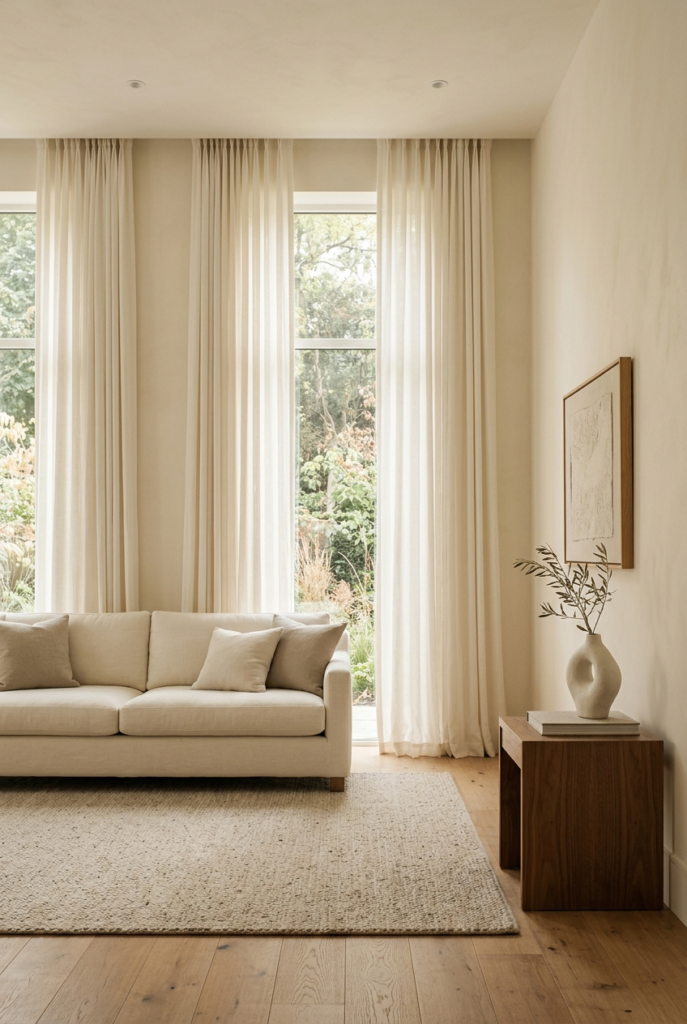
21. Quiet Luxury Interior With Vintage Rugs
A vintage-style rug can prevent a neutral room from feeling too new or predictable. Look for muted patterns in faded beige, brown, rust, or soft olive rather than highly saturated colors.
Place the rug beneath the main seating group and keep the rest of the furnishings relatively simple. The aged-looking pattern becomes a subtle layer of character.

22. Olive Green and Natural Wood Styling
Olive green works beautifully with warm wood because both colors have an earthy quality. Use olive selectively through an accent chair, curtains, cushions, or cabinetry rather than covering the entire room.
Pair it with cream walls, oak or walnut furniture, and natural stone. The result feels grounded while remaining sophisticated.
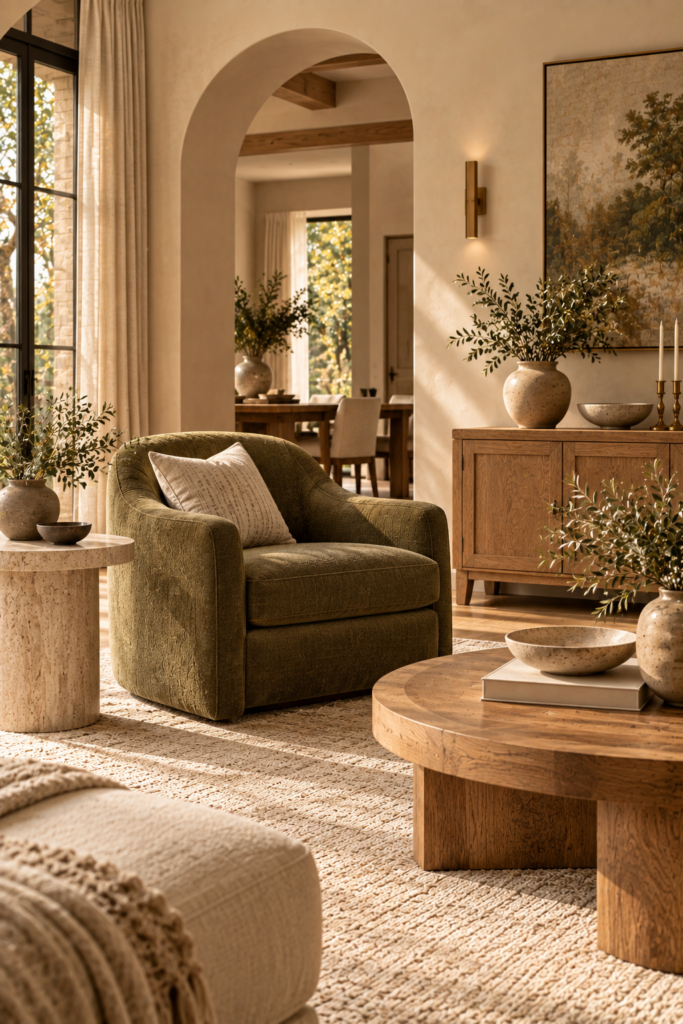
23. Minimalist Luxury With Oversized Artwork
One large artwork can have more impact than a wall covered with small frames. Choose a muted abstract or textural piece with colors that already exist in the room.
Leave generous space around it so the artwork feels intentional. A simple console beneath it and one sculptural object can complete the arrangement without competing for attention.
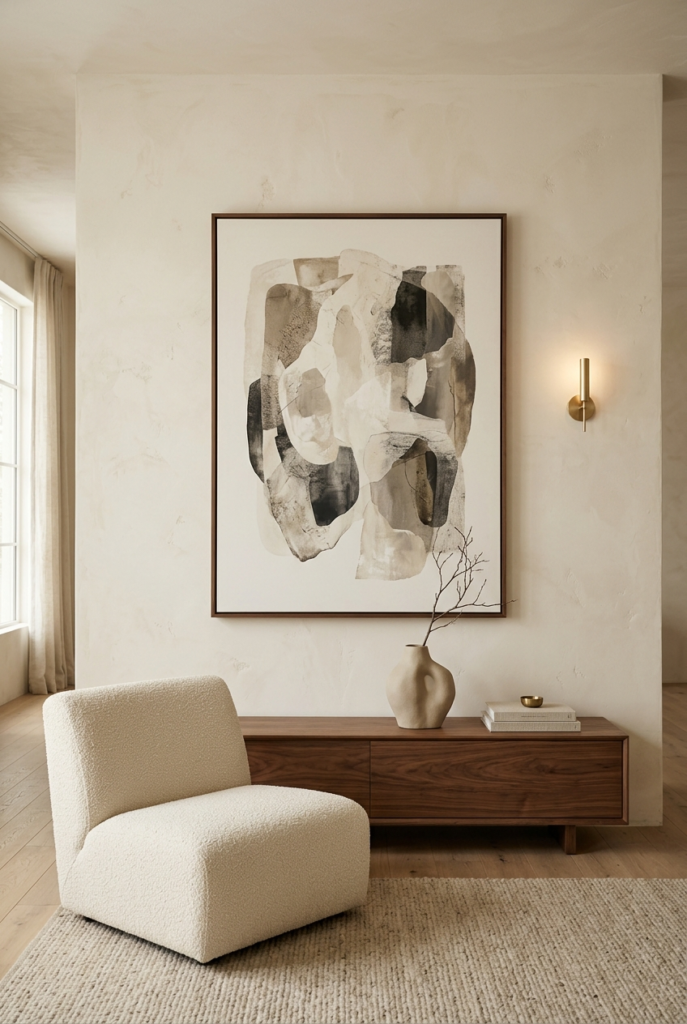
24. Small-Space Quiet Luxury Interior
Quiet luxury can work in a small apartment too. The key is choosing fewer pieces and making each one useful. A compact cream sofa, slim wood coffee table, wall-mounted lighting, and a large mirror can make a smaller room feel polished without filling every corner.
Use similar tones across the furniture and walls to create visual continuity. Hidden storage is particularly helpful for keeping the space calm.
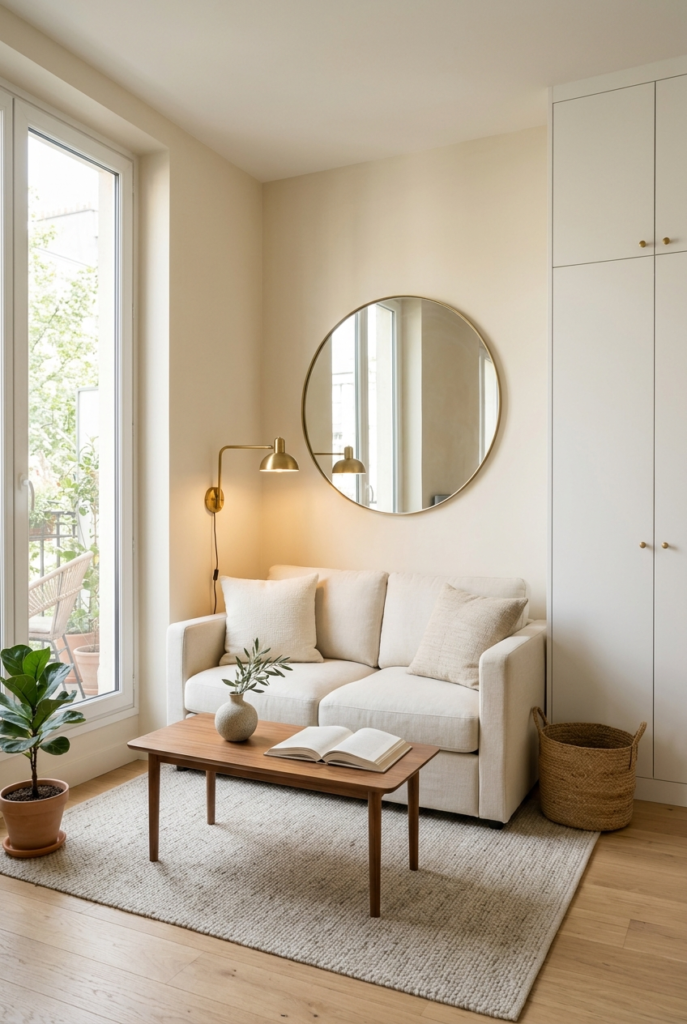
25. Affordable Quiet Luxury Decor
You do not need to replace an entire room to capture the look. Focus on a few high-impact changes: declutter visible surfaces, switch to warm neutral textiles, add natural-looking wood or stone accents, improve lighting, and use fewer decorative objects.
Thrifted furniture, vintage rugs, secondhand artwork, and simple ceramic pieces can add character without requiring a luxury budget. The overall goal is restraint and coordination rather than expensive labels.
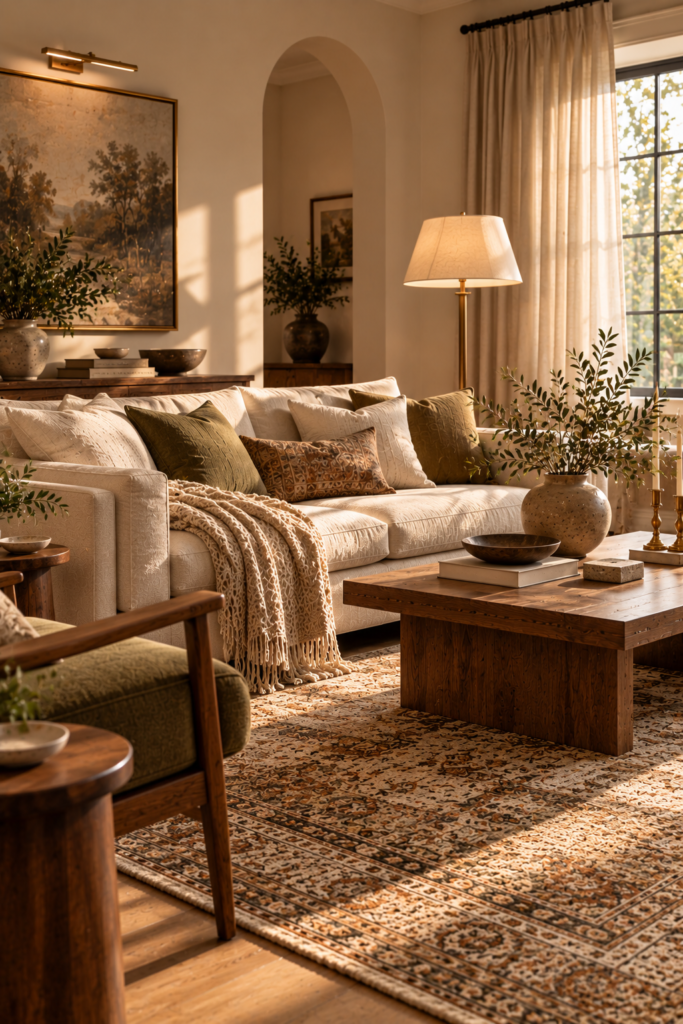
How to Make Quiet Luxury Work in Your Own Home
The easiest way to approach quiet luxury is to resist the temptation to change everything at once. Start with the largest visual elements: your wall color, sofa or bed, flooring, curtains, and lighting. Once those pieces work together, smaller details become much easier to choose.
Natural materials, warm neutrals, restrained decoration, and a mixture of classic and contemporary pieces can create the overall feeling without making your home look overly coordinated. Most importantly, choose pieces because they work for your space rather than because they simply look luxurious in a photograph.
Final Thoughts
Quiet luxury works because it leaves room for the home itself to breathe. Instead of relying on excessive decoration, it uses proportion, texture, natural materials, warm colors, and thoughtful details to create a polished atmosphere.
Whether you start with an ivory living room, a walnut kitchen, a vintage rug, or simply better lighting, you do not need to redesign every room at once. Pick one area, remove what feels unnecessary, and build around a few pieces you genuinely enjoy. Save these quiet luxury interior design ideas to Pinterest so you can return to them when you’re ready for your next decorating project.