
Good kitchen backsplash ideas start with how you cook, not only how a tile looks in a photo. The wall behind your stove and sink takes steam, grease and daily splashes, so a choice that wipes clean and suits your cabinets will serve you far better than a pretty tile that stains in a month.
This guide shares twenty complete choices, from classic subway tile and warm marble to rental friendly peel and stick options and small kitchen fixes. Each idea explains what it looks like, why it works and how to fit it into a real kitchen, so you can pick one with confidence.
1. Classic White Subway Tile
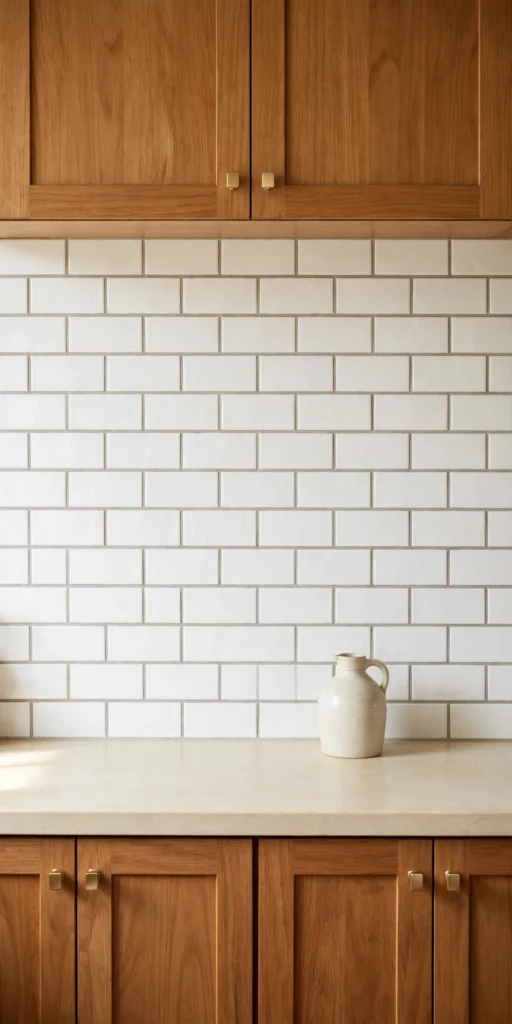
Classic white subway tile is the safe choice that still looks fresh in almost any kitchen. The rectangles, shine and grid give the wall order without stealing attention from cabinets, counters or a cooker hood. It suits farmhouse, modern and traditional rooms alike.
Lay the tiles in a brick pattern with a light grout for a soft look, or a mid grey grout if you want the grid to show. Keep the tile line level with the bottom of the wall cabinets, and use a matching trim tile or a metal edge at the ends. Wipe the surface with a damp cloth, and reseal pale grout once a year.
2. Sage Green Herringbone Tile
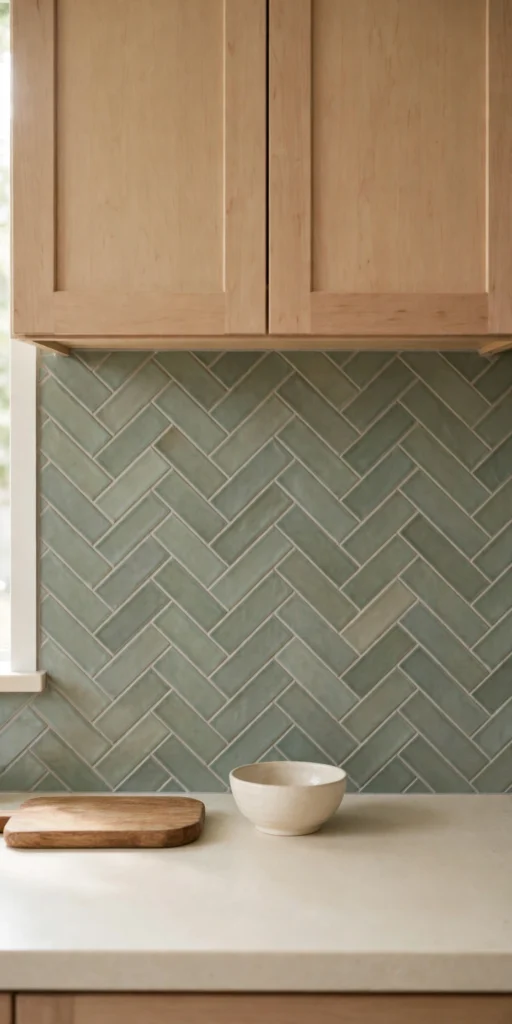
Sage green herringbone tile adds quiet colour and movement to a kitchen wall. The zigzag pattern catches light at different angles, so the wall feels alive without a bold print, and the green sits beside cream cabinets and warm wood. It is a middle step between plain white and a strong colour.
Buy one extra box of tiles, since herringbone cuts create more waste than a straight grid. Ask the tiler to start the pattern at the centre of the range, so the zigzag stays balanced. The same calm green carries through these sage green boho bedroom ideas, where sage is a soft base rather than a loud accent.
3. Warm Marble Look Slab
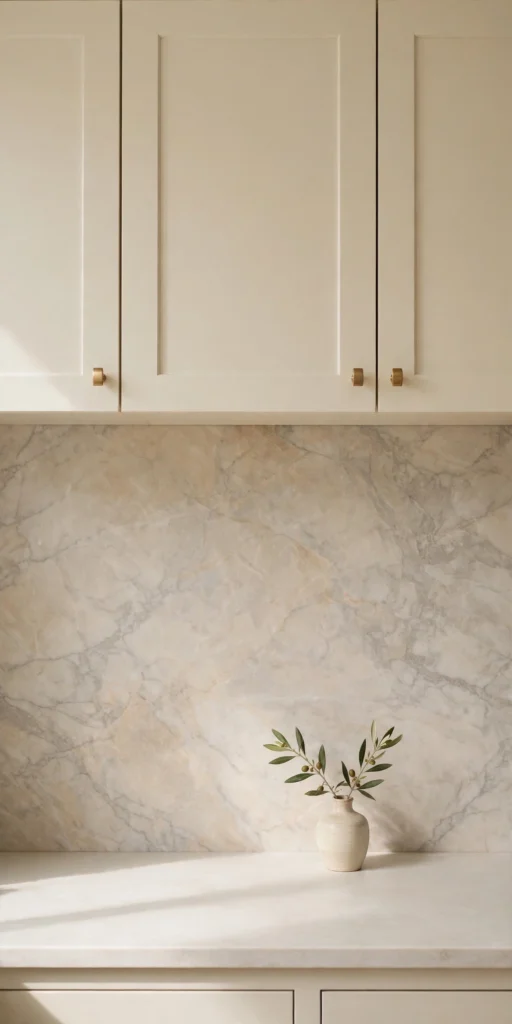
A warm marble look slab gives a kitchen a calm, high end feel with far less upkeep than real stone. Large panels mean fewer grout lines to clean, and the soft grey veining adds interest without a busy pattern. Porcelain slabs that copy marble also resist heat and stains well behind a busy stove.
Measure the wall carefully and order the slab in one piece where the wall allows it, since joins break the calm look. Keep counters plain, with cream or soft white, so the veining stays the focus. This restrained approach shapes these quiet luxury interior design ideas, where simple surfaces carry the whole room.
4. Stacked Stone Behind Range
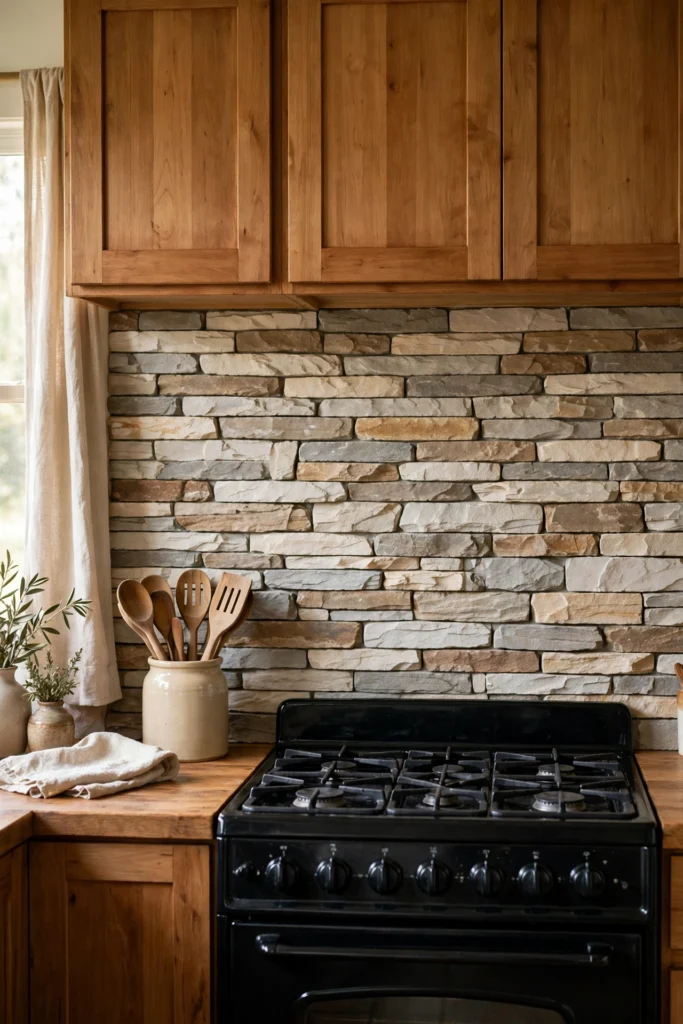
Stacked stone behind the range adds texture and a gathered feel to the busiest part of the kitchen. The rough, layered surface turns a plain cooker wall into a focal point, and warm greys and creams suit wood cabinets and farmhouse details. It works best as one feature wall, not across every kitchen wall.
Use a stone veneer made for kitchen walls, and seal it well before cooking starts, since rough stone can hold grease. Keep the rest of the backsplash plain, in cream tile or painted wall, so the stone stays special. Wipe it with a soft brush and warm soapy water, and reseal it when water stops beading.
5. Vertical Subway Tile Lift
Vertical subway tile lifts a kitchen with a low ceiling, because the eye follows the lines upward. The familiar tile feels fresh when it stands on end, and the tall lines make a galley kitchen feel less cramped. White, cream or pale sage all work, since the pattern does the lifting.
Set the tiles in straight vertical stacks, with the grout lines lined up, for the tallest effect. Stop the tile at the bottom of the cabinets, and use a slim trim piece at the top edge. Choose a grout close to the tile colour for a calm wall, or a darker grout to make the vertical lines read clearly.
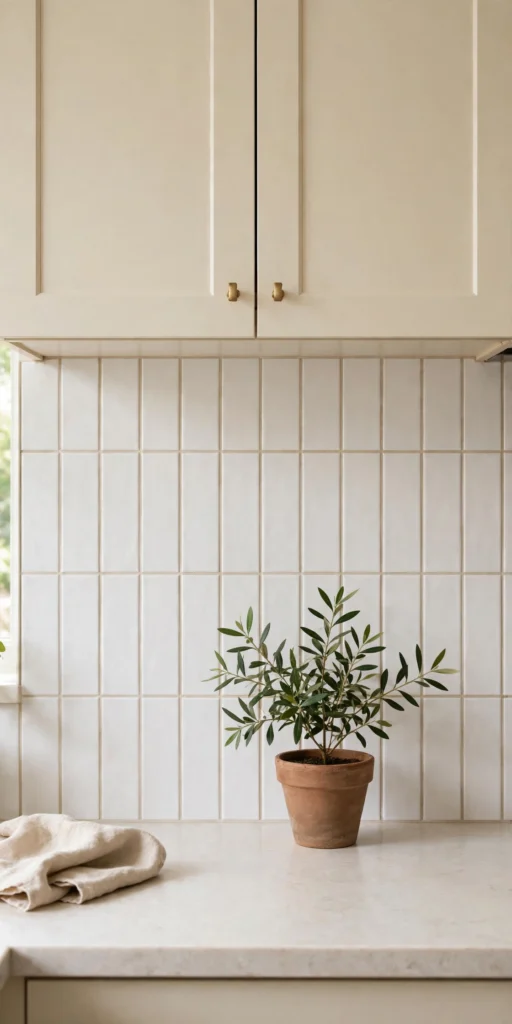
6. Handmade Zellige Style Tile
Handmade zellige style tile brings soft colour variation and a gentle shine that flat factory tile cannot match. Each tile differs slightly in tone and surface, so the wall looks crafted rather than printed, and the glossy glaze wipes clean after cooking. Greens, creams and soft blues all suit this tile, since the glaze keeps them from looking flat.
Order samples first, since the colour can shift a lot between batches, and mix tiles from several boxes as you lay them. Use a grout that matches the main tile colour, so the variation stays soft. Keep counters simple and plain, so the handmade surface remains the star of the wall.
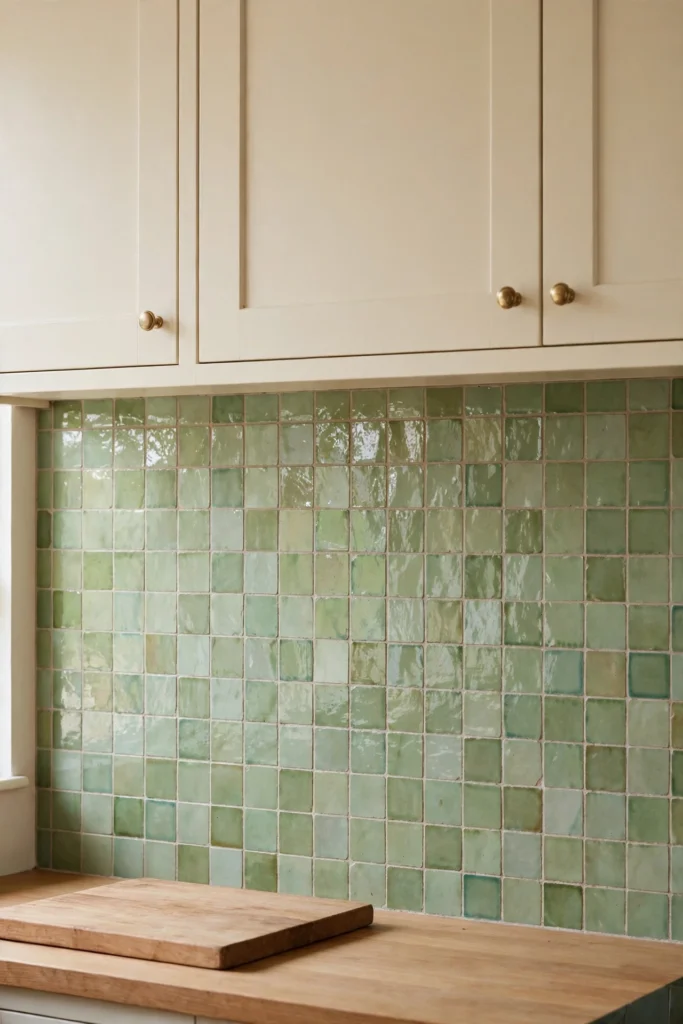
7. White Shiplap Farmhouse Look
White shiplap gives a farmhouse kitchen a warm, boarded wall without the cost or weight of real tile. The horizontal boards add rhythm, the white paint keeps the room bright, and the look pairs naturally with wood shelves and cream cabinets. It is a kind choice for a country kitchen that needs warmth more than shine.
Use boards made for kitchens, or seal painted shiplap well, especially behind the stove and sink. Leave a small gap behind the range for a heat resistant panel, since wood near high heat needs care. Wipe boards with a damp cloth, touch up paint chips quickly, and keep shelves light.
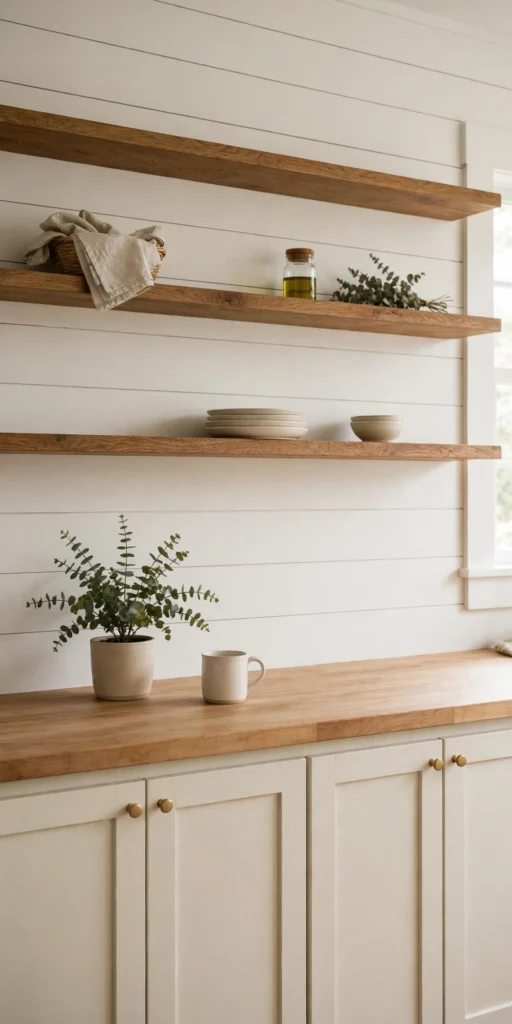
8. Matte Black Tile Brass
Matte black tile with brass fixtures gives a kitchen a bold, modern edge without feeling cold. The dark wall makes brass taps and handles glow, and it hides splashes better than white tile in a busy cooking zone. It suits kitchens with light cabinets and pale counters, where the dark wall becomes one clear contrast.
Add under cabinet lighting, since a dark wall can dull a kitchen without good light. Choose a dark grout that matches the tile, so the wall reads as one smooth surface. Keep the rest of the room light, with cream walls and wood accents, so the black wall feels like a choice, not a cave.
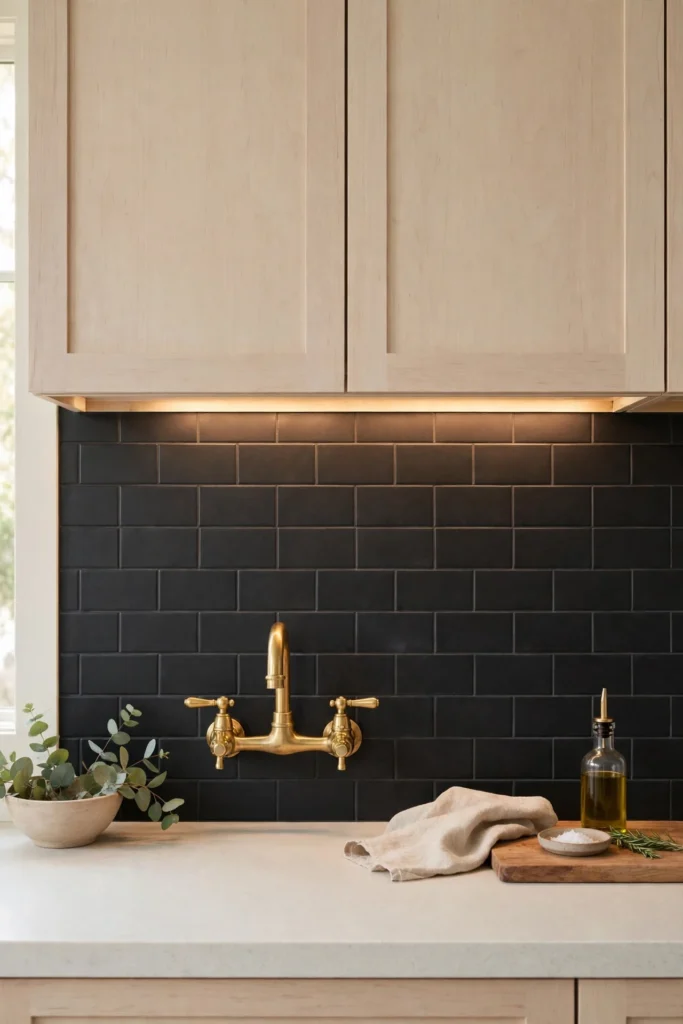
9. Peel And Stick Rental Tile
Peel and stick tile is the rental friendly way to change a backsplash without grout, dust or landlord trouble. Modern panels copy subway tile, marble and patterned tile well, they press straight onto a clean wall, and most peel off without damage when you move. It is also a low cost test before you commit to tile.
Clean the wall with warm soapy water, dry it fully, and cut panels with a sharp knife and a straight edge. Start at the centre of the range and work outward, pressing out air bubbles as you go. Keep panels away from direct flame, and replace a single panel if it lifts.
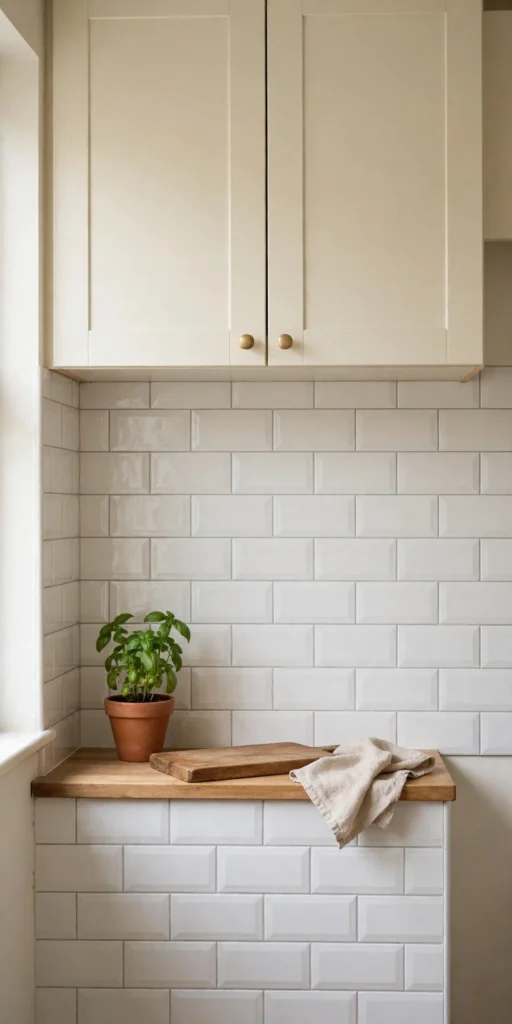
10. Budget Painted Tile Refresh
A painted tile refresh is the cheapest way to change a dated backsplash that is still sound. Tile paint in cream, sage or soft white can turn an old brown or patterned wall into a calm background in a weekend, and it costs far less than new tile. It works best on smooth, well fixed tiles with no cracks.
Clean the tiles well, sand lightly, and use a primer made for tile before the top coats. Apply two thin coats rather than one thick coat, and let each coat dry fully. Avoid harsh scrubbing after painting, and touch up chips as soon as you spot them.
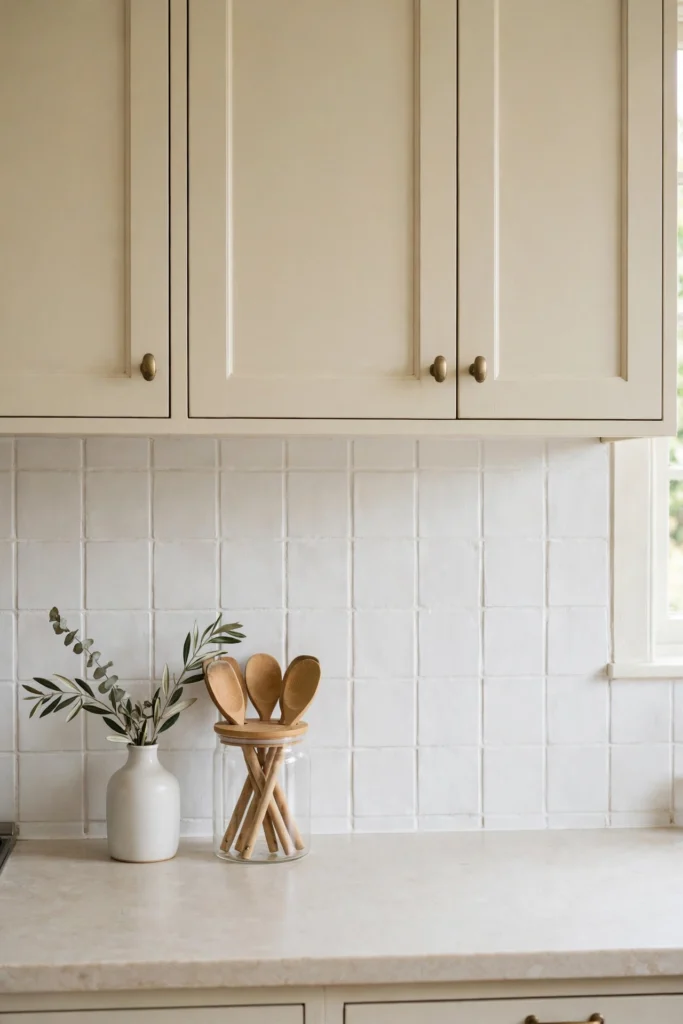
11. Small Kitchen Light Choice
A small kitchen needs one light colour and as few grout lines as possible, so the wall does not chop the room into pieces. Large pale tiles, a single slab or a light glass panel keep the eye moving across the wall, and the room feels wider and brighter. This is the idea to choose when every inch counts.
Pick a tile at least four inches wide, in cream, pale grey or soft white, and use a grout that matches the tile. Run the backsplash to the bottom of the cabinets without a busy border. Keep open shelves to one short run, so the light wall stays visible.
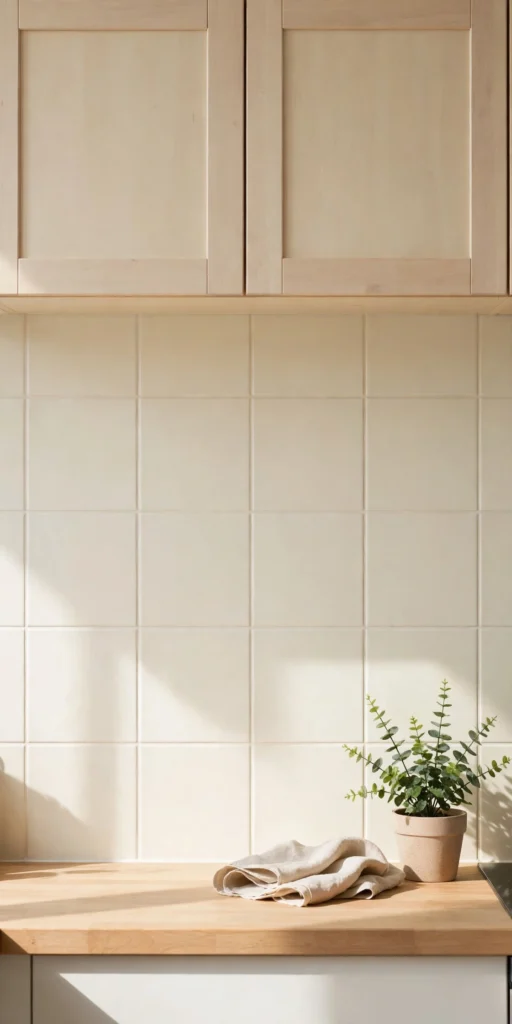
12. Dark Cabinet Warm Pairing
Dark cabinets need a backsplash that warms them, not one that makes the kitchen darker. Cream subway tile, warm marble or pale wood toned tile lifts navy, charcoal and deep green cabinets, and the light wall gives the eye a rest between dark doors. Brass or copper handles complete the warm pairing.
Choose a tile with a warm undertone, not a cold blue white, so it sits happily against dark paint. Keep the grout light and the pattern simple, since a busy wall can fight dark cabinets. Add warm under cabinet light, and repeat one warm metal in taps and handles, so the whole run feels planned.
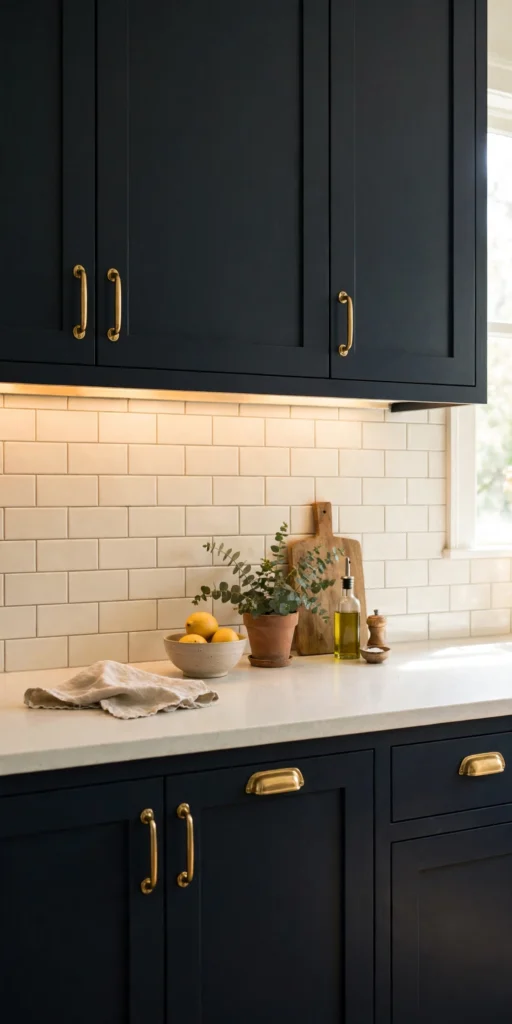
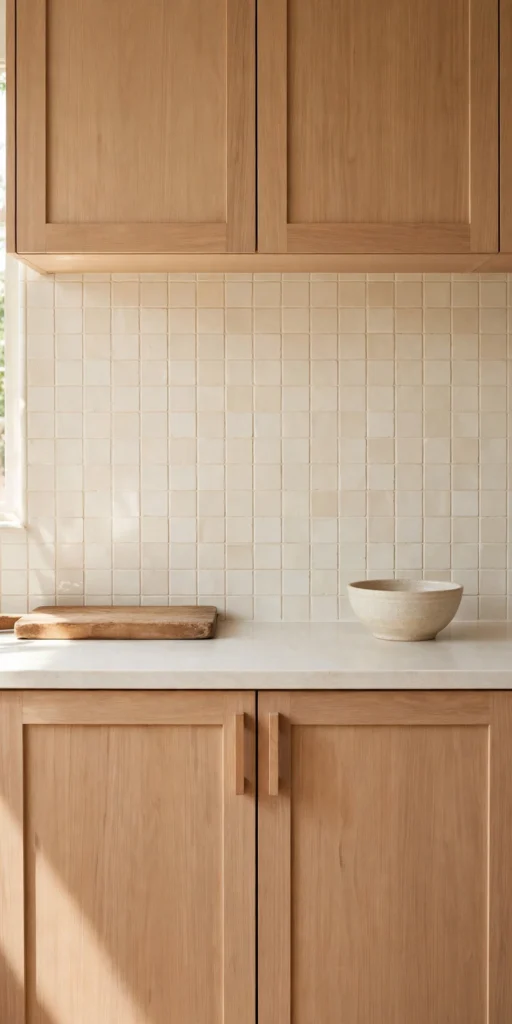
13. Light Wood Cabinet Pairing
Light wood cabinets pair best with a backsplash that adds texture without adding another strong wood tone. Cream zellige, pale sage tile or a soft white slab lets the wood grain stay the focus, while the wall adds shine and a wipe clean surface. The result feels warm and calm, not washed out.
Hold tile samples against the cabinet door in daylight and evening light before you buy, since wood tones shift with light. Choose a grout close to the tile colour for a soft wall, and keep counters in cream or pale stone. One black or brass accent, in taps or handles, stops the pairing from looking too pale.
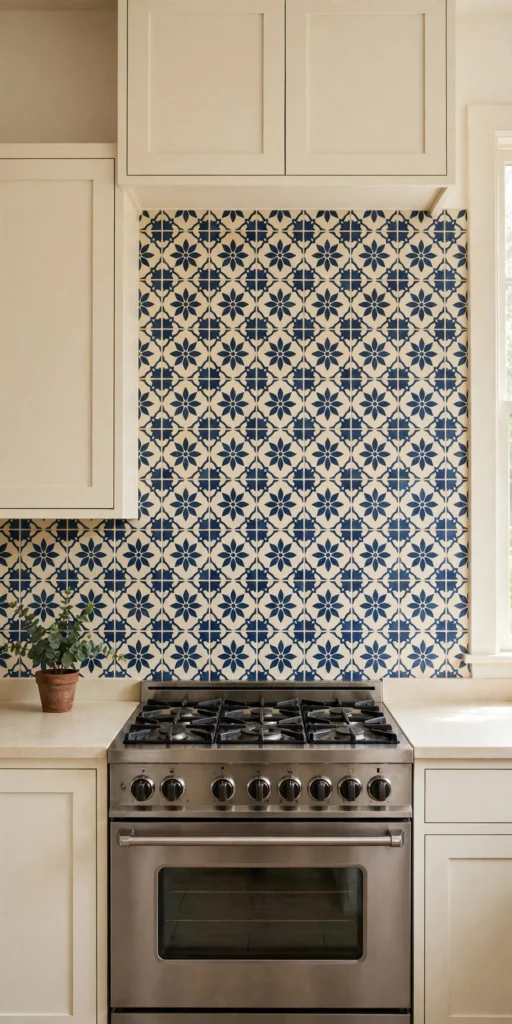
14. Bold Pattern One Wall
A bold patterned tile works best on one wall only, usually behind the range, where it becomes art. Encaustic style patterns, geometric prints and floral tiles all add personality, and keeping the pattern to one area stops it from overwhelming the room. The rest of the kitchen stays calm, so the pattern can shine.
Limit the pattern to the range wall, and use plain cream tile or painted wall elsewhere. Pick one colour from the pattern for towels or a small accessory, so the room feels linked. Order extra tiles, since patterned tiles need careful matching at the edges, and seal them if the maker advises it.
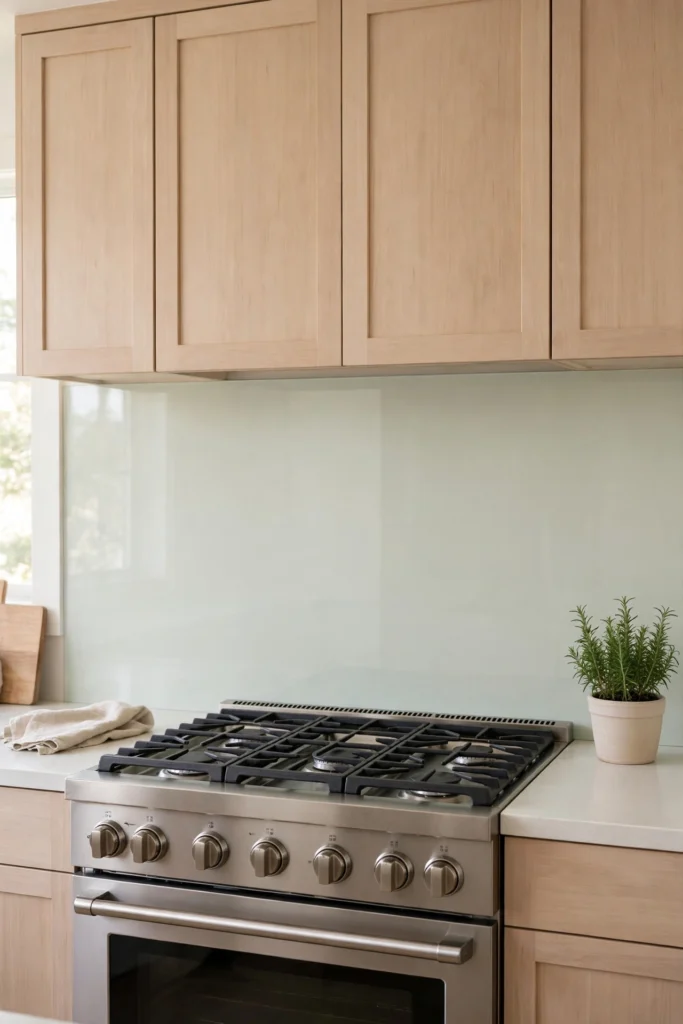
15. Wipe Clean Glass Stove
A glass panel behind the stove is the easiest backsplash to wipe clean after frying and simmering. With no grout lines at all, grease has nowhere to hide, and a pale or mirrored glass also bounces light around a small kitchen. It suits modern kitchens, and it can sit over a painted wall or a printed image.
Measure the range wall exactly, and use toughened glass made for kitchen heat, fitted by a specialist. Leave the maker recommended gap behind the range, and clean the glass with a soft cloth and warm soapy water. Avoid abrasive pads, which can scratch the surface and dull the shine over time.
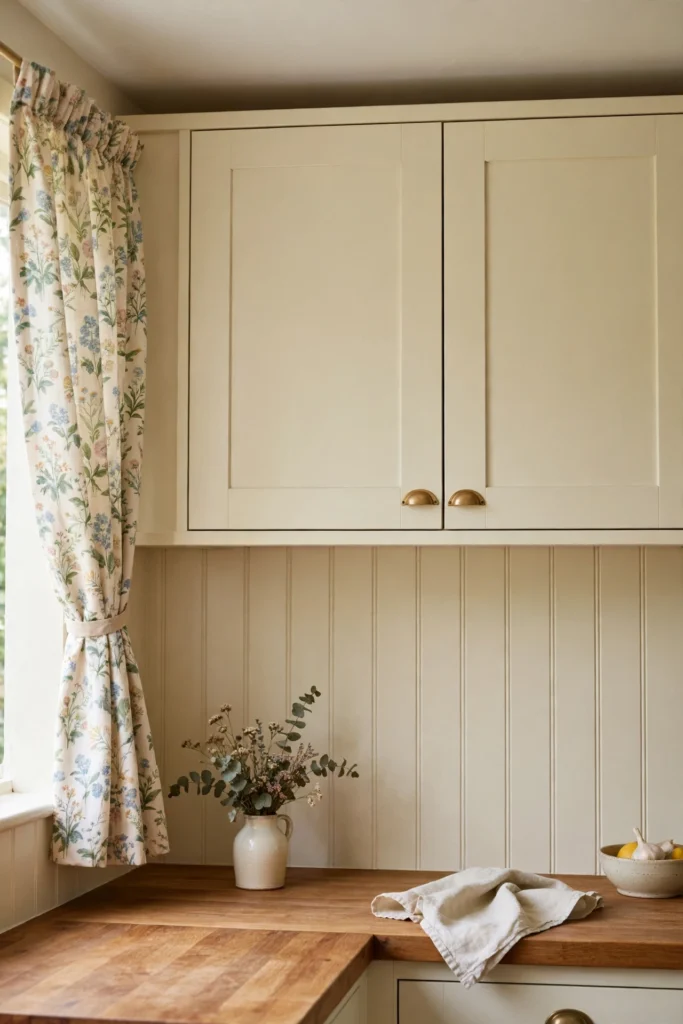
16. Beadboard Cottage Kitchen Look
Beadboard gives a cottage kitchen a soft, painted wall with gentle vertical lines and a homely feel. The narrow boards suit cream cabinets, floral curtains and wood counters, and the painted surface is easy to touch up when life marks it. It is a kind, low cost choice for a small or older kitchen.
Use beadboard panels made for damp areas, seal the edges well, and paint with a kitchen paint that wipes clean. Keep the area directly behind the range in tile or a heat resistant panel, since painted board near high heat needs care. Wipe the boards after cooking, and repaint the whole run when chips build up.
17. Two Tone Split Design
A two tone split backsplash uses tile where it matters most, and paint elsewhere, to save money. Tile behind the range and sink takes the splashes, while paint covers the rest of the wall and keeps the room calm. The split also lets you change the paint colour later at little cost.
Choose a tile and a paint in the same colour family, so the change feels planned, not patched. End the tile with a neat trim or a pencil tile, and keep the tile height level across the wall. Paint the rest in a washable kitchen paint, and touch it up once a year where steam gathers.

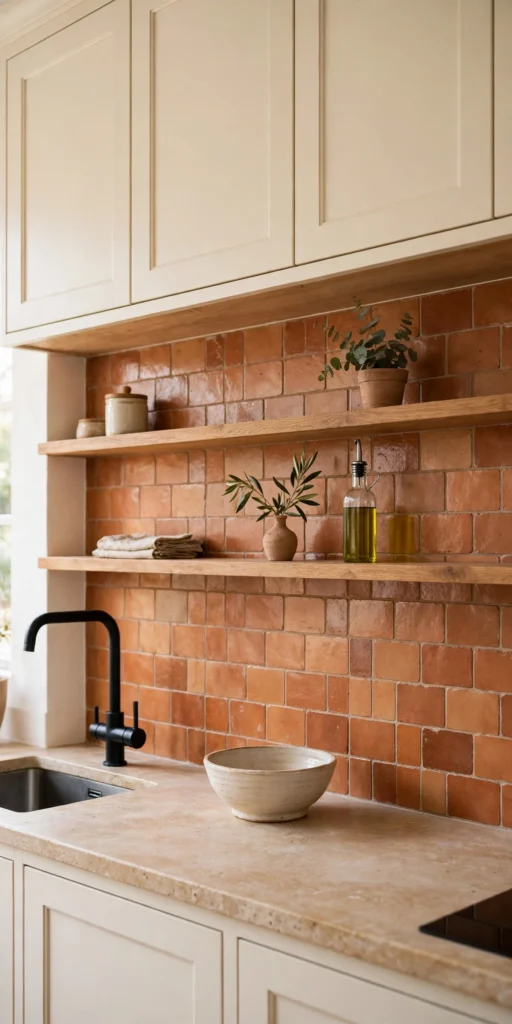
18. Terracotta Warmth For Kitchens
Terracotta tile brings warm, earthy colour to a kitchen that feels too white or too cold. The handmade tones range from soft clay to deep rust, and the warm surface pairs well with cream cabinets, wood shelves and black hardware. It suits Mediterranean, farmhouse and rustic rooms, where warmth matters more than shine.
Seal terracotta well before use, since the unglazed surface can absorb stains, and reseal it when water stops beading. Use a grout in a warm sand tone, so the tiles blend softly. Keep counters plain and pale, so the warm wall stays the focus, and wipe spills quickly, especially from tomato and wine.
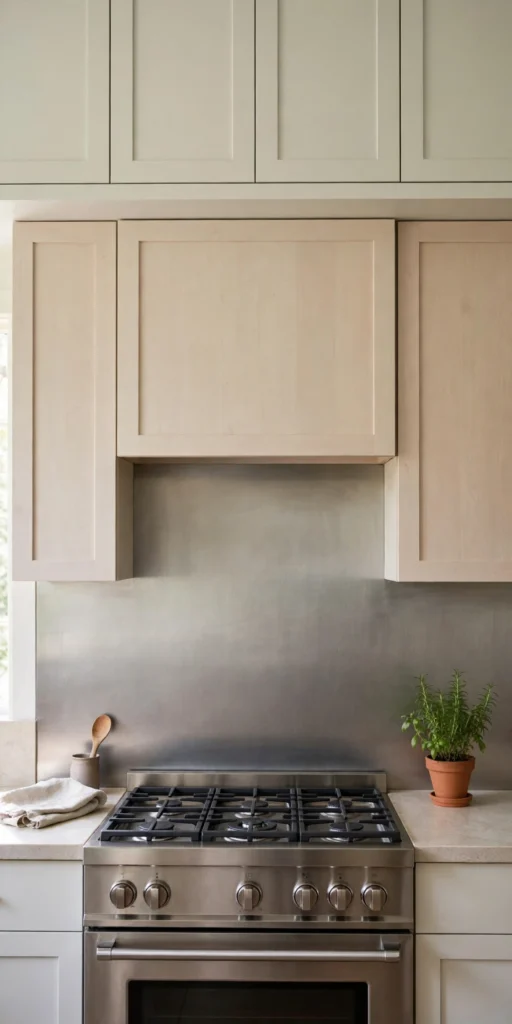
19. Stainless Steel Modern Kitchen
Stainless steel gives a modern kitchen a clean, professional wall that suits serious cooks. The smooth metal wipes clean, resists heat behind the range, and pairs naturally with steel appliances and pale cabinets. It is a practical choice for a kitchen where cooking, not decoration, comes first.
Use brushed steel panels rather than a mirror finish, since brushed steel hides fingerprints and light scratches better. Fit panels with a neat edge trim, and clean them with a soft cloth in the direction of the grain. Avoid harsh pads and chlorine cleaners, which can mark the surface and dull the finish.
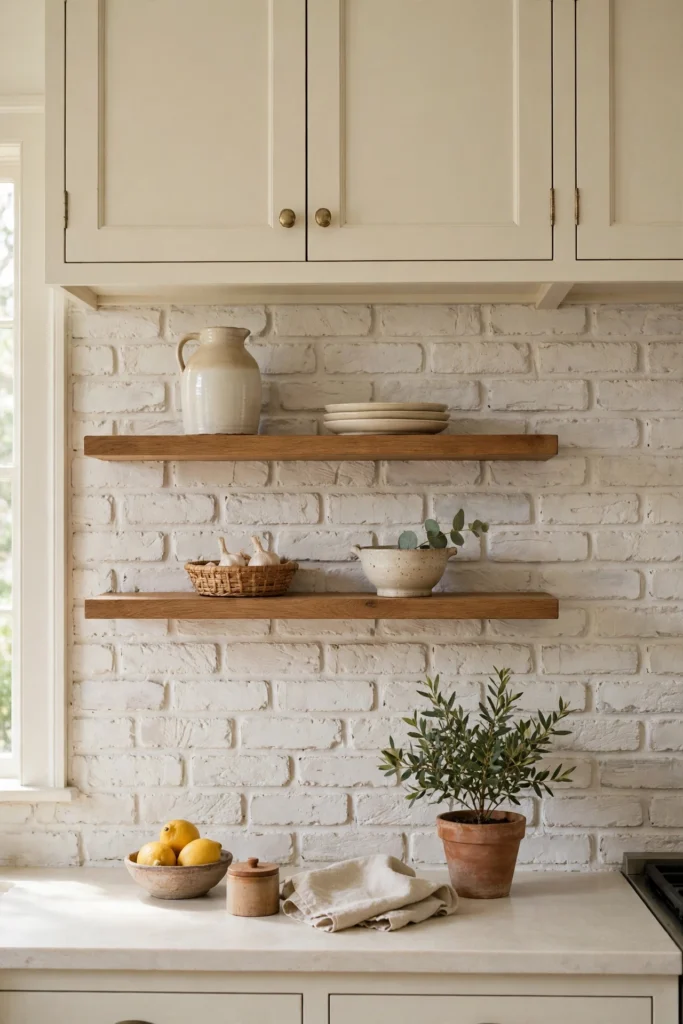
20. Whitewashed Brick Warmth
Whitewashed brick adds texture and a soft, historic feel to a kitchen without the heaviness of red brick. The pale wash keeps the room bright, while the brick shape and mortar lines add character that flat tile cannot match. It suits farmhouse kitchens, loft rooms and kitchens with wood beams or open shelves.
Use a brick veneer made for interior walls, and seal it well, especially behind the stove, since rough brick can hold grease. Pair it with wood shelves and cream cabinets, and keep counters simple. Dust the surface with a soft brush, wipe splashes quickly, and reseal it when the surface starts to absorb water.
Conclusion
The best kitchen backsplash ideas are the ones that suit how you cook, clean and live, not only the ones that photograph well. Pick a wipe clean surface for the stove wall, a colour that suits your cabinets, and a budget you can finish well, then start with one wall and live with it. Save this guide on Pinterest for your next kitchen refresh, and share it with a friend who is planning one too.
Frequently Asked Questions
What backsplash is easiest to clean behind a stove?
Glazed tile, a glass panel or a large slab is easiest, since each has few grout lines for grease to hide in. Wipe the surface with warm soapy water after cooking, and avoid rough pads on glass and glazed finishes. A dark grout also hides marks better than a pale grout.
Does marble need sealing?
Yes, real marble and natural stone should be sealed, since the surface can absorb stains from oil, wine and tomato. A penetrating sealer helps, but it does not make marble stain proof, so wipe spills quickly. For a detailed sealing guide, see the stone tile advice from MSI Surfaces, which covers cleaning, sealing and drying.
Can a renter change a backsplash without tiling?
Yes, peel and stick panels, removable tile sheets and a painted board can all change the look without grout or drilling. Clean and dry the wall first, test one panel in a hidden corner, and keep panels away from direct flame. Most options peel off cleanly, but check your lease first.
How high should a backsplash go?
The usual height is from the counter to the bottom of the wall cabinets, which is often about eighteen inches. Behind a range, run the tile higher, to the hood or to the ceiling, for a finished look. In a kitchen with no wall cabinets, a full height tile wall can look calm and planned.







2 Comments