Home remedies to get rid of a dark neck can help improve the appearance of uneven skin tone when the discoloration is caused by dryness, irritation, or sun exposure. Gentle skincare, regular moisturizing, and daily sun protection are useful first steps. However, a dark neck can sometimes be linked to an underlying condition, so it is important to understand the cause before trying home treatments.
When choosing home remedies to get rid of a dark neck, focus on gentle skincare rather than harsh scrubs or bleaching mixtures. Cleanse the area with a mild product, apply a fragrance-free moisturizer, and use broad-spectrum sunscreen with SPF 30 or higher on exposed skin. Avoid remedies that cause burning, redness, or itching, as irritation can make discoloration worse.
1. Gentle Daily Cleansing
One of the simplest ways to care for a dark neck is to wash it gently every day. Sweat, sunscreen, body oils, and residue from hair products can collect around the neck, especially during warm weather. A mild, fragrance-free cleanser can remove this buildup without stripping away too much of the skin’s natural moisture.
Use lukewarm water and your fingertips rather than a rough washcloth or abrasive scrub. Rinse thoroughly and pat your skin dry with a soft towel. Cleansing can improve everyday skin hygiene, but it will not necessarily remove pigmentation caused by sun damage, hormonal changes, or an underlying medical condition.

2. Apply a Fragrance-Free Moisturizer
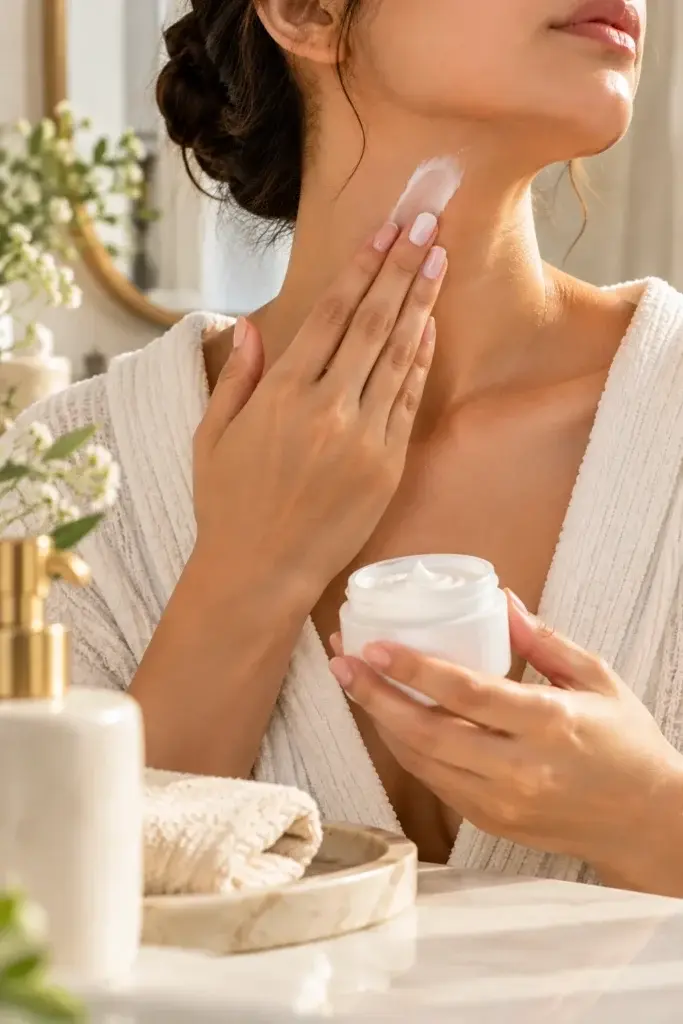
Dryness can make the skin on your neck appear rough and uneven. A fragrance-free moisturizer can help soften dry areas and support the skin barrier, making daily skincare more comfortable. Look for a product formulated for sensitive skin, particularly if your neck becomes itchy or irritated easily.
Apply a thin layer after bathing while the skin is slightly damp. Ingredients such as glycerin and ceramides are commonly used in moisturizers to help attract water and support the skin barrier. Moisturizing does not bleach the skin or guarantee that dark patches will fade, but it can help prevent dryness from becoming another source of irritation.
3. Use Broad-Spectrum Sunscreen on Your Neck
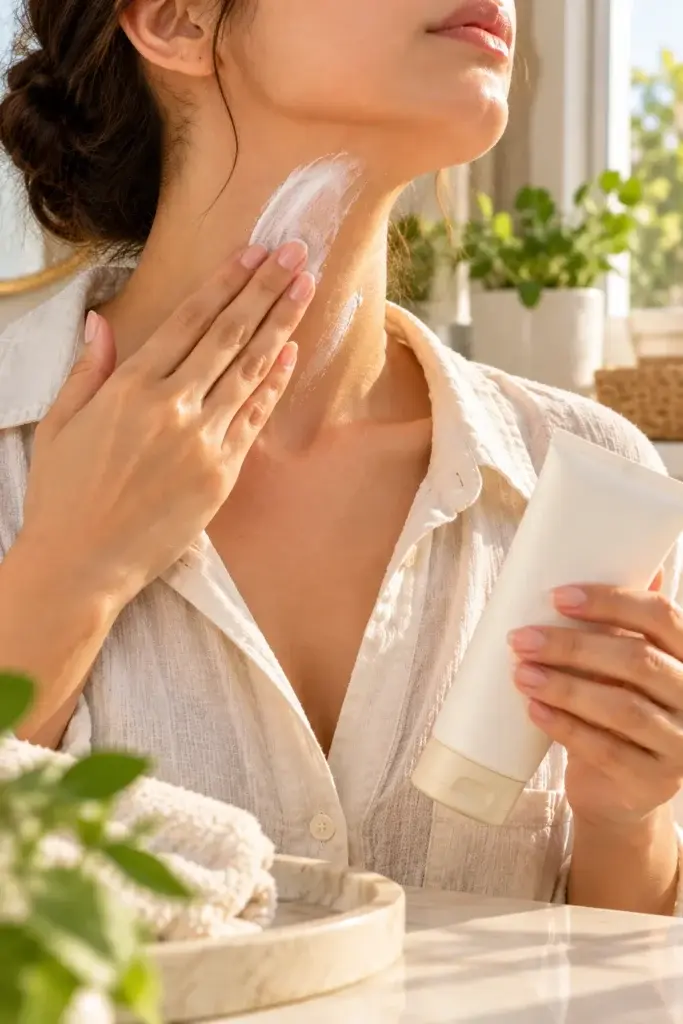
Sun exposure can contribute to hyperpigmentation and make existing dark spots more noticeable. Although sunscreen will not treat every cause of a dark neck, protecting exposed skin can help prevent additional sun-related discoloration and support other pigmentation treatments.
Choose a broad-spectrum sunscreen with SPF 30 or higher and apply it to your neck whenever it is exposed to daylight. Reapply approximately every two hours when outdoors, and sooner after swimming or heavy sweating according to the product label. If visible-light-related pigmentation is a concern, a tinted sunscreen containing iron oxides may provide additional protection.
4. Try Aloe Vera for a Soothing Skincare Step
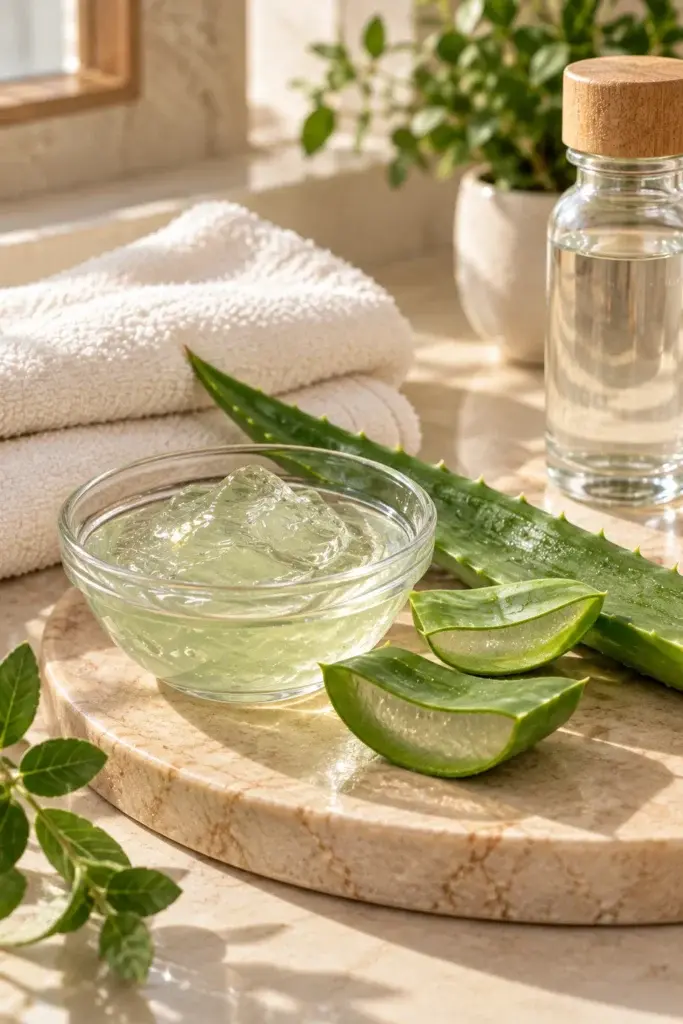
Aloe vera gel is a popular ingredient in soothing skincare products because it can provide a lightweight, cooling feel. If your neck feels dry after a day outdoors, a simple aloe-based product may be a comfortable addition to your routine. However, there is not enough reliable evidence to consider aloe vera a proven treatment for every type of dark neck pigmentation.
Choose a product with a short ingredient list and avoid formulas containing fragrance if your skin is sensitive. Test a small amount on an inconspicuous area first, and discontinue use if you notice burning, redness, or itching. Aloe vera should complement gentle skincare rather than replace sunscreen or medical assessment when the cause of darkening is unclear.
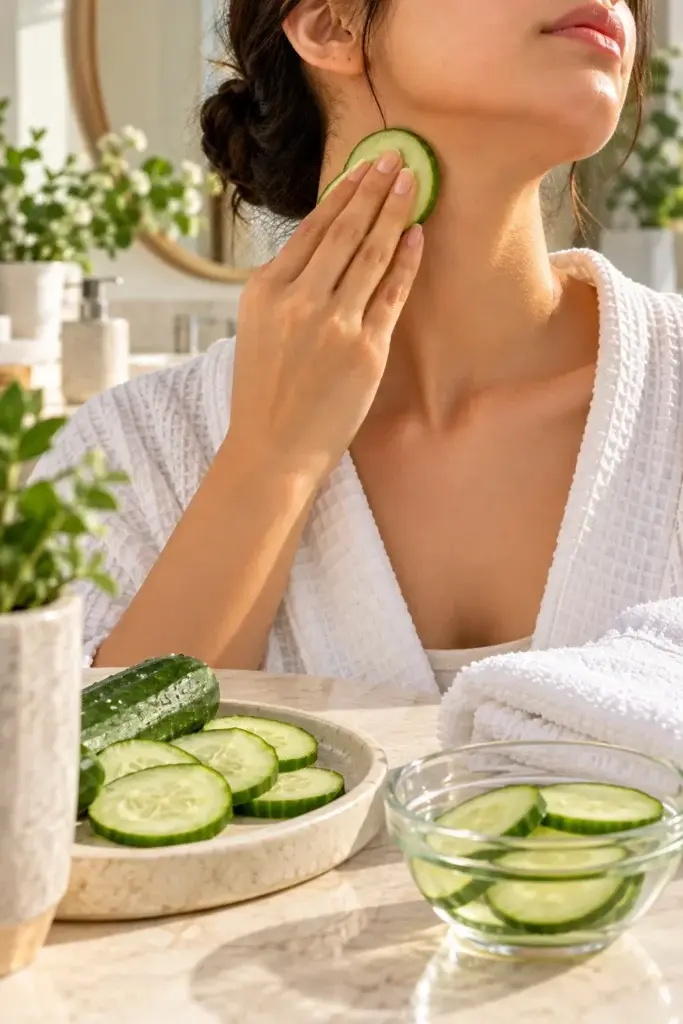
5. Use a Cool Cucumber Compress
Cucumber is often associated with refreshing home skincare. A cool compress can temporarily soothe the feeling of warmth or mild discomfort after spending time in a hot environment. It should not be confused with a treatment that removes melanin or reliably fades established dark patches.
To try this approach, place a clean, cool cucumber slice or a soft cloth dampened with cool water against the neck for a few minutes. Avoid placing ice directly on your skin or rubbing cucumber vigorously across the area. If your neck is already inflamed, painful, or persistently itchy, identify the cause instead of relying on repeated home treatments.
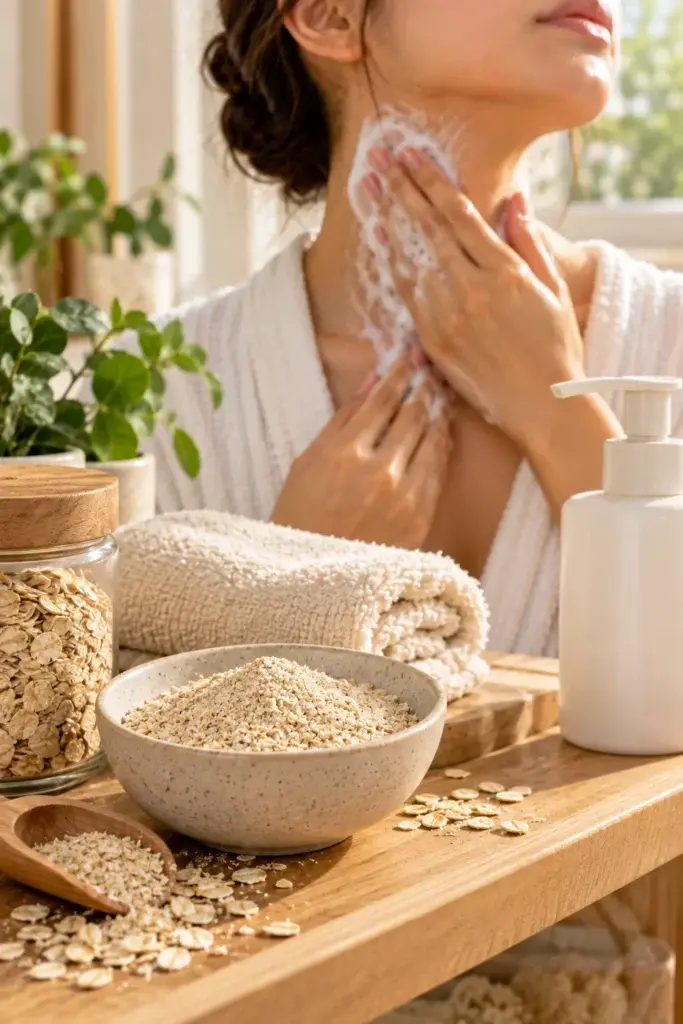
6. Choose Gentle Oatmeal Cleansing
Oatmeal appears in many skincare products designed for dry or sensitive skin. Colloidal oatmeal, which is finely processed for skincare formulations, can help soothe and moisturize certain types of irritated skin. It is a more sensible choice than coarse homemade scrubs that can create friction.
If you want to try an oatmeal-based product, choose one formulated for skin rather than rubbing dry oats directly over the neck. Apply according to the label and rinse gently if the product is intended to be washed off. Oatmeal will not reliably remove pigmentation, and any product that causes stinging or redness should be discontinued.
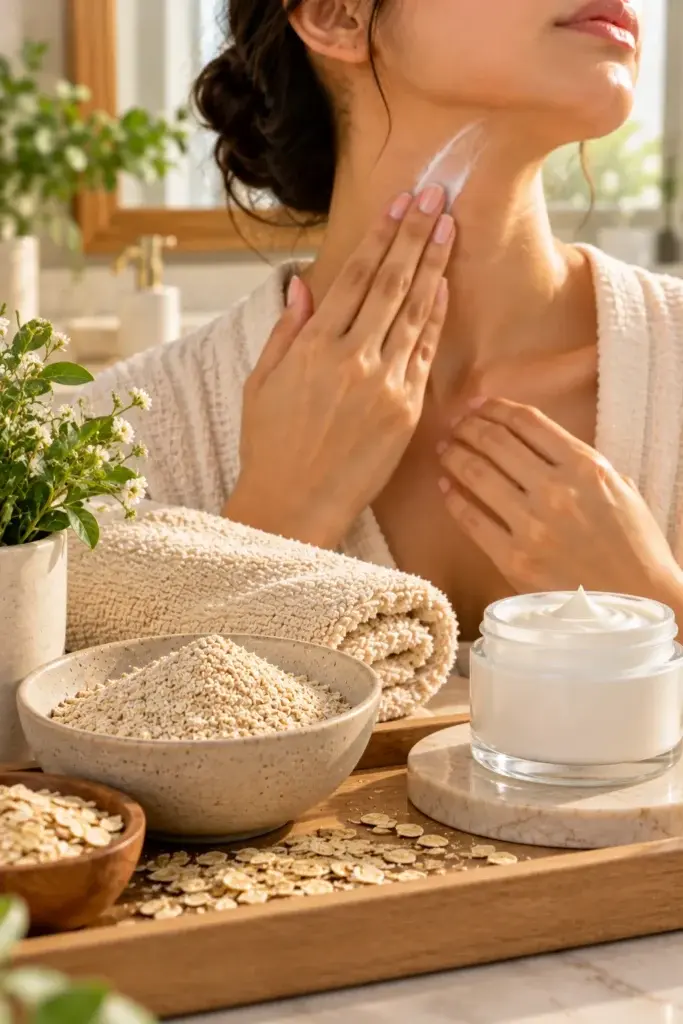
7. Consider a Colloidal Oatmeal Moisturizer
A colloidal oatmeal moisturizer offers a different option from a cleanser because it stays on the skin or is used according to its product instructions. Such formulas may be useful for people whose neck skin feels dry, tight, or easily irritated. Keeping the skin comfortable can make it easier to maintain a consistent skincare routine.
Apply a small amount to clean skin and follow the directions on the packaging. Look for a product without unnecessary fragrance if your skin reacts easily. Remember that soothing dryness is not the same as treating pigmentation. If the dark area is thickened, spreading, or persistent, a moisturizer alone may not address the underlying cause.
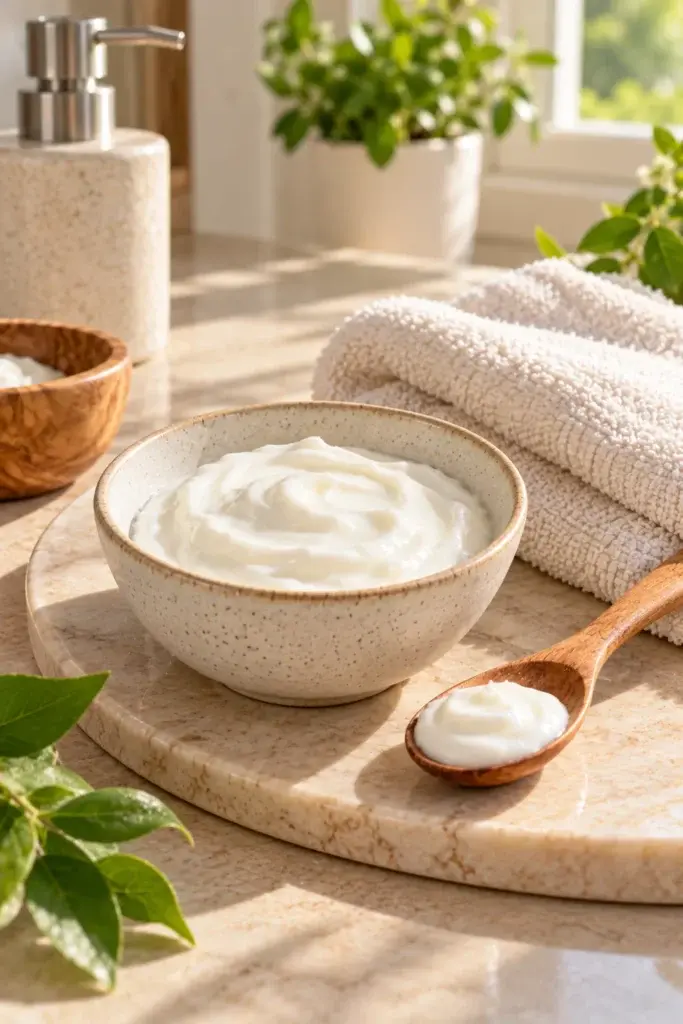
8. Be Cautious With Plain Yogurt Masks
Plain yogurt is a familiar ingredient in homemade beauty recipes, but applying food to your skin is not a proven way to eliminate neck pigmentation. Although yogurt contains lactic acid, its concentration and formulation are not controlled like those of a skincare product designed for exfoliation. It may also irritate some people’s skin.
For this reason, a formulated skincare product is generally a more predictable choice than a homemade yogurt mask. If you decide to experiment with any food-based skin treatment, avoid applying it to broken, irritated, or freshly shaved skin, and stop immediately if it causes discomfort. Never leave a mask on longer in the hope of getting faster results.
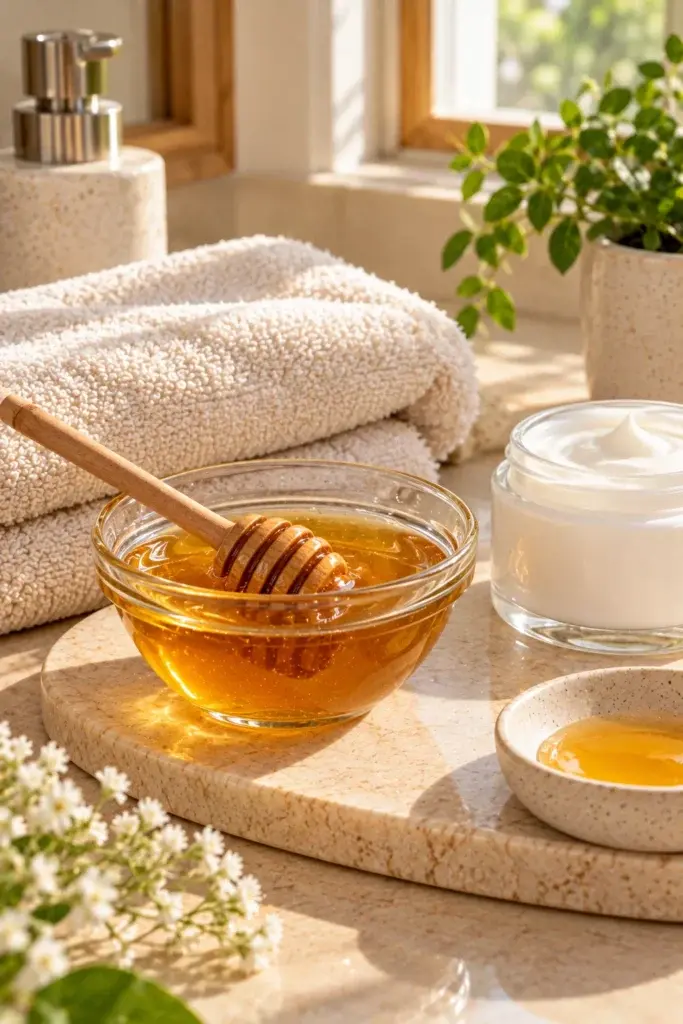
9. Understand the Limits of Honey Masks
Honey is sometimes included in homemade skincare masks because of its texture and moisturizing appeal. However, a honey mask should not be promoted as a proven treatment for dark neck patches. Evidence supporting the use of ordinary kitchen honey for this specific purpose is limited, and some people may experience irritation or an allergic reaction.
If your goal is to improve dry skin, a well-formulated moisturizer is usually a more straightforward option. Avoid applying honey to irritated skin or combining it with lemon juice, baking soda, or abrasive ingredients. Those mixtures can cause irritation, and inflammation may make pigmentation more noticeable, especially in skin that is prone to dark marks.
10. Use a Simple Emollient to Reduce Dryness
An emollient is a moisturizing ingredient or product that helps soften the skin and reduce moisture loss. This can be useful when the neck feels rough or uncomfortable from dryness, frequent washing, or contact with clothing. A simple cream or ointment may be preferable to a heavily fragranced body product.
Apply the product gently after washing, paying attention to areas that feel dry. Avoid rubbing the skin repeatedly in an attempt to remove darker areas. Emollients improve comfort and hydration, but they cannot determine or treat the underlying reason for pigmentation. If your skin is changing despite gentle care, seek professional advice.
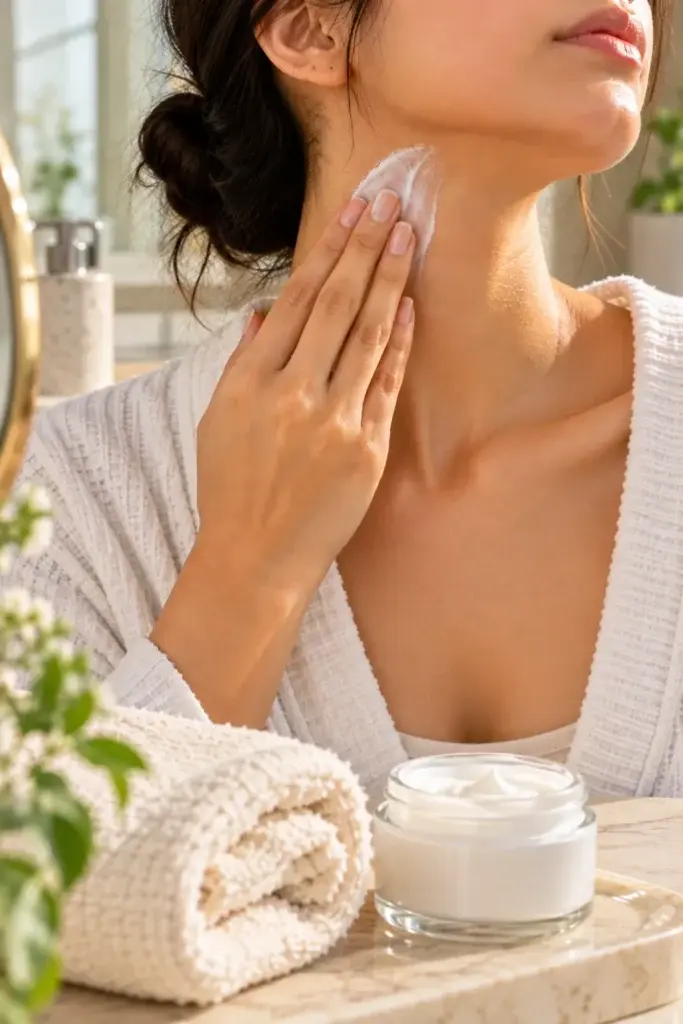
11. Explore a Formulated Niacinamide Product
Niacinamide, a form of vitamin B3, is used in many skincare products intended to support the skin barrier and improve the appearance of uneven skin tone. Unlike a kitchen remedy, a formulated product has a defined ingredient concentration and directions for use. Results depend on the product, the condition being treated, and individual skin sensitivity.
If you choose a niacinamide serum or moisturizer, follow its label and introduce it gradually rather than adding several new active ingredients at once. Do a patch test first, and stop if you develop persistent redness or burning. Niacinamide is not a guaranteed treatment for every cause of neck darkening, and unexplained thickened patches should be assessed medically.
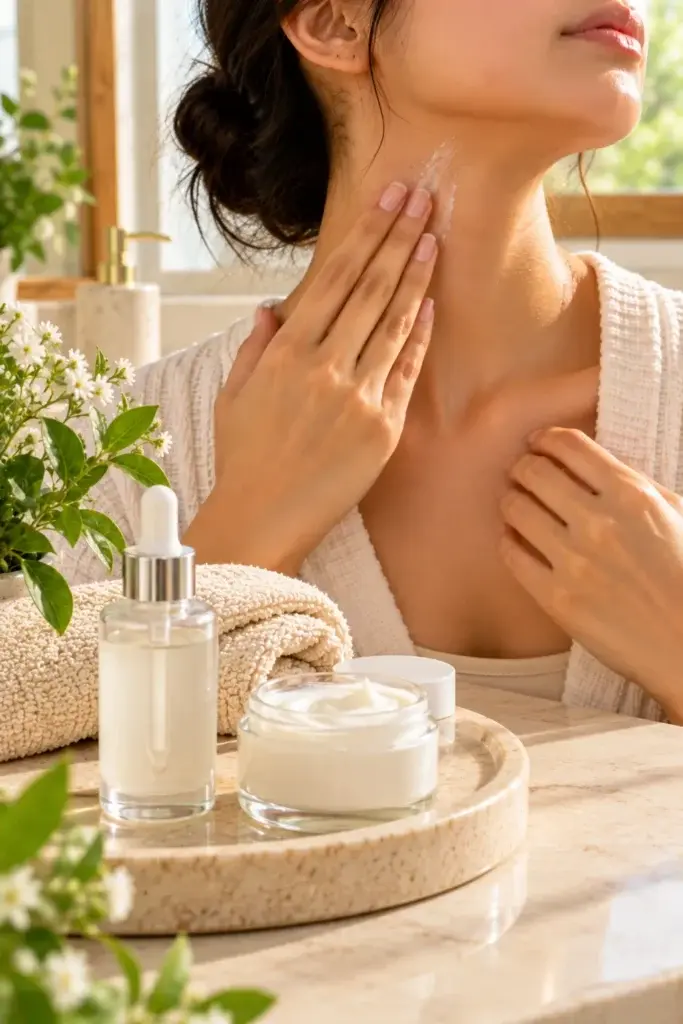
12. Consider a Vitamin C Skincare Product
Vitamin C is an ingredient used in some skincare formulas designed to improve the appearance of uneven skin tone. Certain formulations may help with some forms of discoloration, but results vary and not every product is suitable for sensitive neck skin. A cosmetic serum cannot be assumed to treat a medical cause of pigmentation.
Choose a product from a reputable manufacturer and follow its directions. Start slowly, avoid applying it to irritated skin, and use sunscreen during the day. If the product stings persistently or causes redness, stop using it. Introducing several active ingredients together can make it difficult to identify the source of a reaction, so keep your routine simple.
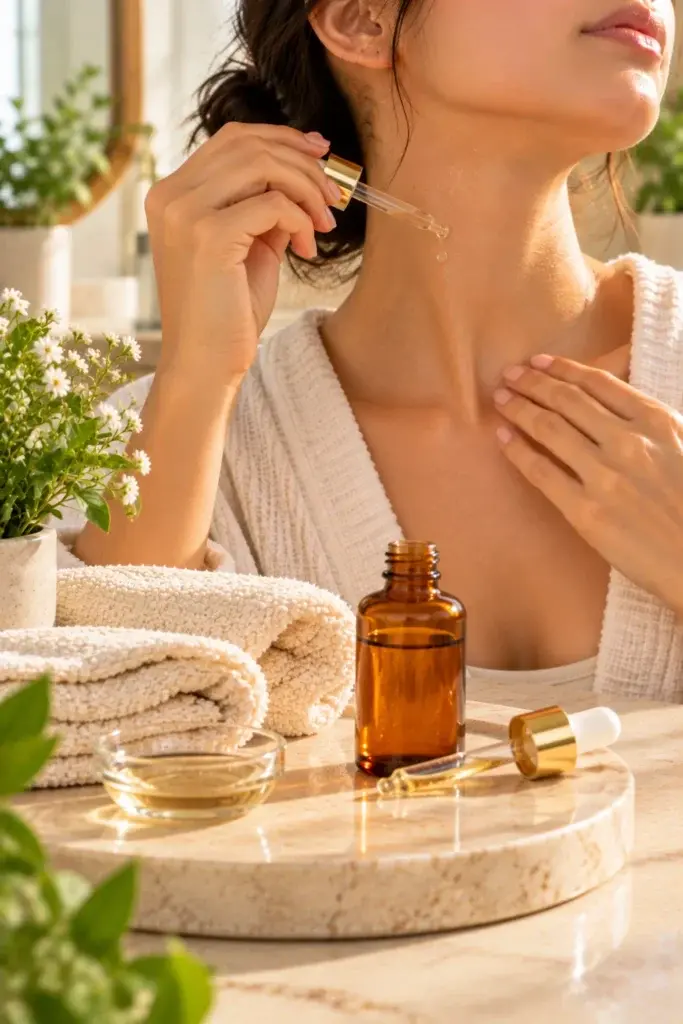
13. Be Careful With Exfoliating Products
Exfoliating products are often marketed for rough texture and uneven skin tone, but the neck can be more sensitive than people expect. Strong acids, frequent exfoliation, and vigorous rubbing can cause irritation. In some skin tones, irritation may lead to additional post-inflammatory pigmentation rather than improvement.
Do not use coarse sugar scrubs, abrasive brushes, or multiple exfoliating products together on a dark neck. If an exfoliating product seems appropriate for your skin, choose a reputable formulation and ask a dermatologist or qualified healthcare professional for guidance, particularly if you have persistent pigmentation. Stop if you experience burning, swelling, or ongoing redness.
14. Reduce Friction Around Your Neck
Repeated friction can irritate the skin and may contribute to discoloration in some people. Tight collars, rough fabrics, necklaces that rub repeatedly, and vigorous towel drying can all make sensitive skin less comfortable. Reducing unnecessary friction is a practical step that does not require buying a complicated skincare routine.
Choose breathable clothing with soft collars and remove accessories that repeatedly rub against the same area. After bathing, pat the neck dry instead of scrubbing it. If darkening continues despite reducing friction, do not assume clothing is the only cause. Persistent pigmentation can have several explanations and may require an examination.

15. Build a Simple Morning Neck-Care Routine
A consistent morning routine can help you protect the skin on your neck without overloading it with products. Start with gentle cleansing if needed, apply moisturizer when your skin feels dry, and finish with broad-spectrum sunscreen on exposed areas. Keeping the routine simple can also help you notice whether a product causes irritation.
Remember to extend your usual facial skincare routine to the neck only when the products are suitable for that area. Some active ingredients may be too irritating for sensitive skin. The goal is to maintain comfortable skin and reduce preventable sun damage, not to force the neck to match the face overnight. Pigmentation can take time to improve, and some causes require specific treatment.
16. Follow a Gentle Evening Neck-Care Routine
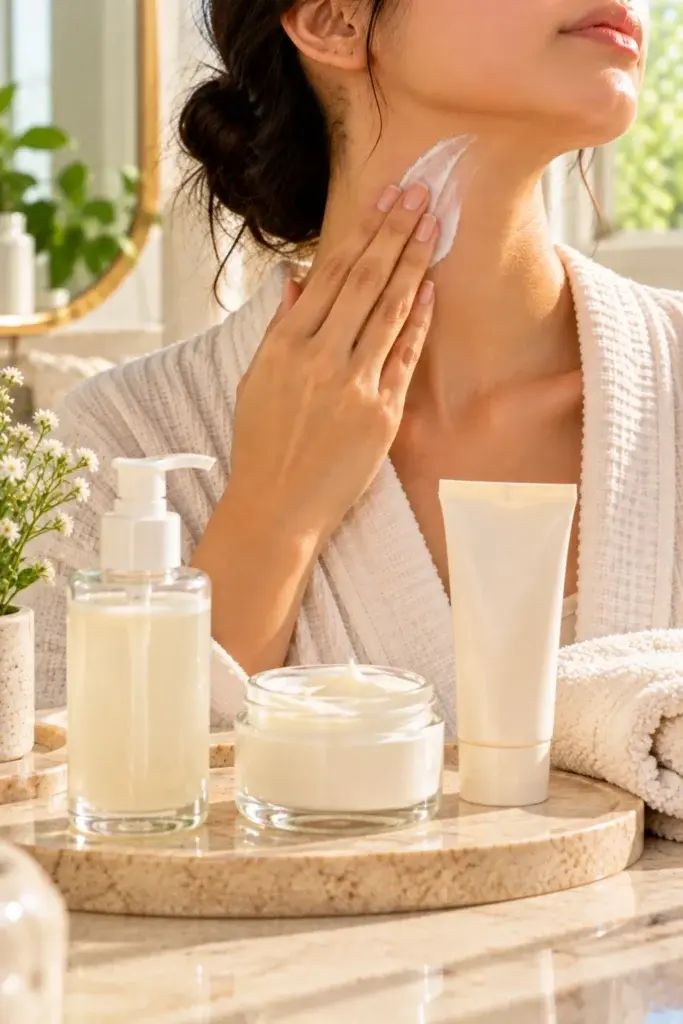
Your evening routine is an opportunity to remove sunscreen, sweat, and daily residue without scrubbing the neck. Use a mild cleanser, rinse well, and apply a moisturizer that suits your skin. If you use a dermatologist-recommended treatment for pigmentation, follow the exact instructions rather than adding several home remedies on top of it.
Avoid the temptation to use stronger products every night when you do not see immediate changes. Overuse can irritate the skin and make discoloration worse. If the dark area remains unexplained, becomes thicker, or continues to spread, arrange a medical assessment. Treating the underlying cause is more important than repeatedly trying new masks or scrubs.
What Causes a Dark Neck?
A dark neck can develop for several reasons, so identifying the likely cause is an important part of choosing the right care.
- Sun exposure: Ultraviolet and visible light can contribute to skin darkening.
- Friction and irritation: Repeated rubbing or inflammatory skin conditions can leave darker marks.
- Post-inflammatory pigmentation: Skin may remain darker after irritation or injury.
- Acanthosis nigricans: This condition can cause darker, thicker, velvety patches around the neck and other skin folds. It may be associated with insulin resistance, diabetes, hormonal conditions, or certain medicines.
Acanthosis nigricans should not be treated as a simple cosmetic issue without considering its cause. The NHS recommends getting new or unexplained dark patches checked by a healthcare professional. Read the NHS guidance on acanthosis nigricans.
What Should You Avoid When Caring for a Dark Neck?
Some popular DIY beauty tips can do more harm than good. Lemon juice, baking soda, strong homemade mixtures, and coarse scrubs can irritate the skin. Irritation may make pigmentation more noticeable, especially in people who are prone to dark marks.
Avoid unregulated skin-lightening creams and products that promise dramatic results in a few days. Do not repeatedly scrub a dark patch to remove it. The American Academy of Dermatology warns that exfoliants and bleaching products may irritate skin affected by acanthosis nigricans and can make the problem worse. See the AAD’s self-care advice.
When Should You See a Dermatologist?
Arrange a medical appointment if the darkening is new, unexplained, persistent, spreading, or accompanied by thickened or velvety skin. It is especially important to get sudden changes assessed promptly. A healthcare professional can help determine whether the cause is pigmentation, irritation, acanthosis nigricans, or another condition.
If a medical condition is responsible, treating that cause may help the skin improve. A dermatologist can also discuss suitable treatments for pigmentation when appropriate. Avoid trying to diagnose yourself using online photographs or relying on home remedies to manage a possible underlying condition.
Frequently Asked Questions
1. What is the safest way to care for a dark neck at home?
Start with gentle cleansing, a fragrance-free moisturizer when needed, and broad-spectrum sunscreen on exposed skin. Avoid harsh scrubbing and irritating homemade mixtures. If the darkening is new or unexplained, get it checked rather than relying only on home care.
2. Can home remedies completely remove neck pigmentation?
No home remedy is guaranteed to remove neck pigmentation. Moisturizers may help dryness, and sun protection can help prevent further sun-related darkening, but results depend on the cause. Some conditions require medical treatment.
3. Why is my neck darker than my face?
Possible reasons include sun exposure, friction, irritation, post-inflammatory pigmentation, and acanthosis nigricans. The appearance alone cannot establish the cause, particularly if the skin has become thick or velvety.
4. Can sunscreen help prevent further darkening?
Yes. Broad-spectrum sunscreen with SPF 30 or higher helps protect against UV exposure that can contribute to pigmentation. Reapply when outdoors as directed, and consider sun-protective clothing and shade.
5. When should I see a dermatologist about dark neck patches?
Seek medical advice if patches are new, unexplained, persistent, spreading, or thickened. Sudden development of dark, velvety patches deserves prompt assessment. A clinician can help identify the cause and recommend appropriate treatment.
Conclusion
Caring for a dark neck begins with understanding why the skin has changed. Gentle cleansing, moisturizing, reducing friction, and using sunscreen can support healthy skin, but homemade masks and natural ingredients should not be treated as guaranteed pigmentation cures. Avoid harsh scrubs and products that irritate your skin, and be patient with any appropriate skincare routine.
If your neck has become unusually dark, thick, velvety, or continues to change, seek professional advice instead of trying increasingly strong remedies. A treatment that addresses the underlying cause is more likely to help than repeated scrubbing or unproven skin-lightening mixtures.